
1. Introduction: Why a Humid Hide Matters
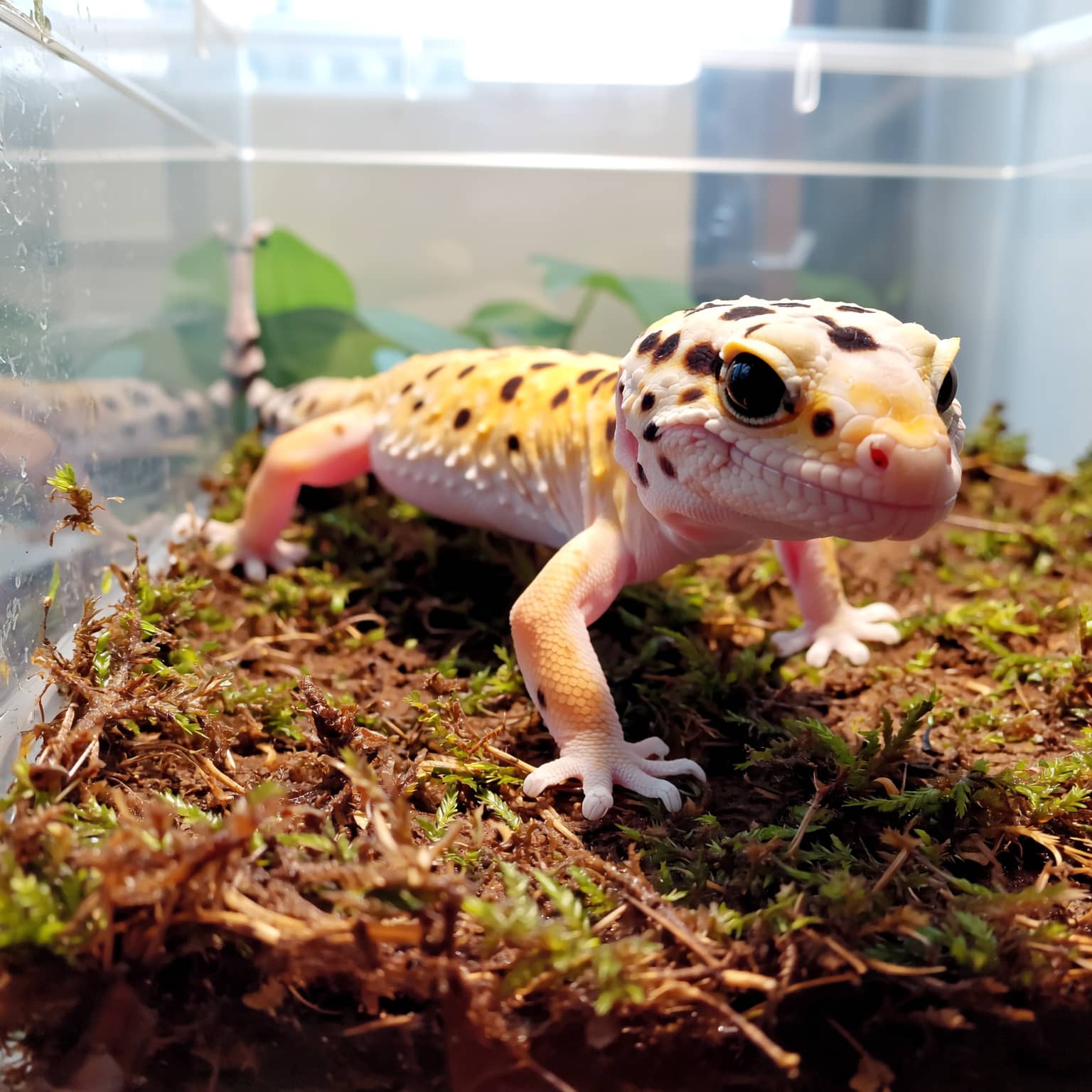
A humid hide is a small enclosed space filled with moist material (such as sphagnum moss or damp paper towels). For leopard geckos, it plays a critical role in hydration, shedding, and stress reduction.
In the wild, these geckos retreat into crevices where humidity is slightly higher than the dry desert air. Replicating this microclimate in captivity helps prevent stuck shed (see Shedding & Skin Care) and supports smooth hydration alongside the regular water bowl (see Water Bowl Setup).
Without a humid hide, geckos are far more likely to suffer from shedding issues, dehydration, and even infections around their eyes, toes, and tail.
2. Materials You Can Use for a DIY Humid Hide
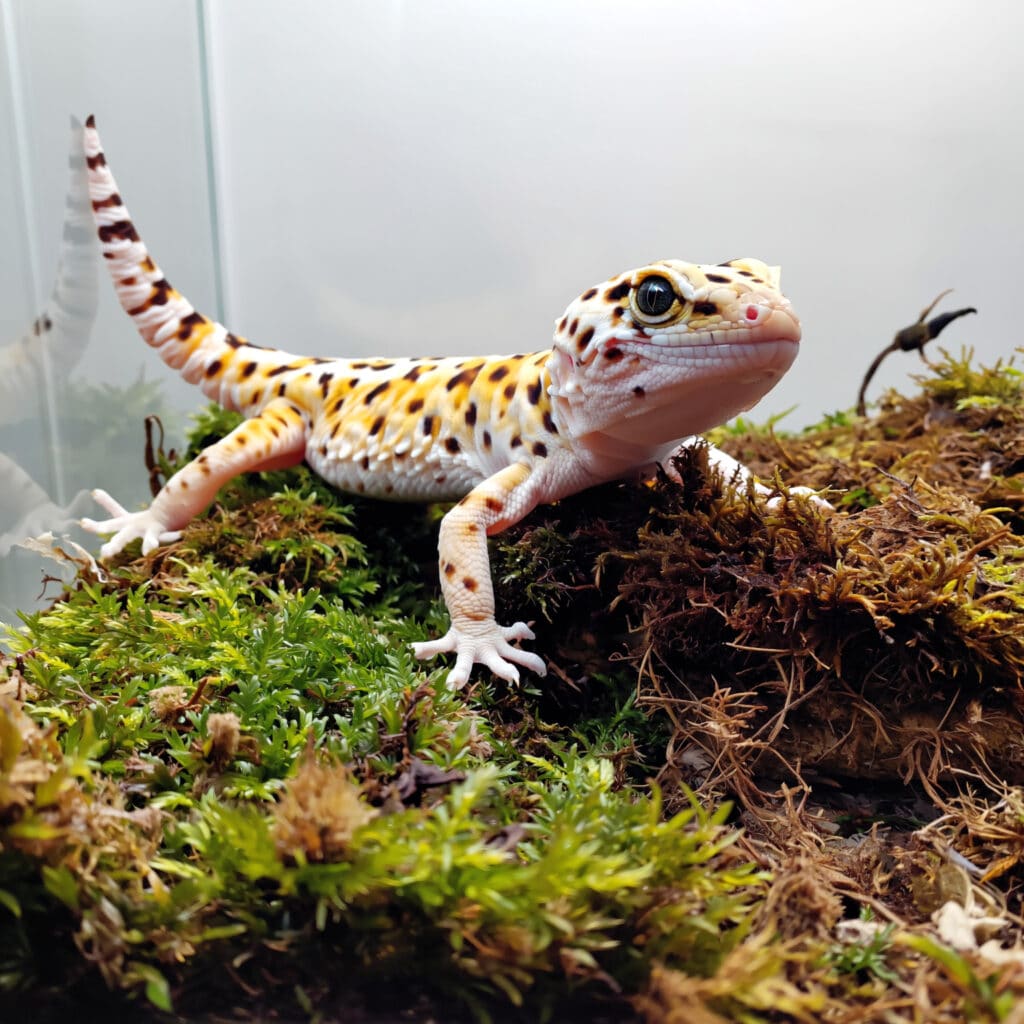
A humid hide doesn’t need to be expensive — many keepers build one at home with simple materials. The goal is to create a safe, enclosed space that retains moisture.
2.1 Container Options
- Plastic food storage box – inexpensive and easy to cut an entrance hole.
- Reptile cave or hide – can be modified with moss inside.
- Ceramic dishes with lids – durable and easy to clean.
2.2 Moisture-Retaining Substrates
- Sphagnum moss – holds moisture well and resists mold.
- Coconut fiber – natural and soft, but needs more frequent replacement.
- Damp paper towels – budget-friendly and simple to clean/replace.
2.3 Placement Considerations
- Always position the humid hide on the warm side of the tank, so heat encourages evaporation inside.
- This creates a micro-habitat with humidity levels ideal for shedding and hydration (see Humidity & Temperature Management).
3. Step-by-Step Guide to Building a DIY Humid Hide
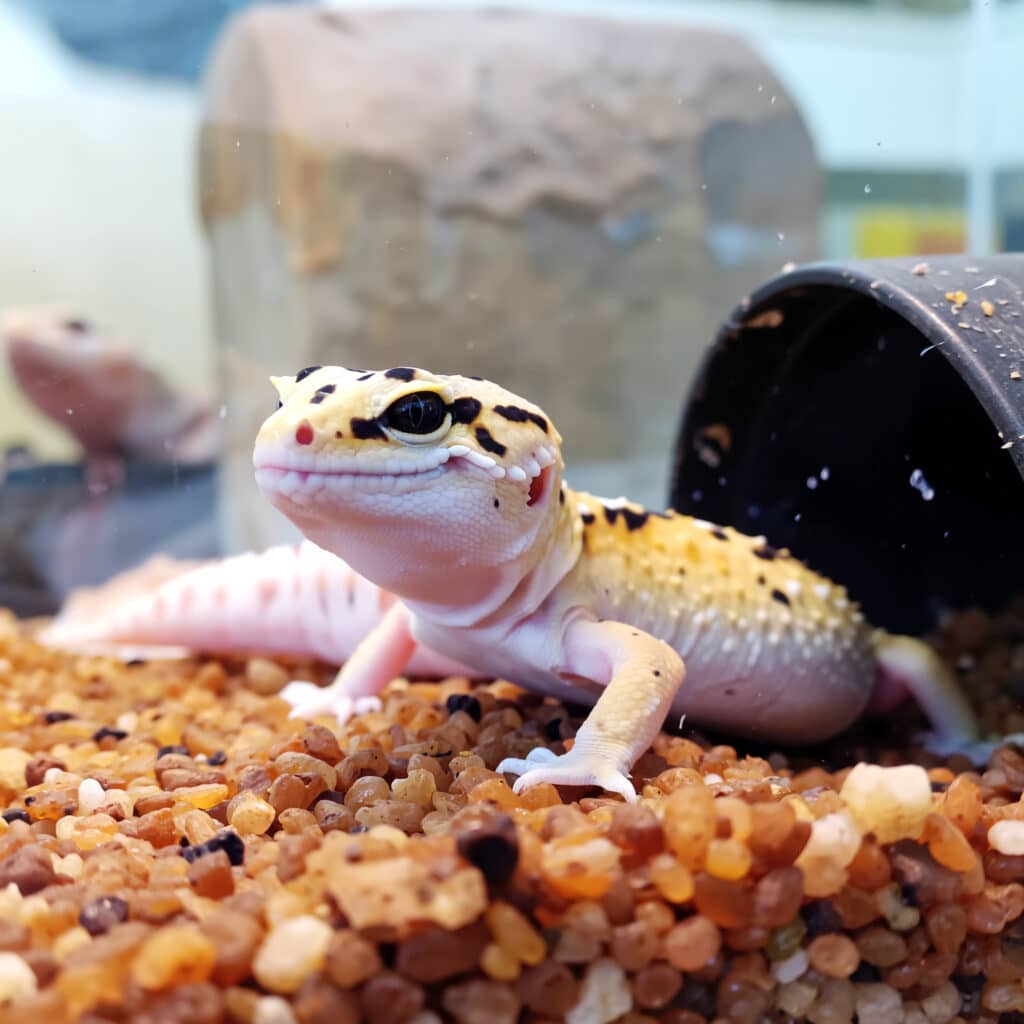
Building a humid hide at home is simple and affordable. Here’s a step-by-step process:
Step 1 – Choose the Container
- Select a plastic food container or small box that fits inside the tank.
- It should be large enough for your gecko to turn around comfortably.
Step 2 – Create an Entrance
- Cut a smooth entrance hole in the side, just big enough for the gecko.
- Sand or file down any sharp edges to prevent injury.
Step 3 – Add Moist Substrate
- Fill the hide with sphagnum moss or damp paper towels.
- Ensure it’s moist, not soaked, to prevent mold.
Step 4 – Placement in the Tank
- Place the hide on the warm side of the enclosure.
- Heat will increase evaporation inside, keeping humidity stable.
Step 5 – Maintain and Clean
- Re-moisten the substrate as needed (usually every 2–3 days).
- Replace moss or paper towels weekly to avoid bacteria buildup.
A DIY humid hide provides the same benefits as store-bought versions but at a fraction of the cost, making it a practical solution for any keeper.
4. Benefits of a Humid Hide
A properly maintained humid hide offers several advantages that directly improve a leopard gecko’s health and comfort.
4.1 Shedding Support
- Keeps skin soft and flexible, preventing stuck shed around toes, eyes, and tail.
- Reduces the need for human intervention during shedding (see Shedding & Skin Care).
4.2 Hydration
- Provides a micro-habitat where the gecko can absorb extra moisture.
- Helps prevent dehydration, especially in dry climates (see Hydration & Water Needs).
4.3 Stress Reduction
- Geckos feel secure in enclosed, dark spaces.
- A humid hide doubles as both a shelter and hydration zone, lowering stress levels.
4.4 Reproductive Benefits
- Female geckos may use a humid hide as a nesting box for laying eggs.
- Stable moisture levels are critical for healthy egg incubation.
5. Common Mistakes to Avoid with Humid Hides
Even though humid hides are simple to set up, there are some frequent mistakes that can reduce their effectiveness or even harm your gecko.
5.1 Over-Saturating the Substrate
- Moss or paper towels should be moist, not soaking wet.
- Excess water creates a breeding ground for bacteria and mold.
5.2 Wrong Placement in the Tank
- Placing the hide on the cool side limits evaporation and makes it ineffective.
- Always position it on the warm side for optimal humidity.
5.3 Using Unsafe Containers
- Sharp-edged plastic can injure your gecko.
- Always smooth the entrance hole and ensure stability.
5.4 Neglecting Maintenance
- Failing to refresh the moss or towels regularly can lead to bad odors and bacterial growth.
- Replace weekly or more often if soiled.
5.5 Only Providing One Hide
- Geckos need at least three hides: a warm hide, a cool hide, and a humid hide.
- The humid hide is only one part of a complete tank setup (see Tank Setup Guide).
Avoiding these mistakes ensures the humid hide remains safe, effective, and beneficial for your leopard gecko.
6. Conclusion & Final Thoughts
A humid hide is one of the simplest yet most essential elements in a leopard gecko’s enclosure. It mimics the natural microclimates geckos would seek out in the wild and supports their hydration, shedding, and overall comfort.
By using safe materials, keeping the substrate moist but not soaked, and placing the hide on the warm side of the tank, keepers can easily create an environment that prevents stuck shed and dehydration.
When paired with a fresh water bowl (see Water Bowl Setup) and a balanced habitat (see Humidity & Temperature Management), the humid hide becomes part of a complete hydration system that keeps leopard geckos thriving.
In short, building a DIY humid hide is affordable, effective, and one of the best steps any owner can take toward responsible reptile care.
FAQs
Do leopard geckos need a humid hide?
Yes, a humid hide is essential for proper shedding, hydration, and reducing stress.
What can I put inside a humid hide?
Sphagnum moss, coconut fiber, or damp paper towels are the most common safe substrates.
Where should I place the humid hide in the tank?
On the warm side of the enclosure, so heat creates proper humidity inside.
How often should I clean a leopard gecko’s humid hide?
Replace moss or towels weekly and re-moisten every few days to prevent bacteria and mold.
Author

