
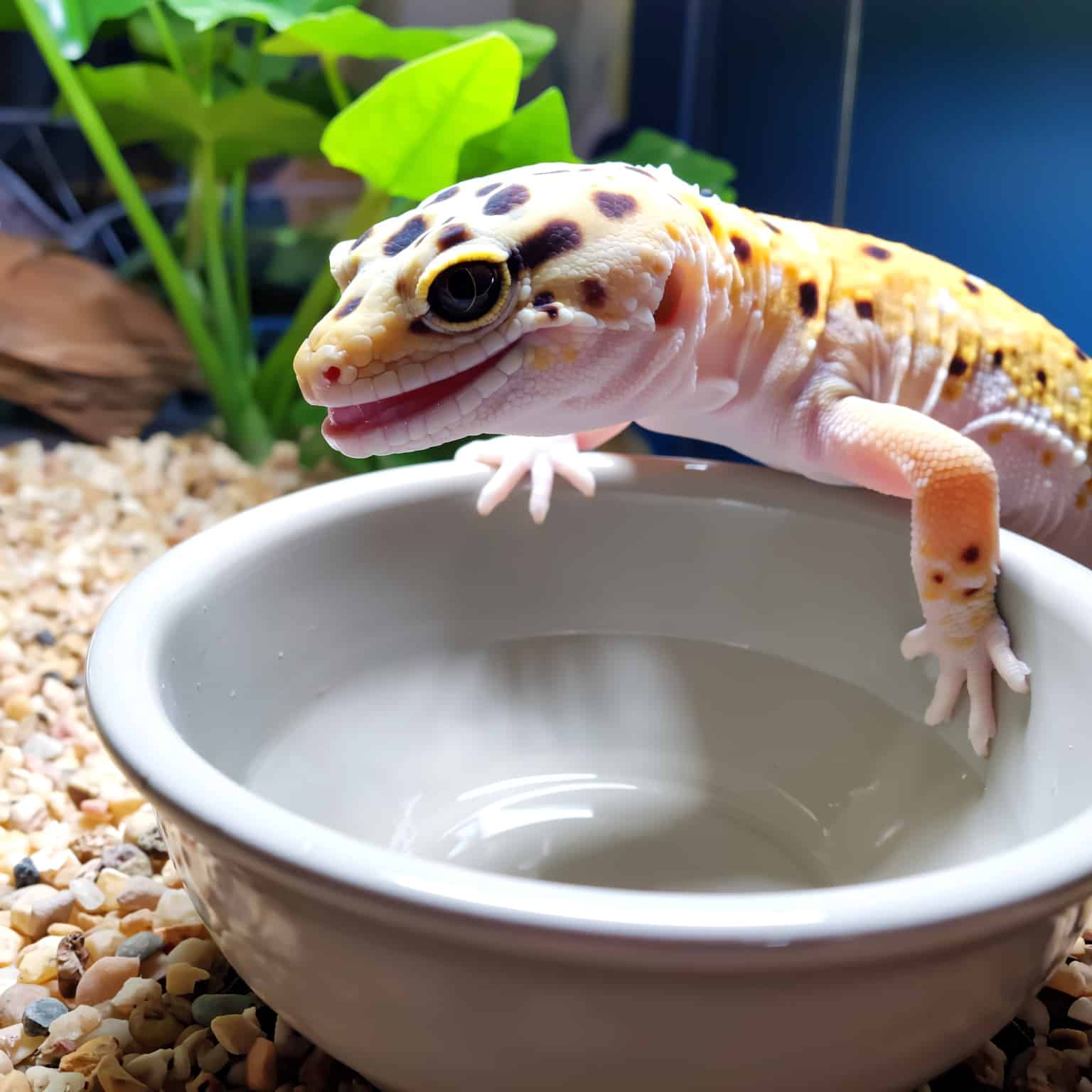
1. Introduction: Why a Water Bowl Matters
Even though leopard geckos come from arid regions, a shallow water bowl is essential in captivity. It ensures they have constant access to hydration, supports healthy shedding, and helps with digestion.
In the wild, geckos rely on dew and moisture from the ground. In captivity, the water bowl replaces this natural source. Alongside a humid hide (see Hydration & Water Needs), it forms one of the two most important hydration methods.
Owners often underestimate the water bowl, focusing more on tank setup and feeding (see Feeding & Nutrition), but proper placement, size, and cleaning are just as important for gecko wellbeing.
Table of Contents
2. Choosing the Right Water Bowl
Not every dish is suitable for leopard geckos. The right water bowl must balance safety, accessibility, and durability.
2.1 Size & Depth
- The bowl should be shallow — deep bowls are unnecessary and could be risky.
- Large enough for the gecko to reach comfortably, but not so big that it takes up too much floor space.
2.2 Material
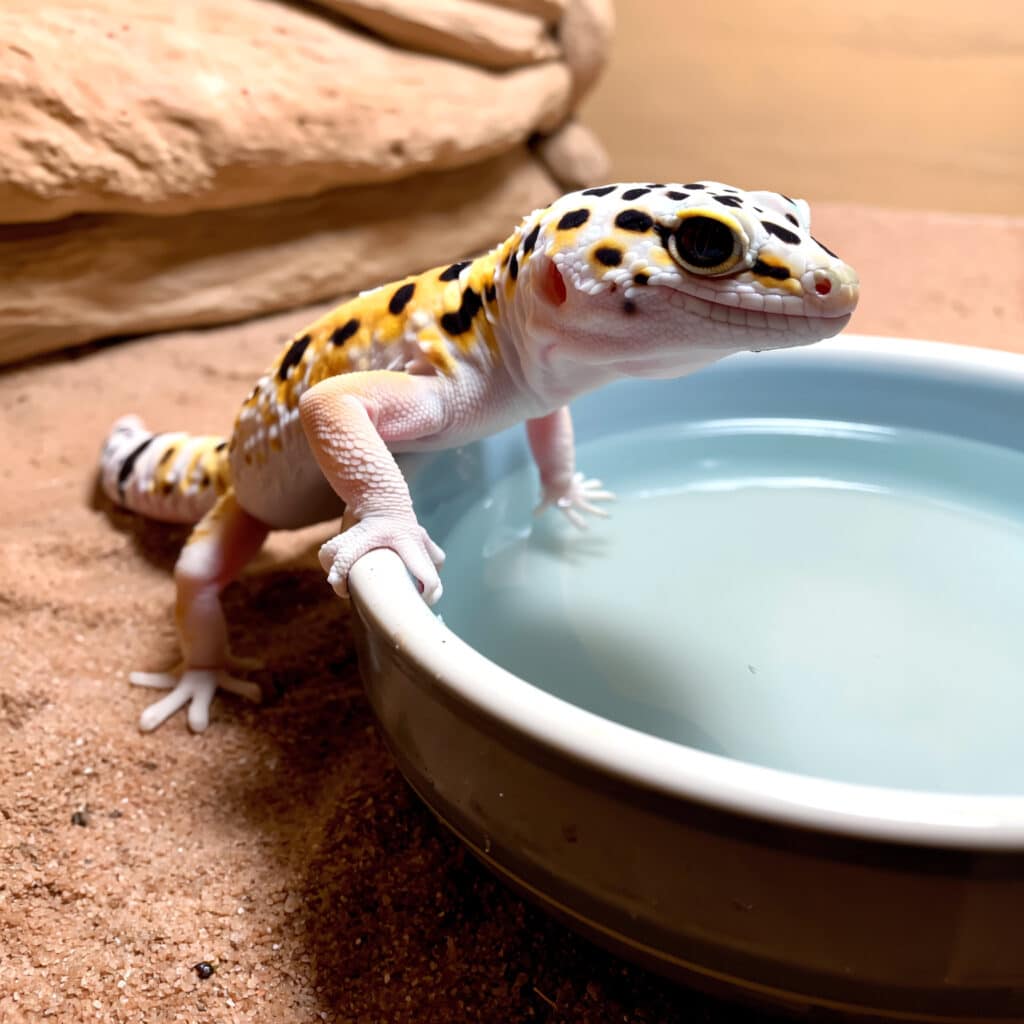
- Ceramic or stone bowls are best because they are heavy and hard to tip over.
- Avoid light plastic bowls, which geckos can move or spill.
- Smooth, non-porous surfaces are easier to clean and less likely to harbor bacteria.
2.3 Safety Considerations
- Ensure the bowl has no sharp edges.
- Avoid bowls with textured interiors that can trap dirt.
- Place on the cool side of the tank to prevent evaporation.
Many keepers combine a water bowl with a humid hide to ensure both drinking and environmental hydration needs are met (see Tank Setup Guide).
3. Placement in the Enclosure
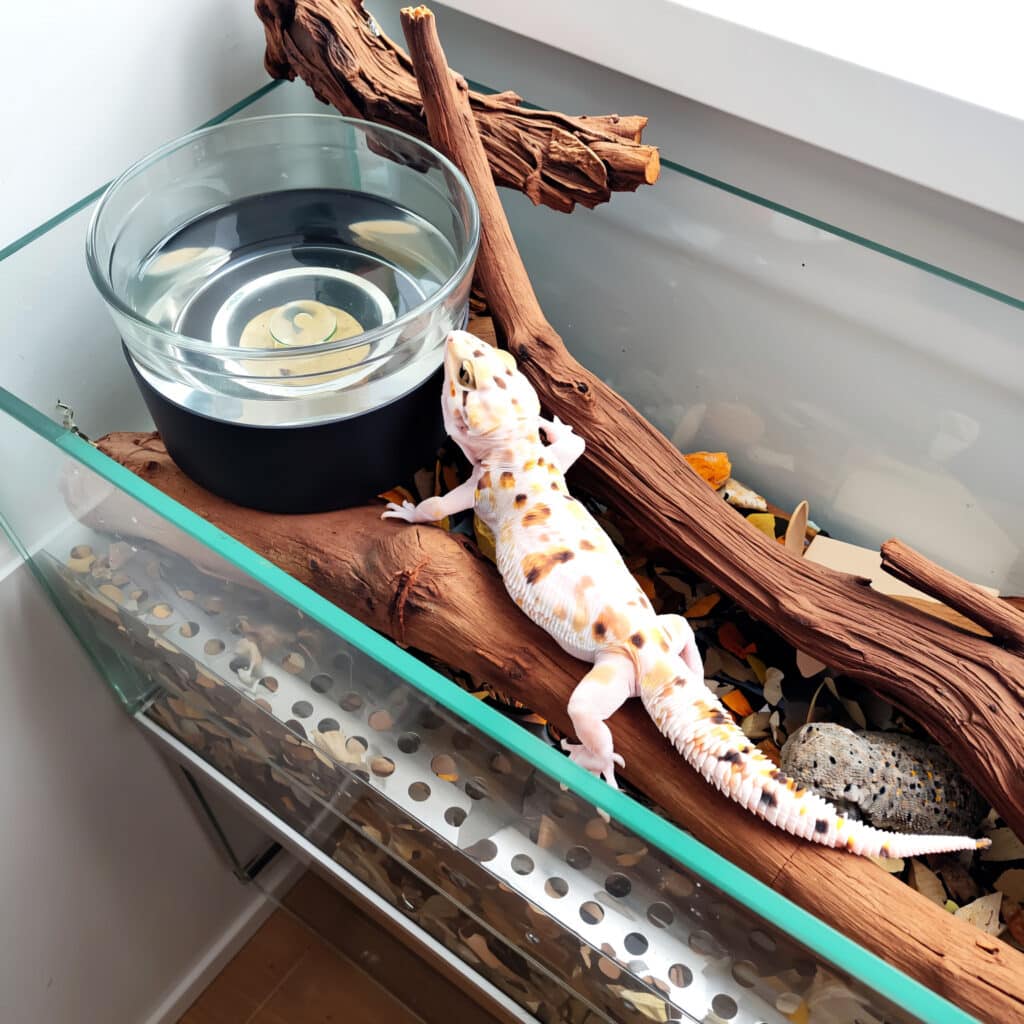
Where you put the water bowl inside the enclosure is just as important as the bowl itself.
3.1 Cool Side of the Tank
- Always place the water dish on the cool side of the enclosure.
- On the warm side, water evaporates too quickly and raises humidity above safe levels (see Humidity & Temperature Management).
3.2 Away from Substrate
- Keep the bowl on a flat surface to avoid tipping.
- If using loose substrate, position the bowl so that dirt or sand does not easily fall inside. Contaminated water can cause illness.
3.3 Easy Access for the Gecko
- The bowl should be low enough for the gecko to drink comfortably.
- Place it near a hide so the gecko feels secure while drinking.
Correct placement prevents accidents, keeps the water cleaner for longer, and helps maintain stable tank conditions.
4. Cleaning & Maintenance of the Water Bowl
Leopard geckos rely on clean water to stay healthy. A neglected water dish can quickly become a breeding ground for bacteria.
4.1 Daily Routine
- Replace the water every day with fresh, dechlorinated water.
- Remove any substrate, insect remains, or droppings that may have fallen inside.
4.2 Weekly Deep Clean
- Wash the bowl with warm water and reptile-safe disinfectant once a week.
- Rinse thoroughly to remove all cleaning residues.
- Avoid using strong soaps or chemicals, which can harm your gecko.
4.3 Hygiene Tips
- Always wash your hands before and after handling the bowl.
- Keep a spare water dish on hand, so you can rotate them during cleaning.
- Monitor for algae buildup if your enclosure is near natural light.
A clean water bowl supports hydration, digestion, and prevents bacterial infections (see Health Issues & Common Diseases for related risks).
4. Cleaning & Maintenance of the Water Bowl
Leopard geckos rely on clean water to stay healthy. A neglected water dish can quickly become a breeding ground for bacteria.
4.1 Daily Routine
- Replace the water every day with fresh, dechlorinated water.
- Remove any substrate, insect remains, or droppings that may have fallen inside.
4.2 Weekly Deep Clean
- Wash the bowl with warm water and reptile-safe disinfectant once a week.
- Rinse thoroughly to remove all cleaning residues.
- Avoid using strong soaps or chemicals, which can harm your gecko.
4.3 Hygiene Tips
- Always wash your hands before and after handling the bowl.
- Keep a spare water dish on hand, so you can rotate them during cleaning.
- Monitor for algae buildup if your enclosure is near natural light.
A clean water bowl supports hydration, digestion, and prevents bacterial infections (see Health Issues & Common Diseases for related risks).
5. Common Mistakes with Water Bowls
Many leopard gecko owners unintentionally make errors when setting up or maintaining water bowls. These small mistakes can lead to poor hydration or health problems.
5.1 Using Bowls That Are Too Deep
- Leopard geckos don’t swim. Deep bowls make drinking harder and increase drowning risks for hatchlings.
5.2 Placing the Bowl on the Hot Side
- Speeds up evaporation and raises humidity above the safe 30–40% range.
- Can create conditions for respiratory infections.
5.3 Not Cleaning Frequently
- Dirty water bowls can harbor harmful bacteria and parasites.
- Even if the water looks clean, replace it daily.
5.4 Using Lightweight Plastic Dishes
- Easily tipped over, leading to wet substrate and unstable humidity.
- Ceramic or stone bowls are safer and more stable.
5.5 Ignoring Substrate Contamination
- Loose substrates like sand can easily fall into the bowl.
- This creates an ingestion risk and contaminates the water supply.
Avoiding these mistakes helps maintain a consistent hydration routine, which is also supported by other care practices (see Complete Leopard Gecko Care Guide).
6. Conclusion & Final Thoughts
A water bowl may seem like a simple accessory, but it plays a critical role in leopard gecko hydration and overall health. Choosing the right size and material, placing it correctly, and maintaining strict hygiene ensures your gecko always has safe access to water.
When combined with a humid hide and balanced humidity control (see Hydration & Water Needs), the water bowl supports proper shedding, digestion, and longevity.
By avoiding common mistakes—like deep bowls, poor placement, or infrequent cleaning—you create a safer, more stable environment that reflects the gecko’s natural hydration needs.
In short, the water bowl is more than just a dish; it’s a daily safeguard for your gecko’s wellbeing and comfort.
FAQs
Do leopard geckos need a water bowl?
Yes, leopard geckos need a shallow water bowl with fresh water available at all times to stay hydrated.
Where should I place the water bowl in a leopard gecko tank?
Always place the bowl on the cool side of the enclosure to prevent evaporation and humidity spikes.
How often should I clean my gecko’s water bowl?
Replace the water daily and deep clean the bowl weekly with reptile-safe disinfectant.
What type of water bowl is best for leopard geckos?
Heavy ceramic or stone bowls are best because they are stable, easy to clean, and safe for the gecko.
Author

