
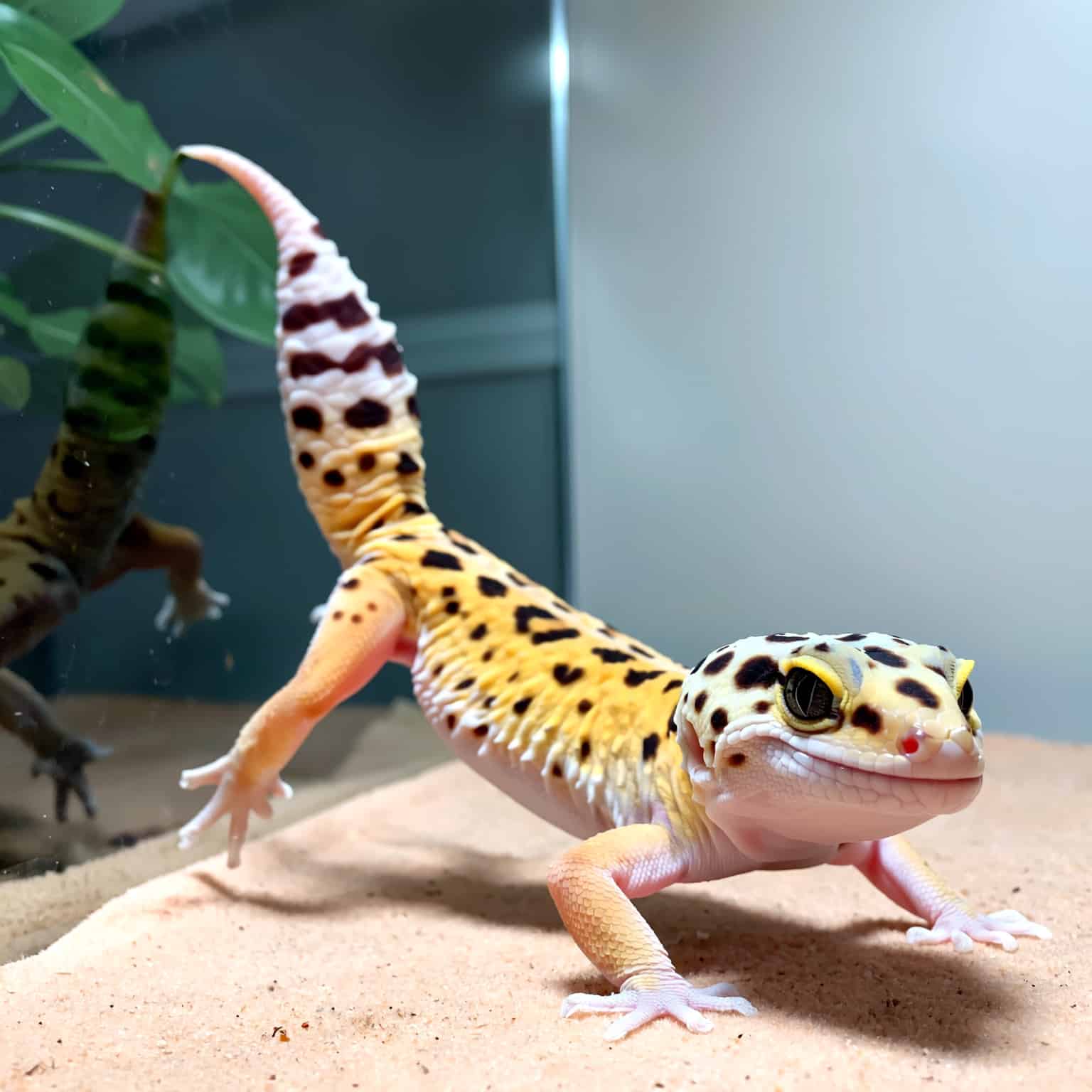
Leopard geckos are usually calm, hardy reptiles, but their behavior can reveal a lot about their health and comfort. Subtle actions—such as tail movements, unusual sounds, or constant climbing at the glass—often signal stress. By learning to read these behaviors, owners can adjust care routines and prevent health issues.
Table of Contents
Why Behavior Matters
- Behavior is a direct reflection of environment, health, and emotional state.
- Stress signs often appear before visible illness.
- Recognizing early warnings helps prevent serious problems.
Physical vs. Behavioral Stress Signs
Physical Stress Signs
- Rapid breathing: noticeable chest movements when the gecko is resting.
- Wrinkled or dull skin: may indicate dehydration or prolonged stress. This connects closely with Signs of Dehydration in Leopard Geckos, since hydration problems are a major stress trigger.
- Loss of appetite: refusing food for several days often links to stress and can overlap with issues covered in Leopard Gecko Feeding & Nutrition.
- Weight loss: gradual decline if stress persists, which may require checking for Common Health Issues in Leopard Geckos.
Behavioral Stress Signs
- Tail waving: a warning signal, usually to predators or cage mates. We’ll cover this in depth in the cluster article Tail Waving Meaning in Leopard Geckos.
- Glass surfing: repetitive climbing against the glass, often linked to tank setup issues, which you can explore in Leopard Gecko Tank Setup Guide.
- Unusual vocalizations: chirps or squeaks often indicate discomfort, explained further in Vocal Sounds in Leopard Geckos.
- Excessive hiding: refusing to leave the hide even during active hours, sometimes tied to improper Humidity & Temperature Management.
- Aggression: biting or hissing when handled, which can also connect with Handling & Bonding Tips.
Common Causes of Stress in Leopard Geckos
1. Improper Habitat Conditions
- Incorrect temperatures, poor humidity, or lack of hides can create constant stress.
- A poorly balanced enclosure often causes glass surfing or refusal to eat.
- See also: Leopard Gecko Tank Setup Guide and Humidity & Temperature Management.
2. Handling Stress
- Frequent or rough handling can overwhelm a gecko.
- Geckos need gradual bonding time, as explained in Handling & Bonding Tips.
- Aggressive behavior often stems from stress rather than natural temperament.
3. Shedding Difficulties
- Inadequate humidity may lead to stuck shed, which is both uncomfortable and stressful.
- See Shedding Problems in Leopard Geckos for causes and solutions.
4. Health Issues
- Parasites, infections, or metabolic problems can trigger unusual stress behaviors.
- Related reading: Parasites in Leopard Geckos and Metabolic Bone Disease.
5. Environmental Disturbances
- Loud noises, vibrations, or too much light can disrupt their normal rhythm.
- Tank placement is key—learn more in Enclosure Placement & Environment.
Normal vs. Abnormal Behavior
Normal Behaviors
- Exploring at night: Leopard geckos are nocturnal, so nighttime activity is expected.
- Occasional tail waving: light movements can be communication, not always stress.
- Mild hiding: spending time in hides is natural, especially during the day.
Abnormal Behaviors
- Persistent glass surfing: repeated attempts to escape the enclosure indicate discomfort; see Glass Surfing in Leopard Geckos.
- Frequent vocalizations: constant chirping or squeaking often signals stress; more in Vocal Sounds in Leopard Geckos.
- Excessive hiding: staying hidden all the time suggests illness or stress, sometimes linked to dehydration covered in Signs of Dehydration in Leopard Geckos.
- Aggressive responses: biting or lunging at routine handling shows high stress, discussed in Handling & Bonding Tips.
Reducing Stress in Leopard Geckos
1. Optimize the Habitat
- Maintain proper temperature gradients and humidity.
- Provide at least two hides (warm side + cool side).
- Avoid over-decorating with unsafe objects—see Tank Décor & Enrichment.
2. Create a Stable Routine
- Feed at consistent times; irregular schedules can cause anxiety.
- Reduce sudden changes in lighting or handling frequency.
- Guidance available in Leopard Gecko Feeding & Nutrition.
3. Handle with Care
- Limit handling sessions to short, calm interactions.
- Support the body fully and avoid sudden movements.
- More tips in Handling & Bonding Tips.
4. Monitor Health Closely
- Address shedding issues early with proper humidity.
- Watch for parasites or infections that may trigger stress (see Parasites in Leopard Geckos).
- Schedule regular checkups with an exotic vet, as explained in Vet & Medical Care.
5. Reduce Environmental Disturbances
- Keep the enclosure in a quiet room away from constant vibrations.
- Limit visual stress from other pets or excessive human activity.
- For placement tips, see Enclosure Placement & Environment.
When Stress Requires Veterinary Help
Not all stress behaviors can be solved with routine care. Sometimes, they signal underlying medical problems.
Warning Signs to Seek a Vet
- Prolonged refusal to eat (over 10–14 days).
- Severe weight loss despite proper feeding (see Leopard Gecko Growth & Lifespan for healthy weight ranges).
- Constant lethargy even during night hours.
- Unresolved shedding issues, such as stuck shed around toes or eyes, which can lead to infections (Shedding & Skin Care).
- Unusual droppings that suggest parasites or infections (Parasites in Leopard Geckos).
- Respiratory problems like wheezing or clicking noises (Respiratory Infections in Leopard Geckos).
Importance of Early Intervention
Stress is often the body’s first alarm system. Acting early can prevent minor issues from becoming life-threatening. Consulting an exotic vet ensures that hidden conditions—such as metabolic bone disease, internal parasites, or infections—are diagnosed and treated properly.
📝 Conclusion
Leopard geckos rarely show obvious illness at the beginning, so stress signs are one of the best early warnings an owner can recognize. From tail waving and glass surfing to unusual vocalizations, these behaviors reveal how comfortable—or uncomfortable—a gecko feels in its environment. By providing a stable habitat, handling gently, and monitoring for health problems, owners can reduce stress and support long-term well-being.
FAQs
What are the most common signs of stress in leopard geckos?
Tail waving, glass surfing, refusal to eat, excessive hiding, and vocalizations are common stress behaviors.
Can stress cause health problems in leopard geckos?
Yes, prolonged stress weakens the immune system, making geckos more vulnerable to parasites, infections, and shedding issues.
How can I calm down a stressed leopard gecko?
Optimize tank conditions, minimize handling, and ensure access to proper hides. A consistent routine helps geckos feel secure.
When should I take a stressed gecko to the vet?
If stress behaviors persist despite care adjustments, or if there are symptoms like weight loss, dehydration, or respiratory issues, a vet visit is needed.
Author

