
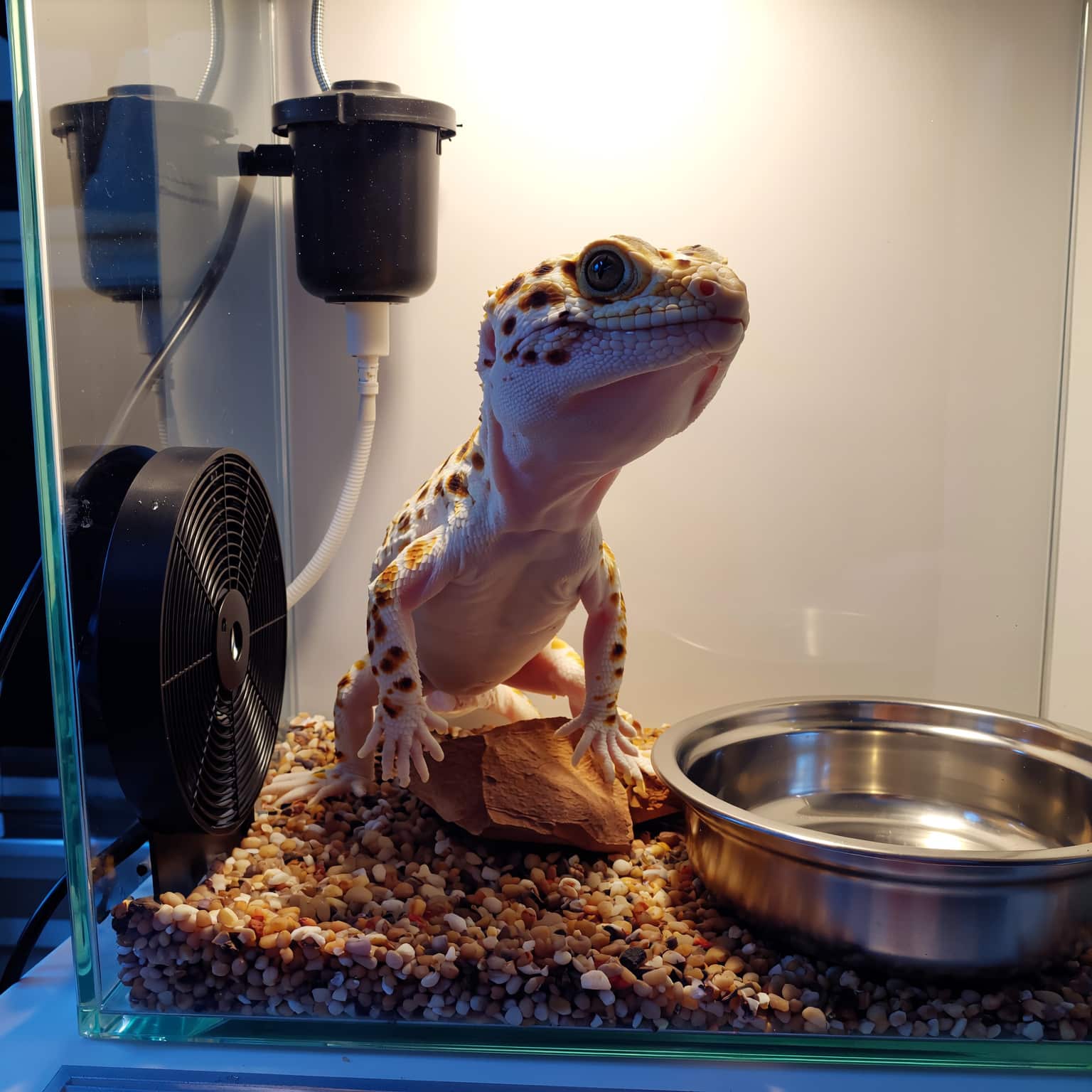
Bringing home a leopard gecko for the first time is exciting, but it can also feel overwhelming. These reptiles may be hardy, yet their wellbeing depends on having the right equipment from the start. A proper setup ensures your gecko adjusts quickly and stays healthy long-term.
This checklist covers the essential supplies every new owner should prepare: the enclosure, heating and lighting, safe substrates, feeding equipment, and key accessories. By organizing these basics before your gecko arrives, you’ll avoid common mistakes and make the transition smooth.
For a broader overview of husbandry beyond the first setup, the Complete Leopard Gecko Care Guide provides detailed context on diet, handling, and long-term health.
The Enclosure (Tank Size & Type)
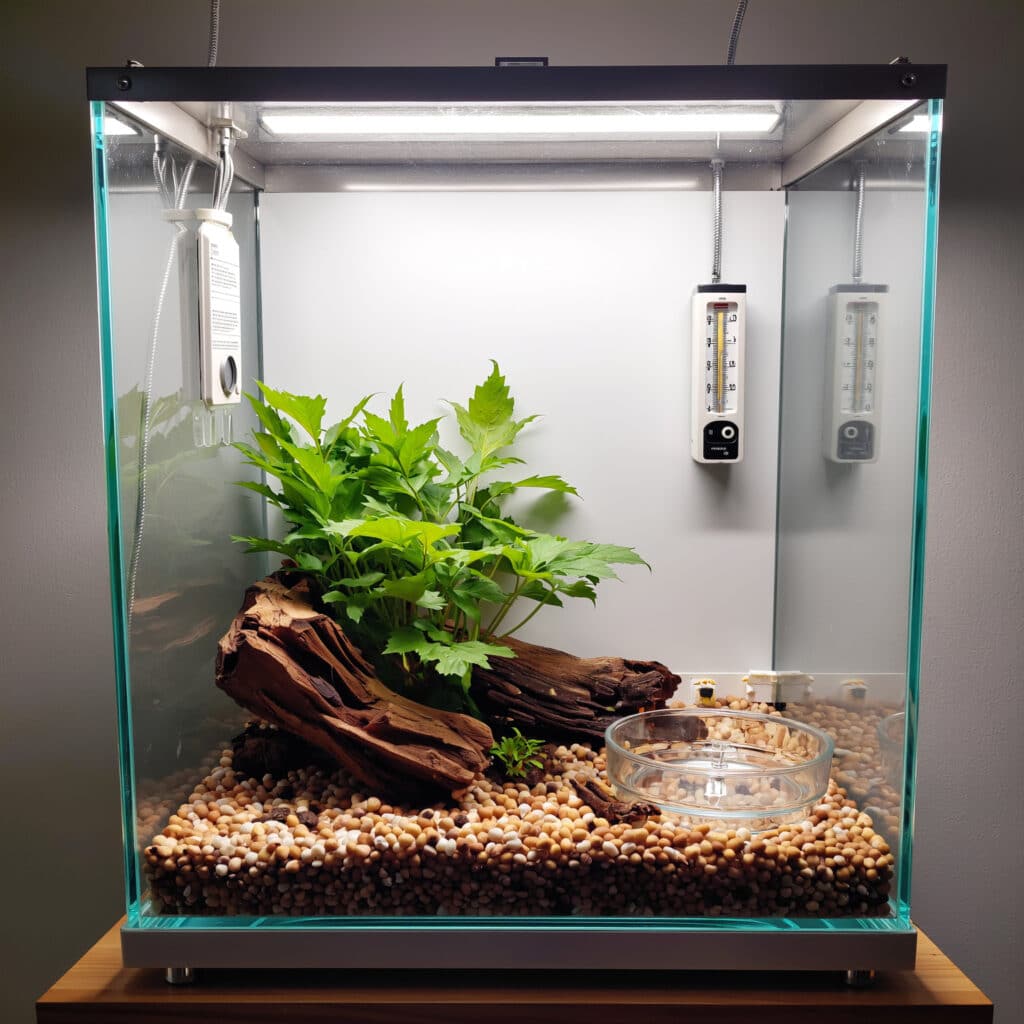
The enclosure is the foundation of a healthy setup. Leopard geckos don’t need overly large habitats, but they require enough space to explore, thermoregulate, and feel secure.
- Hatchlings (0–3 months): A 10–15 gallon tank is enough during the early growth stage.
- Juveniles (3–10 months): At least 20 gallons provides the right balance of space and heating efficiency.
- Adults (10+ months): A 20–40 gallon tank is recommended for comfort and enrichment.
Glass tanks are the most commonly used, but PVC enclosures are growing in popularity thanks to their durability and insulation. Front-opening designs are also practical for easy cleaning and stress-free handling.
Details on sizing, material pros and cons, and placement are fully explained in the Leopard Gecko Tank Setup Guide, which helps owners avoid the most common mistakes.
Heating & Lighting Equipment
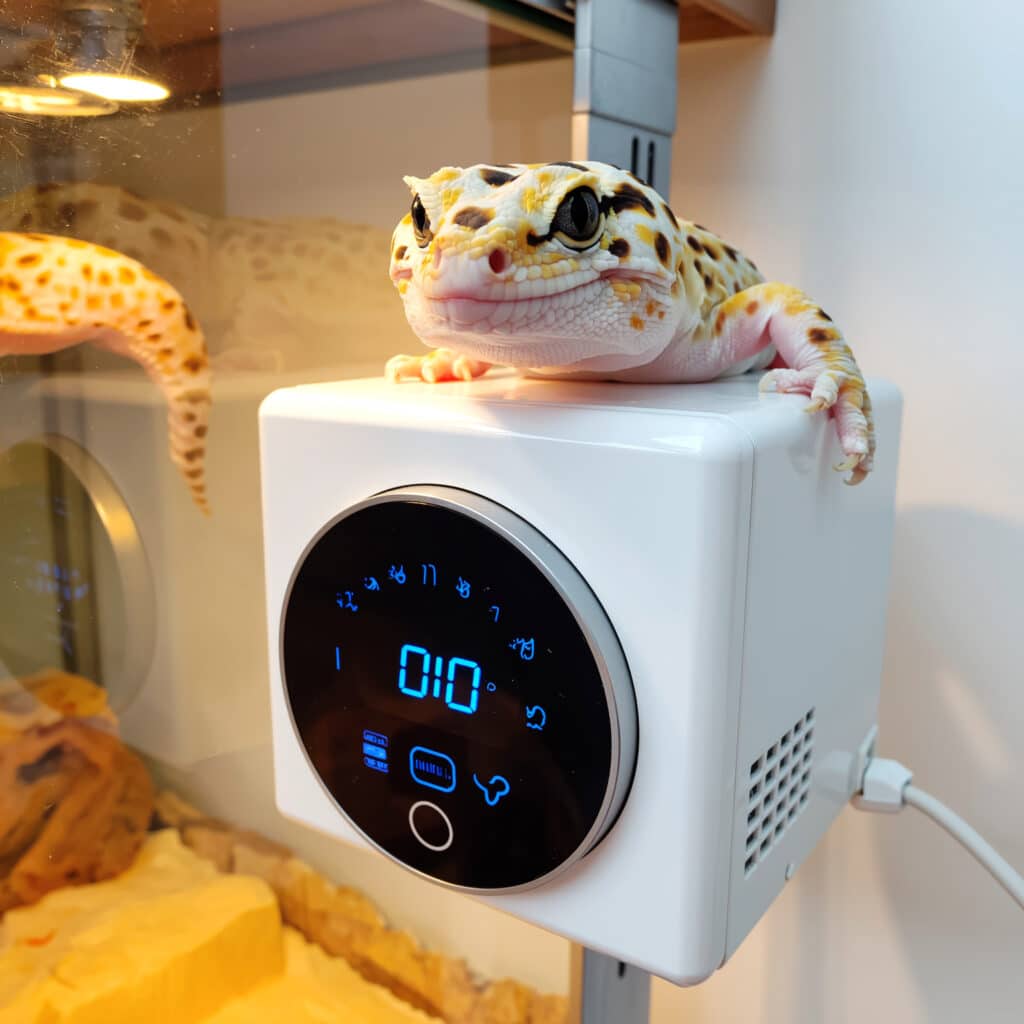
Leopard geckos are ectothermic reptiles, meaning they rely on external heat sources to regulate their body temperature. A proper heating setup is one of the most important parts of your starter kit.
- Heat source: Most keepers use an under-tank heating pad (UTH) connected to a thermostat. This provides belly heat, which geckos need for proper digestion.
- Temperature zones: Maintain a warm side of 90–95°F and a cool side around 75–80°F. Nighttime temperatures can safely drop into the low 70s.
- Thermostat: Always connect heating equipment to a thermostat to avoid overheating.
- Lighting: Leopard geckos do not require complex lighting systems. However, providing a day-night light cycle helps mimic natural conditions. Many keepers also use low-level UVB, which may improve calcium metabolism and overall health.
The article on Heating & Lighting for Leopard Geckos explores the types of heat mats, lamps, and thermostats in more depth, with pros and cons of each.
Safe Substrates
The substrate (the flooring of the enclosure) plays a major role in both hygiene and gecko safety. Many new owners make the mistake of using sand, thinking it recreates a desert environment. In reality, sand can lead to impaction, a serious and sometimes fatal digestive blockage.
- ✅ Recommended substrates: reptile carpet, slate or ceramic tile, and paper towels (especially good for hatchlings and quarantine tanks).
- ⚠️ Use with caution: bioactive setups can work if designed carefully, but they require experience and regular monitoring.
- ❌ Avoid: loose sand, walnut shells, wood chips, or gravel.
Different substrates also affect cleaning routines and tank aesthetics. Beginners often prefer paper towels for easy spot cleaning, while advanced keepers may opt for naturalistic setups with tile.
A detailed comparison of each option is available in the guide on Best Substrates for Leopard Geckos, which explains both the safe choices and the risks to avoid.
Feeding Equipment & Supplements
A proper feeding setup ensures your leopard gecko gets both nutrition and safety during mealtime. At minimum, you’ll need:
- Feeding dish: A shallow, stable bowl for worms or supplements.
- Tweezers: Long reptile-safe tweezers make it easier to offer insects directly and prevent bites from crickets.
- Calcium dish: A small cap or bowl can be left in the enclosure with plain calcium powder for self-regulation.
Supplements are non-negotiable. Dust feeder insects with calcium and vitamin D3 several times per week for juveniles, and at least weekly for adults. Multivitamin powders can be added once every 1–2 weeks to cover additional nutrients.
➡️ More details on supplement schedules are explained in Calcium & Vitamin Needs for Leopard Geckos, while safe insect storage and preparation tips can be found in the guide on Feeder Insect Care.
Accessories & Hides
Leopard geckos rely on secure hiding spots to feel safe and reduce stress. A proper starter setup should include at least three hides placed across the temperature gradient:
- Warm hide: Positioned on the heated side of the tank for digestion.
- Cool hide: On the opposite side, allowing the gecko to regulate body temperature.
- Humid hide: Kept moist with moss or damp paper towels, essential for healthy shedding.
Additional accessories like climbing branches, background décor, or artificial plants can provide enrichment. While not strictly necessary, these items encourage natural behaviors such as exploring and climbing.
Each accessory should be stable, non-toxic, and easy to clean. Loose or sharp decorations can cause injury. Beginners often underestimate the importance of multiple hides, but they are vital for reducing stress.
A broader list of recommended items—including thermometers, hygrometers, and feeding tools—can be found in the Accessories & Gear guide, which reviews essential and optional supplies.
Preparing the right supplies before bringing home a leopard gecko makes the difference between a stressful start and a smooth transition. A properly sized enclosure, safe substrate, controlled heating, essential supplements, and secure hides form the foundation of responsible care.
Many of these essentials connect directly with broader husbandry practices. Details on tank placement, heating zones, and ventilation are covered in the Leopard Gecko Tank Setup Guide, while long-term routines for diet, health, and handling are explained in the Complete Leopard Gecko Care Guide.
By starting with this checklist, new owners ensure their gecko has everything needed to settle comfortably into its new home.
Author

