
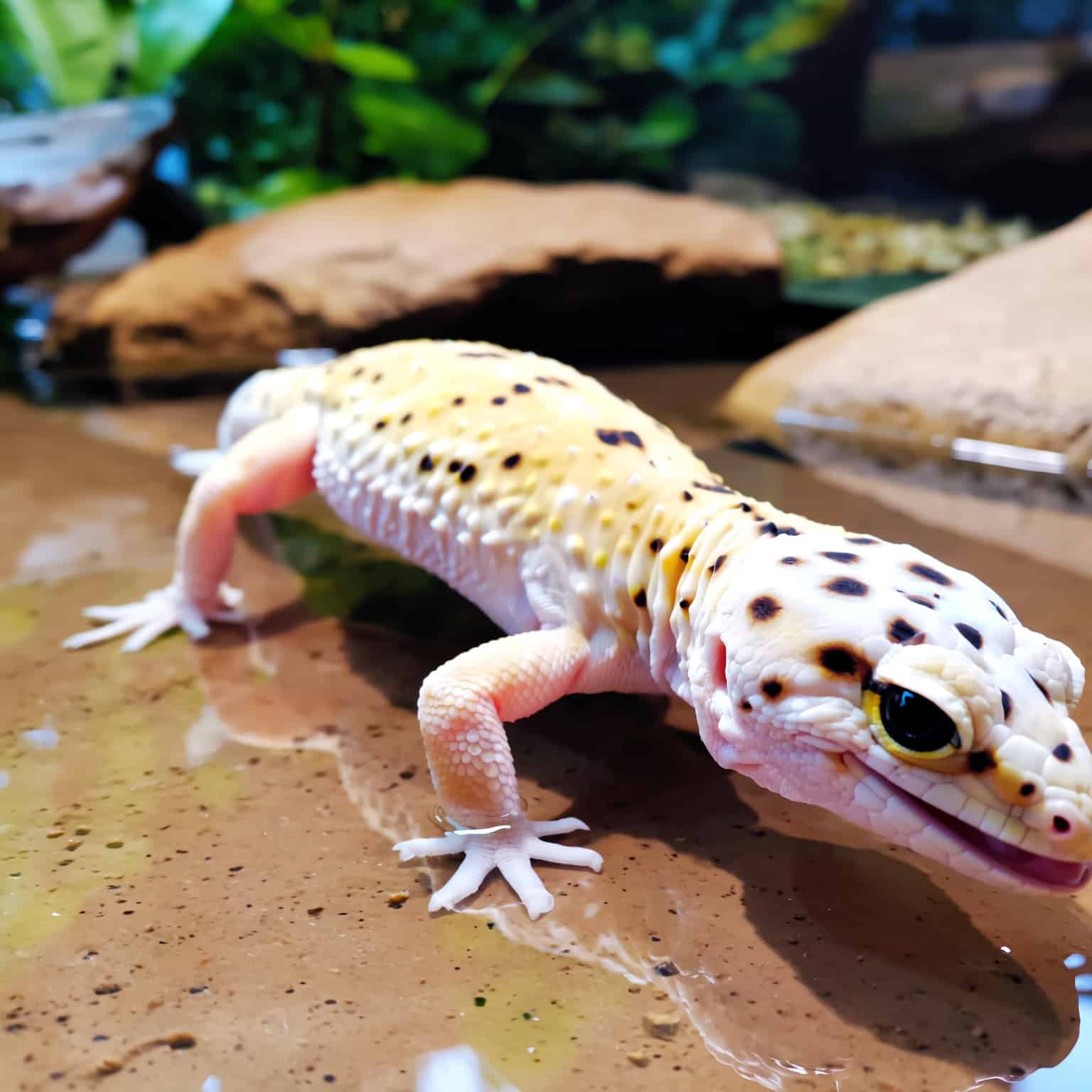
Hydration is a critical aspect of leopard gecko care. Although these reptiles originate from semi-arid regions, they still require constant access to clean water and proper humidity management to stay healthy. Poor hydration can lead to dehydration, shedding problems, and digestive issues.
This comprehensive guide explains everything you need to know about your gecko’s hydration needs—from setting up a water bowl to creating effective humid hides and recognizing the signs of dehydration.
2. Why Hydration Matters for Leopard Geckos
Leopard geckos may not live in tropical rainforests, but water still plays an essential role in their overall health. Proper hydration supports:
- Shedding: Adequate moisture helps geckos shed their skin smoothly. Without it, stuck shed can occur, especially around the toes and eyes (see Shedding & Skin Care for more details).
- Digestion: Water aids in breaking down food and prevents impaction from feeder insects or substrate.
- Organ Function: Hydration keeps the kidneys and other vital organs functioning properly.
- Temperature Regulation: Access to a water source helps geckos manage body temperature during seasonal changes.
In the wild, leopard geckos rely on dew, damp soil, and occasional rain to stay hydrated. In captivity, owners must replicate this balance with a clean water bowl and controlled humidity, as explained in the Tank Setup Guide.
3. Water Sources in Captivity
Leopard geckos obtain hydration in several ways within their enclosure. Providing a combination of sources ensures they stay healthy and prevents dehydration.
3.1 Water Bowl
- Always keep a shallow dish of fresh water in the enclosure.
- The bowl should be heavy enough so the gecko doesn’t tip it over.
- Clean and refill daily to prevent bacterial growth.
- Place the bowl on the cool side of the tank to reduce evaporation.
3.2 Humid Hide
- A humid hide is a small shelter filled with damp moss or paper towels.
- It maintains moisture, especially important during shedding.
- Position it on the warm side of the enclosure so evaporation creates ideal humidity inside.
3.3 Misting (With Caution)
- Unlike tropical reptiles, leopard geckos don’t require heavy misting.
- Lightly misting the humid hide or enclosure walls a few times a week can help in very dry climates.
- Avoid over-misting, as excess humidity may cause respiratory infections (see Health Issues for warning signs).
3.4 Food Moisture
- Feeder insects like crickets and mealworms provide some hydration naturally.
- Gut-loading insects with fruits and vegetables boosts their water content.
Together, these methods mimic the ways geckos hydrate in the wild while adapting to a controlled tank environment.
4. Signs of Dehydration in Leopard Geckos
Even with water sources available, leopard geckos can sometimes become dehydrated. Recognizing the early warning signs is key to preventing serious health issues.
4.1 Physical Symptoms
- Wrinkled or saggy skin – skin loses elasticity when moisture levels drop.
- Sunken eyes – a clear indicator that the gecko is not well hydrated.
- Dry or stuck shed – especially around toes and eyes.
- Visible hip bones or thin tail – often linked to both dehydration and malnutrition.
4.2 Behavioral Changes
- Lethargy – reduced activity or hiding for long periods.
- Loss of appetite – a dehydrated gecko may refuse food.
- Difficulty shedding – repeated stuck sheds even with a humid hide.
4.3 Severe Dehydration
If left untreated, dehydration can lead to organ failure. In this case, immediate veterinary attention is necessary (see Vet & Medical Care for guidance on when to seek help).
5. Preventing Dehydration in Leopard Geckos
Keeping leopard geckos properly hydrated comes down to daily care and enclosure management. Here are the most effective practices:
5.1 Provide Fresh, Clean Water
- Change the water daily to avoid bacteria buildup.
- Use a shallow, sturdy bowl so the gecko can drink safely.
- Place it on the cool side of the enclosure to reduce rapid evaporation.
5.2 Maintain a Functional Humid Hide
- Keep the humid hide filled with moist sphagnum moss or paper towels.
- Re-moisten as needed, especially during the shedding cycle.
- Position it on the warm side of the tank for effective humidity.
5.3 Monitor Tank Humidity
- Ideal ambient humidity is around 30–40%.
- Use a digital hygrometer for accurate readings.
- Adjust with light misting, ventilation, or substrate changes if needed.
5.4 Support with Diet
- Gut-load feeder insects with hydrating foods like cucumber, apples, and leafy greens.
- Offer occasional water-rich treats like hornworms.
5.5 Observe Daily
- Check for signs of dehydration (sunken eyes, wrinkled skin, dry shed).
- Ensure water bowls are not tipped over or contaminated with substrate.
By combining these small but consistent practices, owners can prevent dehydration and promote long-term gecko health, alongside other aspects of Safety & Wellbeing.
6. Risks of Overhydration & Common Mistakes
While dehydration is a bigger threat to leopard geckos, overhydration and excessive humidity can also cause health problems. Striking the right balance is essential.
6.1 Dangers of Overhydration
- Respiratory infections – prolonged humidity above 50% can lead to breathing issues.
- Skin problems – overly damp environments may cause bacterial or fungal growth on the skin.
- Stress – leopard geckos are adapted to arid climates; constant wet conditions can make them uncomfortable.
6.2 Common Mistakes to Avoid
- Over-misting the entire tank – instead, only lightly mist the humid hide or one corner of the enclosure.
- Using deep water bowls – geckos don’t swim; bowls should be shallow to prevent accidents.
- Placing the water dish on the hot side – this increases evaporation and raises humidity too much.
- Neglecting ventilation – stagnant air plus moisture creates an unhealthy environment.
6.3 Striking the Balance
The key is to maintain 30–40% ambient humidity with a localized humid hide. This balance allows geckos to stay hydrated without being exposed to constant dampness.
For more details on managing enclosure moisture, see Humidity & Temperature Management.
7. Seasonal Hydration Adjustments
Leopard gecko hydration needs can vary slightly depending on the time of year and the environment where they are kept. Adjusting care seasonally helps prevent both dehydration and excess humidity.
7.1 Summer Care
- Higher temperatures may cause faster evaporation of water bowls. Refill more frequently.
- Monitor for signs of heat stress and ensure geckos always have access to fresh water.
- If the air is dry due to air conditioning, increase humid hide moisture.
7.2 Winter Care
- Heating equipment can reduce ambient humidity.
- Check the humid hide more often to prevent it from drying out.
- Reduce misting to avoid excess dampness in cooler conditions.
7.3 Brumation Periods
- Some leopard geckos naturally slow down during winter months.
- During this phase, they may drink less and eat less, but a clean water source must always be available.
- Avoid forcing hydration; instead, ensure a balanced environment and monitor for signs of dehydration.
By adapting hydration practices throughout the year, keepers ensure their geckos remain healthy regardless of seasonal changes.
8. How Hydration Links to Shedding, Digestion & Longevity
Hydration does more than just prevent thirst — it directly influences key aspects of a leopard gecko’s health and lifespan.
8.1 Shedding
- Proper hydration ensures the old skin separates smoothly from the new layer.
- A well-maintained humid hide reduces the risk of stuck shed around toes, tail, and eyes.
- Chronic dehydration often leads to incomplete sheds, which can cause infections or loss of digits.
8.2 Digestion
- Water helps break down feeder insects and supports nutrient absorption.
- Dehydrated geckos are more prone to impaction, especially if they ingest substrate.
- Offering gut-loaded, moisture-rich feeders helps balance hydration from within.
8.3 Longevity
- Consistent hydration contributes to a longer, healthier life.
- It reduces strain on kidneys and supports organ function.
- A gecko with proper hydration, balanced diet, and safe habitat can live well beyond 15–20 years in captivity.
Hydration, alongside nutrition and habitat care, forms the foundation of a gecko’s long-term wellbeing. For deeper insights into lifespan management, see Growth & Lifespan.
9. Quick Daily Hydration Checklist for Gecko Owners
To make hydration care simple and effective, here’s a practical checklist owners can follow every day:
- ✅ Refill water bowl with fresh, clean water.
- ✅ Check the humid hide – ensure moss or paper towels are moist (not soaked).
- ✅ Observe your gecko – look for signs of dehydration (skin, eyes, activity).
- ✅ Inspect enclosure humidity – keep it in the 30–40% range.
- ✅ Check for spills – avoid excess water pooling inside the tank.
- ✅ Gut-load feeder insects with water-rich fruits and veggies.
- ✅ Adjust seasonally – more checks in hot summer, less misting in winter.
By following this quick routine, owners can easily prevent hydration issues and support the gecko’s overall health, shedding, and longevity.
10. Conclusion & Final Thoughts
Hydration may seem simple, but for leopard geckos it is a cornerstone of their health. A balance of fresh water, a functional humid hide, and controlled humidity ensures they stay hydrated without being exposed to excessive dampness.
Proper hydration supports smooth shedding, efficient digestion, and long-term organ health, directly influencing how long and how well a gecko lives.
By observing your gecko daily and maintaining a consistent hydration routine, you can prevent common problems like dehydration, stuck shed, or respiratory infections. Alongside proper nutrition (see Feeding & Nutrition) and a safe habitat (see Tank Setup Guide), hydration forms one of the three pillars of responsible leopard gecko care.
Ultimately, hydration is not just about providing water—it’s about creating a stable, healthy environment where your gecko can thrive for years to come.
FAQs – Hydration Tips for Leopard Geckos
Do leopard geckos need a water bowl?
Yes. Leopard geckos must always have access to a shallow, clean water bowl. Even if they drink rarely during the day, they often hydrate at night.
How do I know if my leopard gecko is dehydrated?
Common signs include wrinkled skin, sunken eyes, lethargy, poor appetite, and stuck shed. Severe dehydration may also increase the risk of infections.
What is a humid hide and why is it important?
A humid hide is a small, enclosed area with moist substrate (like moss or damp paper towels). It helps with proper shedding, hydration, and prevents dry skin problems.
What humidity level is best for leopard geckos?
Ambient humidity should stay around 30–40%, while the humid hide should reach up to 70%. Too much overall humidity can cause respiratory infections.
Author

