
Why Heating Matters So Much
Leopard geckos are ectothermic reptiles, meaning they rely entirely on their environment for warmth.
In the wild, they absorb heat from sun-warmed rocks and soil to digest food, move, and regulate metabolism.
In captivity, your gecko depends on you to recreate that same thermal environment.
Without proper belly heat, they can’t digest food properly, leading to impaction and lethargy. Too much heat, on the other hand, causes dehydration and burns.
That’s why choosing the right heating source is one of the most critical parts of your tank setup.
Before comparing the two options, make sure your tank size is appropriate for even heat distribution.
👉 See our Leopard Gecko Tank Size by Age Guide for recommended dimensions by growth stage.
The Two Main Heating Systems
- Under-Tank Heating Mats (UTHs):
- Provide belly heat through conduction.
- Ideal for nocturnal species like leopard geckos.
- Overhead Heat Lamps (Ceramic or Infrared):
- Provide radiant warmth from above.
- Mimic natural sunlight patterns.
Both can work well — but each has specific advantages and challenges. Let’s explore how to pick what’s best for your setup.
Heating Mats (Under-Tank Heat Pads)
How They Work
Heating mats are thin pads that stick underneath the tank floor, warming the substrate and the gecko’s belly.
They are controlled by a thermostat to maintain a steady temperature (around 88–92°F on the warm side).
Advantages of Heat Mats
✅ Natural for Geckos: Belly heat mimics how they warm up in nature.
✅ Energy Efficient: Uses little electricity and keeps temperature stable.
✅ Safe for Nocturnal Behavior: Doesn’t disturb your gecko’s night rhythm.
✅ Simple Installation: Perfect for beginners — just plug into a thermostat.
✅ Works with Solid Lids: Great for tanks where airflow and humidity must stay stable.
Because leopard geckos don’t bask under bright light, under-tank heating remains the gold standard for most enclosures.
🔗 You can find a full starter list of reliable UTH models in the Leopard Gecko Starter Kit Checklist.
Disadvantages of Heat Mats
- ❌ Uneven heating in tall tanks or PVC enclosures with thick bases.
- ❌ Doesn’t warm the air, only the floor surface.
- ❌ Needs close monitoring with a thermostat to avoid burns.
If you’re using a PVC tank, pair your UTH with a small ceramic heat emitter to maintain ambient warmth.
The Glass vs PVC Tanks Guide explains why heat retention differs between materials.
Heat Lamps (Overhead Heating Sources)
How They Work
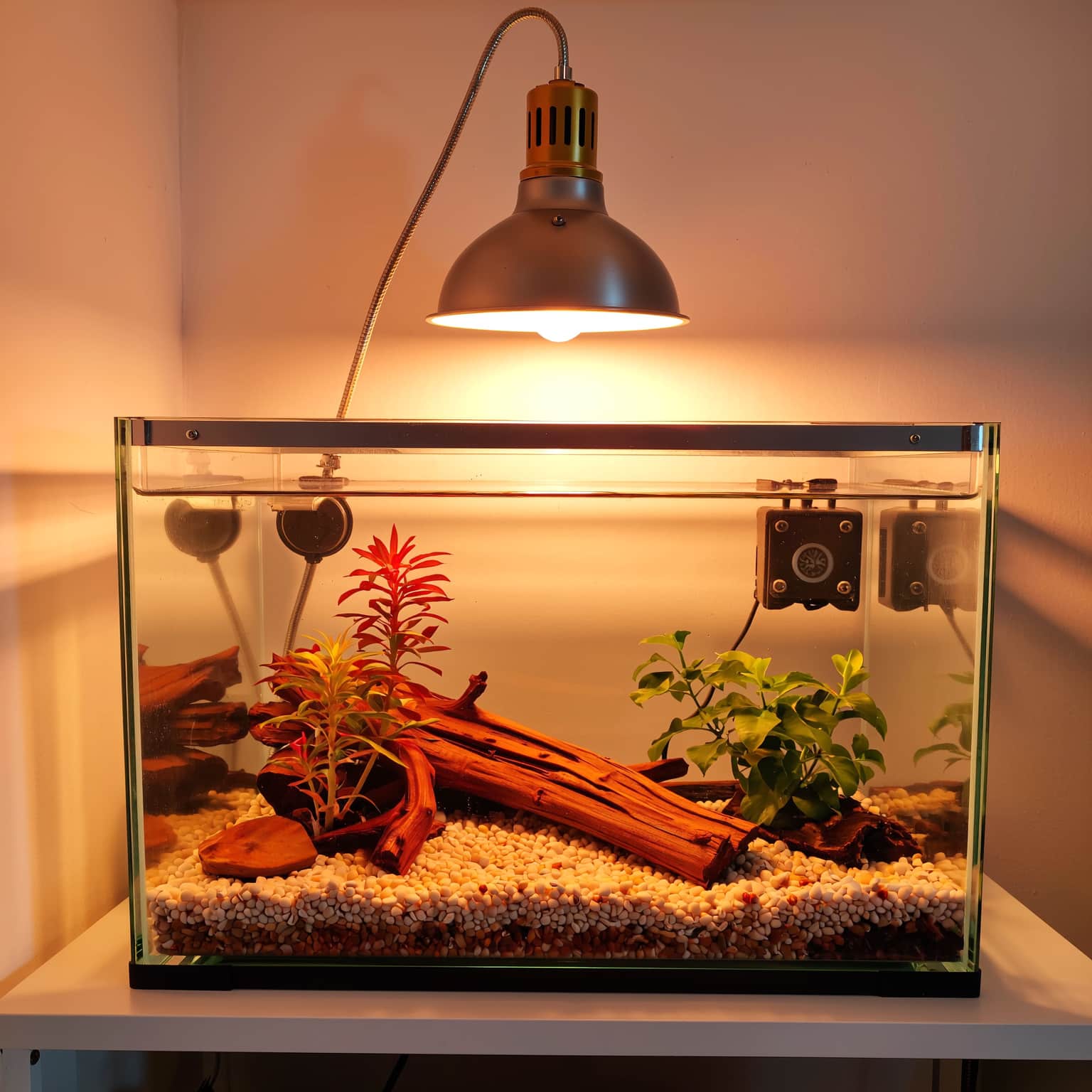
Heat lamps provide radiant warmth from above. They can be ceramic emitters (no light) or infrared/halogen bulbs (visible light).
They’re often used in combination with a UTH or as the main heat source in tall tanks.
Advantages of Heat Lamps
✅ Increases Ambient Air Temperature: Helps maintain 75–80°F cool side temps.
✅ Boosts Day/Night Cycle: Mimics sunlight when used with a timer.
✅ Ideal for Cold Rooms: Adds top-down heat where mats alone struggle.
✅ Easier Adjustment: You can raise or lower the lamp to fine-tune warmth.
Lamps are especially effective for glass tanks in cold climates, where under-tank mats can’t raise the air temperature sufficiently.
For proper fixture safety and placement, see our full Tank Setup Guide — it includes diagrams for safe light distances and thermostat wiring.
Disadvantages of Heat Lamps
- ❌ Can dry out the air too quickly.
- ❌ Some bulbs disturb geckos at night (avoid colored bulbs).
- ❌ Harder to maintain stable gradient without a thermostat.
- ❌ Consumes more electricity.
If you use lamps, always avoid red, blue, or black bulbs — they can stress your gecko’s eyes and disrupt sleep.
Instead, choose ceramic emitters for night use or low-intensity daylight LEDs for rhythm only.
Combining Heat Mats + Lamps
The best of both worlds? Many keepers use a hybrid system — a heat mat for belly warmth and a low-wattage ceramic lamp for air temperature.
When to Combine Both
- You live in a cold home or use a PVC enclosure.
- Your tank struggles to stay above 70°F on the cool side.
- You want to stabilize humidity and prevent condensation.
Example Setup:
| Heat Source | Placement | Purpose |
|---|---|---|
| Heat Mat | Under warm side (bottom) | Belly heat for digestion |
| Ceramic Emitter | Above warm side (top corner) | Raise air temperature |
| Thermostat Probe | On floor above mat | Prevent overheating |
Always connect both to separate thermostats or a dual controller (like Inkbird ITC-306A) for safety.
A hybrid setup gives you full control and is perfect for keepers who want consistency year-round.
For advanced multi-heat setups, visit the Safe Accessories & Monitoring Tools Guide.
Efficiency, Maintenance & Final Recommendation
Energy Efficiency Tips
- Use insulation foam under tanks to reduce heat loss.
- Set your thermostat between 88–90°F instead of maxing out at 95°F.
- Choose ceramic emitters over halogen bulbs for long-term savings.
- Plug both heat sources into smart plugs or timers for automation.
For a more sustainable, low-cost heating approach, check our Budget Leopard Gecko Tank Setups — it explains how to maintain perfect warmth under $150.
Maintenance Routine
- Check temperatures daily with a digital thermometer on each side.
- Test thermostat calibration monthly.
- Clean lamp domes and remove dust regularly.
- Replace heat mats or bulbs every 12–18 months for consistent output.
For cleaning procedures, see the Tank Cleaning Routine Guide — it covers safe methods to maintain heating devices.
Final Recommendation
If you live in a moderate or warm climate, a heat mat with thermostat is the safest and most reliable option.
If your home is cold, drafty, or dry, combine the mat with a ceramic heat emitter for best results.
Avoid visible “night bulbs” and never rely solely on room temperature — your gecko needs precise belly heat for digestion and health.
When installed correctly, both methods can work beautifully — what matters is consistency, thermostat control, and proper monitoring.
FAQs — Heating Mats vs Lamps
Do leopard geckos need a heat lamp or just a mat?
Most thrive with a heat mat alone, but in cold rooms, a lamp can help maintain air temperature.
Are red or blue heat bulbs safe?
No. Colored bulbs disturb sleep and stress geckos. Use ceramic emitters or low UVB LEDs instead.
How warm should the tank be at night?
Keep the warm side around 88°F and allow the cool side to drop to 70–75°F.
Can I use both a lamp and a mat together?
Yes — many keepers combine them for balanced heat and humidity, using separate thermostats for safety.
How do I know if my heat mat is working correctly?
Place a thermometer probe on the floor above it; if it stays within 88–92°F, it’s working perfectly.
Author

