

Leopard geckos may be hardy reptiles, but their health depends heavily on proper heating and lighting. As ectotherms, they rely on external heat sources to digest food, regulate energy, and maintain natural behavior. Without the right setup, geckos can develop appetite loss, stress, and even life-threatening conditions like impaction.
In this guide, we’ll cover everything you need to know about heating and lighting for leopard geckos — from ideal temperatures and heat sources to UVB lighting, day-night cycles, and common mistakes to avoid.
Why Heating and Lighting Are Essential
Ectothermic Needs and Thermoregulation
Leopard geckos don’t generate body heat the way mammals do. Instead, they move between warm and cool zones to regulate temperature. This is why every enclosure needs a temperature gradient.
Impact on Digestion, Appetite, and Behavior
- Digestion: Geckos require belly heat to break down food. Without proper warmth, food may rot in their stomachs, causing impaction.
- Appetite: Low temperatures often lead to refusal to eat, a common concern covered in our guide on why your gecko won’t eat.
- Behavior: Incorrect lighting cycles or poor heating can disrupt sleep patterns and increase stress behaviors like glass surfing.
Proper heating and lighting replicate the gecko’s natural environment, keeping them healthy and active.
Understanding Temperature Requirements
Leopard geckos need specific temperature ranges within their enclosure to stay healthy. These ranges mimic the hot days and cooler nights of their natural desert habitat.
Warm Side Temperatures (88–92°F / 31–33°C)
The warm side is where digestion happens. Place a heat mat under one-third of the tank and ensure the warm hide sits directly over it. Inside the hide, temperatures should stay between 88–92°F.
Cool Side Temperatures (75–80°F / 24–27°C)
The cool side provides relief when your gecko wants to avoid heat. This zone should stay around 75–80°F, offering balance for thermoregulation.
Nighttime Drops and Safe Ranges
At night, temperatures can safely drop to 70°F (21°C). If your home gets colder, use a ceramic heat emitter (CHE) for invisible, non-disruptive warmth. Avoid colored bulbs at night, which disturb your gecko’s natural rhythm.
Failing to maintain these ranges can lead to appetite loss, stress, and shedding issues. If your gecko struggles with skin stuck on toes or tail, check your temps and also review our guide on shedding problems.
Heating Options Explained
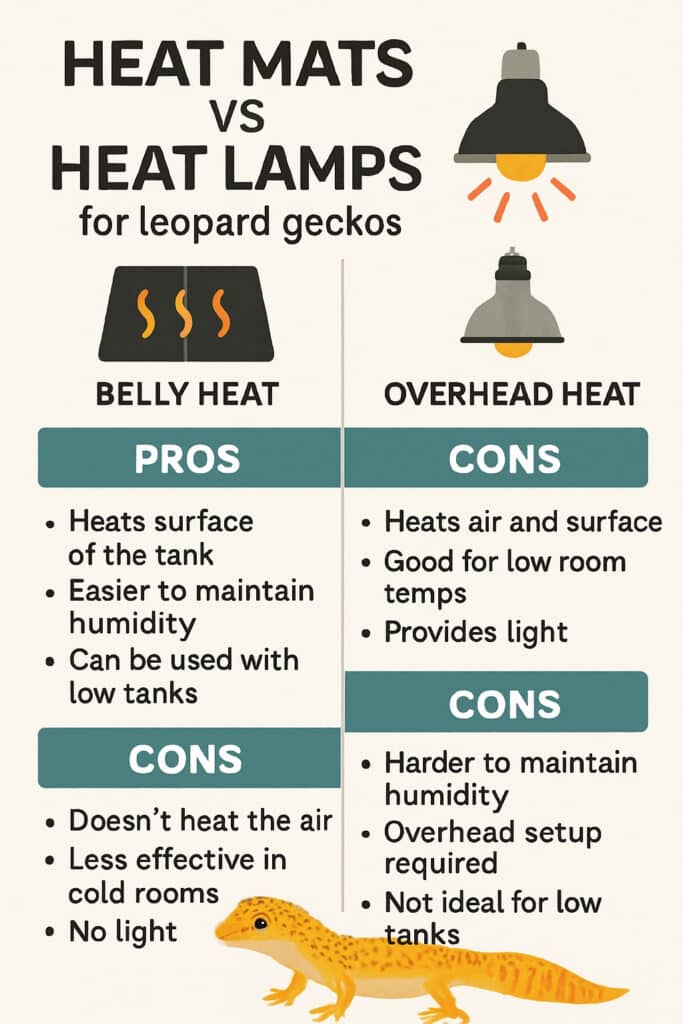
There are several ways to provide heat for leopard geckos, but not all are equally effective. Here’s a breakdown of the most common heating methods.
Heat Mats (Under-Tank Heaters)
- How they work: Stick to the bottom or side of the tank to provide belly heat.
- Why they’re recommended: Leopard geckos need belly heat for proper digestion, making heat mats the #1 choice for most setups.
- Best practice: Always connect to a thermostat to prevent overheating.
Heat Lamps
- How they work: Provide heat from above, warming air and surfaces.
- Pros: Good for creating basking spots and daytime gradients.
- Cons: Do not provide sufficient belly heat on their own. Should only be used alongside a heat mat.
Ceramic Heat Emitters (CHE)
- How they work: Screw into a lamp fixture to emit heat without light.
- Best use: For nighttime heating, since they don’t disturb the gecko’s circadian rhythm.
- Tip: Use with a thermostat for precise control.
Radiant Heat Panels (Advanced Setups)
- How they work: Mounted to the enclosure ceiling, distributing gentle heat evenly.
- Best for: PVC or custom enclosures. Not typically needed in glass tanks.
- Drawback: Expensive compared to mats and lamps.
📝 Tip: Regardless of the heating method, thermostats and digital thermometers are non-negotiable. They keep temperatures consistent and prevent burns. For recommended devices, check our list of the top thermometers for leopard gecko tanks.
Comparing Heat Mats vs Heat Lamps
Many new keepers wonder whether a heat mat or a heat lamp is better for leopard geckos. The truth is, both can work, but they serve different purposes.
Which Is Safer for Digestion?
- Heat Mats: Provide belly heat directly to the gecko’s underside, which is crucial for digestion. Without this, food can remain undigested and lead to impaction.
- Heat Lamps: Warm the air and surfaces but do not heat the ground effectively, making them less reliable for digestion.
👉 Verdict: Heat mats are essential. Heat lamps can be supplemental, but they should not replace belly heat.
Cost and Efficiency Comparison
- Heat Mats: Affordable ($15–$30) and energy-efficient. They run continuously with minimal electricity costs.
- Heat Lamps: Slightly more expensive to operate and require fixtures, bulbs, and frequent replacements.
Best Setups for Beginners vs Advanced Keepers
- Beginners: Stick with a heat mat + thermostat as the primary heat source.
- Advanced Keepers: Combine a heat mat with a low-wattage heat lamp or ceramic heat emitter for a more natural gradient.
For a full breakdown, see our dedicated guide on heat mats vs heat lamps for leopard geckos.
Do Leopard Geckos Need UVB?
One of the most debated topics in leopard gecko care is whether UVB lighting is necessary. Traditionally, keepers relied solely on dietary supplements and belly heat. However, new research shows that low-level UVB can provide health benefits.
Traditional Care Without UVB
- Leopard geckos have been successfully kept for decades without UVB.
- Calcium and vitamin D3 supplements (powdered on feeders) can prevent metabolic bone disease (MBD).
- Many keepers still prefer this method because it’s simple and affordable.
Benefits of Low-Level UVB Exposure
- Vitamin D3 Synthesis: Helps geckos absorb calcium naturally.
- Bone Health: Supports stronger bones and prevents long-term deficiencies.
- Activity & Behavior: Some geckos are more active and display healthier routines under UVB.
Studies show that geckos exposed to low UVB levels (2–5%) may live longer, healthier lives.
Choosing the Right UVB Bulb (2–5%)
- UVB Strength: Stick to low-output bulbs (T5 2–5%).
- Placement: Position above a mesh screen, covering only part of the enclosure so the gecko can self-regulate.
- Cycle: 12 hours on, 12 hours off to mimic natural light.
📝 Tip: If you choose UVB, pair it with a shaded hide so your gecko has the option to avoid direct exposure.
For owners who want a deeper dive into lighting, see our guide on day vs night lighting for leopard geckos.
Day vs Night Lighting Cycles
Leopard geckos are crepuscular, meaning they are most active at dawn and dusk. This makes it especially important to replicate a natural day-night rhythm in captivity.
Natural Crepuscular Activity
- In the wild, geckos hunt and explore during low-light periods.
- A balanced lighting cycle helps maintain these natural behaviors.
- Too much light exposure can cause stress and excessive hiding.
Dangers of Red/Blue Night Bulbs
- Pet stores often market “night glow” red or blue bulbs.
- Leopard geckos can actually see these wavelengths, and the lights disrupt their circadian rhythm.
- Prolonged use may lead to stress, appetite loss, and irregular activity.
Safe Night Heating Alternatives
- Ceramic Heat Emitters (CHEs): Produce heat without light, making them ideal for nighttime warmth.
- Radiant Heat Panels (for advanced setups): Provide consistent overhead heating without disturbing light cycles.
- Room Heating: If household temps stay above 70°F (21°C) at night, no extra heating is needed.
For a full breakdown of how light cycles influence behavior, see our leopard gecko behavior guide.
Monitoring and Regulating Heat
Even the best heating setup won’t work if it isn’t properly regulated. Consistent temperatures are the foundation of good leopard gecko care.
Why Thermostats Are Non-Negotiable
- Heat mats and lamps can overheat if left unchecked.
- A thermostat keeps the temperature within safe ranges, preventing burns and stress.
- Always set the probe on the floor of the warm hide for accurate readings.
Best Thermometers and Hygrometers
- Digital thermometers with probes give the most reliable results.
- Place one probe on the warm side and another on the cool side.
- Combine with a digital hygrometer to track humidity levels in the humid hide.
We’ve reviewed reliable devices in our guide on the top thermometers for leopard gecko tanks.
Common Heating Mistakes to Avoid
- Using stick-on dial thermometers: Inaccurate and misleading.
- No thermostat: Leads to dangerous overheating.
- Incorrect probe placement: Placing the probe in the air instead of on the floor can cause wrong readings.
- Overheating the entire tank: Only one-third of the enclosure should be heated, leaving a cooler zone for thermoregulation.
📝 Tip: Always test your setup for at least 24 hours before introducing your gecko. This ensures the gradient is safe and stable.
Conclusion & Next Steps
Proper heating and lighting are the backbone of leopard gecko care. From maintaining a warm side at 88–92°F for digestion to ensuring complete darkness at night, these details make the difference between a stressed gecko and a thriving one.
Key takeaways:
- ✅ Heat mats are essential for belly heat and digestion.
- ✅ A temperature gradient (warm and cool side) prevents stress.
- ✅ Avoid red/blue bulbs at night — use a ceramic heat emitter if extra warmth is needed.
- ✅ Low-level UVB (2–5%) isn’t mandatory but can improve health and activity.
- ✅ Thermostats and digital thermometers are non-negotiable for safety.
With the right heating and lighting setup, your gecko will be active, eat well, and shed without problems.
For a full overview of enclosures, décor, and substrate to pair with heating, check out our Ultimate Leopard Gecko Tank Setup Guide.
FAQs About Leopard Gecko Heating & Lighting
Can geckos survive without a heat mat?
No. Leopard geckos need belly heat for digestion. Without it, they risk impaction and other health issues. Heat mats are the safest and most reliable option.
Do leopard geckos need light if kept in a bright room?
They don’t require strong overhead lights, but they still benefit from a consistent day-night cycle. Natural ambient light is usually enough, but adding a low-level UVB can improve health and activity.
How often should I replace bulbs and mats?
Heat Mats: Replace every 2–5 years, or sooner if they malfunction.
Heat Lamps: Bulbs typically last 6–12 months.
UVB Bulbs: Replace every 6 months (even if the bulb still looks lit, UVB output fades).
Is a ceramic heat emitter safe for night use?
Yes. CHEs produce heat without visible light, making them the best choice for nighttime heating when needed.
Do leopard geckos need red or blue bulbs at night?
No. These bulbs can disturb their circadian rhythm. Instead, use a CHE or allow the temperature to drop naturally to safe levels.
For further details on light cycles, see our guide on day vs night lighting for leopard geckos.
Author

