

Leopard geckos are among the most docile and beginner-friendly reptiles you can own, but that doesn’t mean they automatically enjoy being handled from day one. Learning how to handle a leopard gecko properly and building trust through gentle taming techniques will help your pet feel safe while strengthening your bond. This guide covers everything from the first day you bring your gecko home to advanced interaction tips that ensure your scaly friend stays happy and stress-free. Whether you’re a first-time reptile owner or looking to improve your handling skills, you’ll find practical steps here for creating a confident, well-adjusted gecko.
Understanding Leopard Gecko Behavior Before Handling
When learning how to handle a leopard gecko, the first and most important step is understanding its natural behavior. Leopard geckos aren’t like dogs or cats that instinctively seek out touch. They’re prey animals in the wild, which means they tend to be cautious and sometimes skittish, especially in new environments. Before you even think about picking yours up, you need to know how to read its body language and understand when it’s open to interaction — and when it’s not.
Reading Body Language
A leopard gecko’s body language is the clearest indicator of its comfort level. Here’s what to watch for:
- Relaxed, slow movements – A calm gecko will move steadily without jerky motions. If it’s exploring without darting away, it feels relatively safe.
- Tail position – A low, relaxed tail means your gecko isn’t alarmed. If the tail is up and slightly waving, that’s a defensive signal — it’s warning you to back off.
- Wide, curious eyes – Alert but relaxed eyes mean your gecko is paying attention without feeling threatened.
- Loud tail thumps or rapid tail vibrations – This is a stress or defense behavior. Give your gecko space when you see this.
Reading these cues consistently helps prevent stressful handling sessions, making the taming process smoother.
When Not to Handle Your Gecko
Even the most tame leopard geckos have times when they simply don’t want to be handled. Picking them up at the wrong time can undo progress in building trust. Avoid handling in these situations:
- Right after feeding – Leopard geckos need time to digest. Handling too soon after a meal can lead to regurgitation and discomfort.
- During shedding, the process can be physically taxing, and your gecko may become more irritable and less receptive to handling.
- When hiding or sleeping – Disturbing a gecko when it’s resting can make it associate your presence with stress.
- Immediately after introducing them to a new environment – Newly acquired geckos should have at least a week to settle before handling attempts.
Recognizing your gecko’s natural rhythms and respecting their boundaries is key to successful taming. It’s not just about handling them, but about ensuring they feel safe and comfortable at every stage.
By starting with observation, patience, and respect, you’re building the foundation for every other taming step in this guide. Once you can read your gecko’s body language like a book, the actual handling process will be far smoother and more enjoyable for both of you.
Preparing the Perfect Environment for Taming
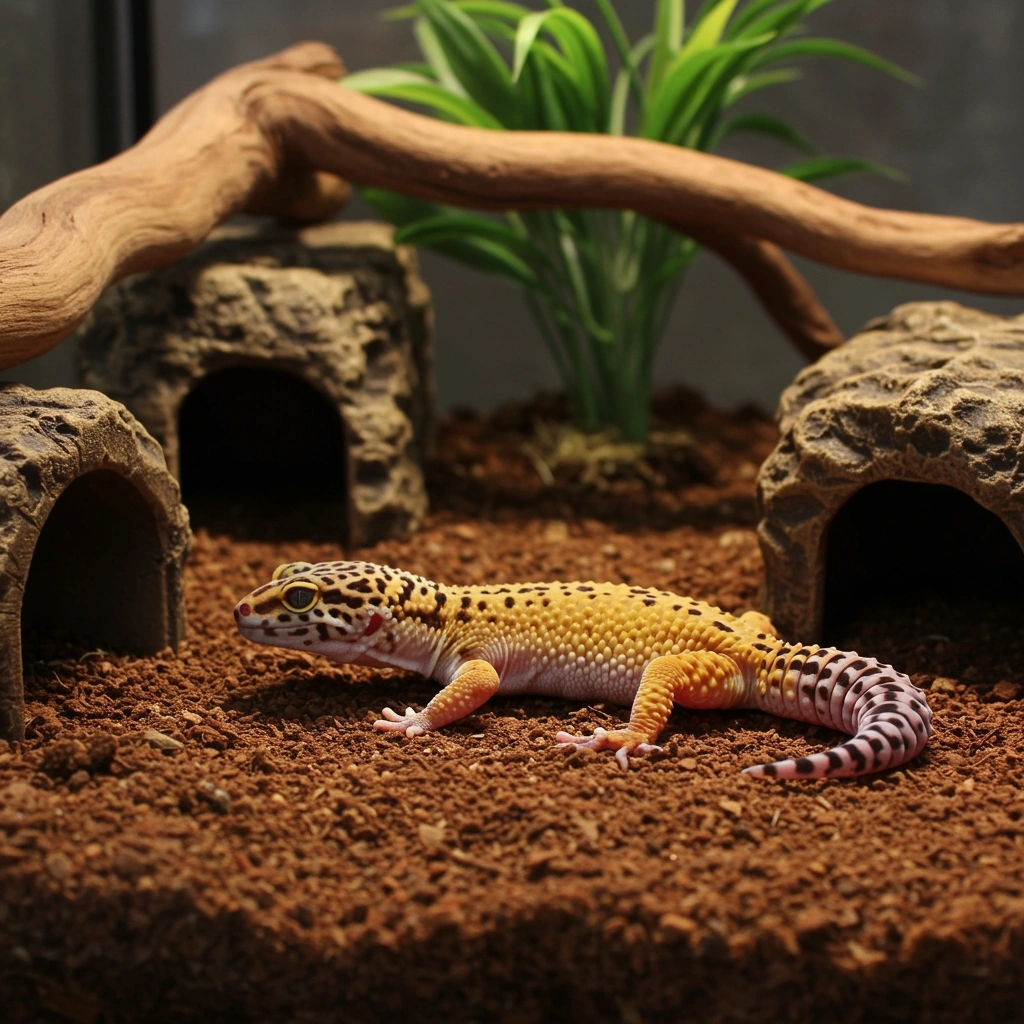
A calm gecko starts with a calm environment. Before you even think about handling, you need to make sure your pet’s enclosure is set up to minimize stress. The more secure your leopard gecko feels in its habitat, the easier it will be to approach and eventually hold.
Creating the right setting isn’t just about comfort — it’s a crucial part of how to handle a leopard gecko successfully. Stress from poor housing conditions can make even the tamest gecko defensive or jumpy.
Creating a Low-Stress Habitat
Leopard geckos thrive when their environment closely mimics their natural desert conditions. Here are the essentials:
- Temperature gradient—Provide a warm side (88–92°F) and a cool side (75–80°F) so your gecko can self-regulate. Use an under-tank heater rather than heat rocks to avoid burns.
- Hiding spots—Offer at least two hides: one on the warm side and one on the cool side. A moist hide also helps with shedding and comfort.
- Lighting—Leopard geckos don’t require UVB lighting, but a day-night cycle helps maintain their biological rhythm.
- Substrate choice—Opt for safe, solid substrates such as reptile carpet, paper towels, or tile. Avoid loose materials like sand, as they can cause impaction if swallowed.
- Low disturbance zone—Keep the enclosure away from loud televisions, speakers, or heavy foot traffic to reduce startle responses.
A gecko that feels secure in its home is far less likely to see you as a threat when you begin the taming process.
Allowing an Adjustment Period
Even if you’ve prepared the perfect enclosure, your leopard gecko will still need time to get used to it—and to you. This adjustment phase is a big part of taming success.
- Wait at least 5–7 days before first handling attempt – Let your gecko explore and get comfortable with its surroundings.
- Build familiarity without touching – Place your hand gently inside the enclosure for a few minutes each day so your gecko can get used to your scent.
- Offer food as a trust builder—hand-feeding small treats like mealworms or dubia roaches helps your gecko associate your presence with something positive.
By giving your leopard gecko a low-stress, secure environment from the start, you’re laying the groundwork for every future interaction. Once your pet feels safe in its own space, it will be far more open to the next steps in taming a leopard gecko and learning that your hands are nothing to fear.
First Handling Steps for a Leopard Gecko

Once your leopard gecko has settled into its environment and started recognizing you as a non-threat, it’s time for the first actual handling attempt. This stage is exciting but also where many new owners make mistakes—moving too fast, grabbing incorrectly, or ignoring the gecko’s cues. The goal here is to keep the experience positive so your pet learns that being picked up isn’t scary.
Approaching Calmly and Slowly
The way you approach your gecko can make or break your first handling session. Sudden movements can trigger a flight response, especially since leopard geckos are prey animals by instinct.
- Move slowly toward the enclosure—approach from the side rather than from above. In the wild, predators come from above, so a hand descending suddenly can be frightening.
- Keep your hand visible—let your gecko see you coming. Place your hand inside the tank slowly, palm facing up, and rest it on the substrate for a few seconds before making contact.
- Let them come to you—often, a curious gecko will walk onto your hand if it feels safe. This voluntary step helps build trust much faster than scooping them up right away.
- Avoid chasing your gecko—if it moves away, give it time and try again later. Forcing interaction can undo taming progress.
Supporting Their Body Properly
When your gecko steps onto your hand or allows you to lift them, proper support is essential for safety and comfort.
- Use both hands if needed—slide one hand under the gecko’s chest and belly while using the other as a platform for its tail and hind legs.
- Keep them low—hold your gecko close to a flat surface or your lap during the first few sessions. This prevents injury if they suddenly jump or dart away.
- Avoid the tail area—leopard geckos can drop their tails when stressed or threatened—a defense mechanism that takes weeks to heal. Always support the base of the tail without gripping it.
- Maintain a calm demeanor—speak softly if you talk to your gecko. Your calm tone and steady hands help reduce anxiety.
During the first few sessions, limit handling to just 3–5 minutes. End on a positive note by returning your gecko gently to its enclosure before it shows signs of stress. Over time, you can slowly increase handling duration as your pet becomes more comfortable.
This slow, respectful introduction is the foundation of how to handle a leopard gecko without damaging trust. By making every early interaction safe and stress-free, you set the stage for a gecko that is relaxed and confident in your hands for years to come.
Building Trust Over Time
When it comes to how to handle a leopard gecko, the secret isn’t in one magical handling session — it’s in consistent, patient interactions over weeks or even months. Trust is built gradually, and every session should leave your gecko feeling safe. Rushing the process or pushing boundaries too soon can undo your progress.
Short, Frequent Handling Sessions
Rather than aiming for long interactions early on, start with brief sessions and slowly extend them.
- Begin with 3–5 minutes per session – End before your gecko starts showing stress signals like tail flicking or trying to run.
- Handle several times a week – Consistency is key. A few short, positive interactions are better than one long, stressful one.
- Increase time gradually – As your gecko becomes more comfortable, add 1–2 minutes per session. Over time, they may tolerate 15–20 minutes of gentle handling.
- Use familiar spaces – Keep early sessions close to their enclosure or in a small, secure area to prevent escapes.
Short, controlled exposure teaches your gecko that handling is a normal, non-threatening part of life.
Positive Associations
One of the fastest ways to speed up taming is to pair your presence with good things. Leopard geckos are highly food-motivated, which you can use to your advantage.
- Hand-feeding treats – Offering a mealworm, waxworm, or dubia roach from your fingers can help your gecko connect your hand with food.
- Linking scent with safety – Wash your hands before handling, but avoid strong perfumes or lotions that could be overwhelming.
- Feeding during or after handling – For example, after a short handling session, place your gecko back in the enclosure and offer a snack. This rewards them for staying calm.
- Balanced diet awareness – If you’re unsure what treats are best for taming, see the detailed Leopard Gecko Feeding Guide for safe options and portion sizes.
By keeping sessions short and sweet, pairing them with rewards, and respecting your gecko’s limits, you’re not just taming them — you’re building a foundation of trust that will make every future handling session smoother.
Over time, a well-tamed leopard gecko will approach you voluntarily, climb onto your hand without hesitation, and remain calm even outside its enclosure. That’s the point where handling becomes not just easy, but enjoyable for both you and your pet.
Advanced Taming Techniques

Once your leopard gecko is comfortable with basic handling, you can take your interactions to the next level. Advanced taming isn’t about fancy tricks — it’s about deepening trust, increasing confidence, and introducing new forms of enrichment. At this stage, your gecko should already tolerate being held calmly and show minimal signs of stress during regular sessions.
Interactive Enrichment
Leopard geckos can benefit from gentle interaction and safe exploration outside their enclosure. The goal is to give them new sensory experiences while still keeping safety and comfort as top priorities.
- Petting zones – Most leopard geckos tolerate gentle strokes along their head, back, and sometimes under the chin. Avoid the tail unless your gecko has shown it’s completely relaxed with handling.
- Safe exploration spaces – Set up a secure, escape-proof area like a tabletop surrounded by barriers or a soft playpen. Allow your gecko to explore at its own pace.
- Supervised outdoor time – If weather is warm and safe, a short, shaded outdoor session in a secure reptile enclosure can provide enriching natural scents and sights.
- Climbing enrichment – Introduce low climbing structures or textured surfaces in your supervised area to engage natural instincts without risk of injury.
These experiences stimulate curiosity while reinforcing the idea that you are a source of interesting, safe activities.
Recognizing and Respecting Limits
Even with advanced taming, your gecko will have moments when it needs a break. Overstepping their comfort zone can undo weeks of progress.
- Watch for subtle stress cues – Faster breathing, tail twitching, or sudden stillness can mean your gecko is becoming overwhelmed.
- End on a good note – Always finish a session before your gecko becomes restless. That way, the last memory of the interaction is positive.
- Avoid overexposure – Advanced handling doesn’t mean constant handling. Balance interaction with plenty of downtime.
- Adapt for personality – Some leopard geckos naturally enjoy more interaction, while others prefer minimal handling. Respecting individual temperament is part of being a responsible owner.
At this stage, you’re not just learning how to handle a leopard gecko — you’re refining the relationship so your pet is genuinely comfortable and engaged in your presence. The trust you’ve built now will make future care tasks, like vet visits or enclosure cleaning, far less stressful for both of you.
Common Handling Mistakes and How to Avoid Them
Even with the best intentions, many new owners unknowingly make handling mistakes that slow down the taming process or even cause their gecko to become more skittish. Knowing these pitfalls — and how to avoid them — is essential for anyone learning how to handle a leopard gecko successfully.
Overhandling
One of the most common errors is handling your gecko too much, too soon. While interaction is important, leopard geckos need time alone to feel secure.
- Why it’s harmful – Overhandling can lead to stress, reduced appetite, and even health problems if your gecko feels constantly threatened.
- How to prevent it – Limit early sessions to just a few minutes, gradually increasing as your gecko becomes more comfortable. Let your gecko’s body language guide you.
- Signs you’re overhandling – If your gecko hides more often, refuses food, or becomes unusually defensive, it’s time to scale back.
Ignoring Signs of Illness or Stress
Handling should always be secondary to your gecko’s well-being. If your pet is unwell or highly stressed, taming can wait.
- Behavioral signs of stress – Tail twitching, rapid movements, prolonged hiding, or loud tail thumps.
- Physical signs of illness – Weight loss, lethargy, cloudy eyes outside of shedding, or visible injuries.
- Why it matters – Handling a sick or stressed gecko can make recovery harder and create negative associations with your presence.
- What to do instead – Give your gecko space and focus on proper husbandry, diet, and environment until they are healthy and calm again.
By avoiding overhandling and staying attentive to your gecko’s needs, you preserve the trust you’ve worked so hard to build. Mistakes can happen, but catching them early prevents long-term setbacks in the taming process.
When you know what not to do, your journey in learning how to handle a leopard gecko becomes smoother, safer, and far more rewarding — for both you and your scaly friend.
Conclusion
Learning how to handle a leopard gecko is a journey that blends patience, observation, and respect for your pet’s boundaries. From understanding body language to preparing the perfect habitat, the first steps you take set the tone for the entire relationship. By using short, consistent handling sessions, rewarding your gecko with treats, and gradually introducing new experiences, you can transform even a shy gecko into a confident, relaxed companion.
The taming process isn’t about forcing interaction — it’s about earning trust. Respect your gecko’s signals, avoid common handling mistakes, and always end on a positive note. Over time, these efforts will pay off with a gecko that’s comfortable, easy to handle, and a joy to interact with.
Building this bond also depends on the basics of proper care, including a secure enclosure, correct temperatures, and a safe substrate. These fundamentals, such as those outlined in the complete leopard gecko care guide, create the foundation for stress-free handling and long-term trust.
🦎 “Discover everything you need to know about leopard geckos – visit Reptizen today!”
FAQs
Do geckos get attached to their owners?
Leopard geckos don’t form emotional attachments the way mammals do, but they can recognize you by sight, scent, and routine. Over time, they learn to associate you with safety, food, and positive experiences, which can create a form of trust-based bond.
How to make your gecko trust you?
Trust comes from consistent, calm interaction. Move slowly, offer food by hand, and avoid handling during stressful times. Following the gradual approach in this guide is the best way to build a strong, trusting relationship.
Do geckos like when you talk to them?
While they can’t understand words, the tone and consistency of your voice can be soothing. A calm, gentle voice can help your gecko feel more at ease during handling.
How to get a house gecko to trust you?
Even though house geckos are more skittish than leopard geckos, the principles are the same — slow movement, gentle handling, and a secure habitat help them relax over time.
Where do geckos like to be petted?
Most leopard geckos tolerate gentle strokes along their head, back, and sometimes under the chin once they are fully tame. Avoid touching the tail unless your gecko is completely relaxed.
How do I bond with my gecko?
Bonding is about trust. Consistent feeding, calm handling, and respecting your gecko’s signals will help them associate you with safety and care.
How to tell when a gecko is happy?
A happy gecko will have a relaxed body posture, steady movements, and may willingly approach you. They may also explore their enclosure confidently without hiding all the time.
Do geckos like to be held?
Some leopard geckos enjoy short, calm handling sessions, while others prefer minimal handling. Pay attention to your gecko’s personality and adjust accordingly.
Why do leopard geckos sploot?
When a gecko sploots — flattening its belly against the ground — it’s usually absorbing warmth from a surface or simply relaxing in a comfortable position.
Author

