
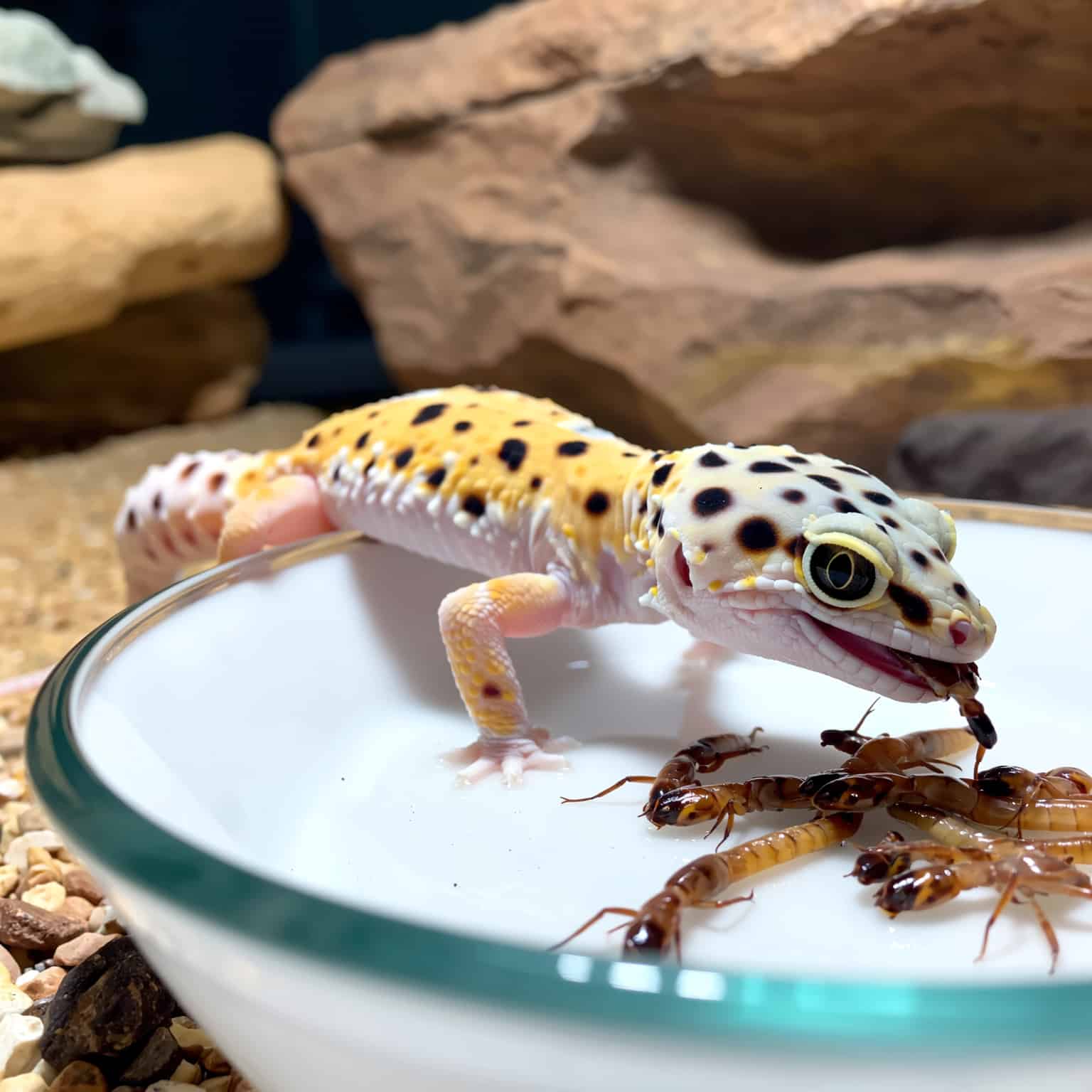
Feeding leopard geckos might look simple at first glance, but the right schedule depends on their age and stage of growth. Hatchlings, juveniles, and adults all have different nutritional needs and feeding frequencies. Getting this balance right is crucial for healthy growth, preventing obesity, and supporting a long lifespan.
Unlike some reptiles that eat vegetables or fruits, leopard geckos are strict insectivores. This means every meal should be carefully chosen and offered at the right time. In this article, we’ll break down feeding schedules by age, explain how to monitor portion sizes, and highlight mistakes to avoid.
➡️ If you’re just starting, check the full [Complete Leopard Gecko Care Guide] for housing, health, and handling basics.
Feeding Hatchlings (0–3 months)
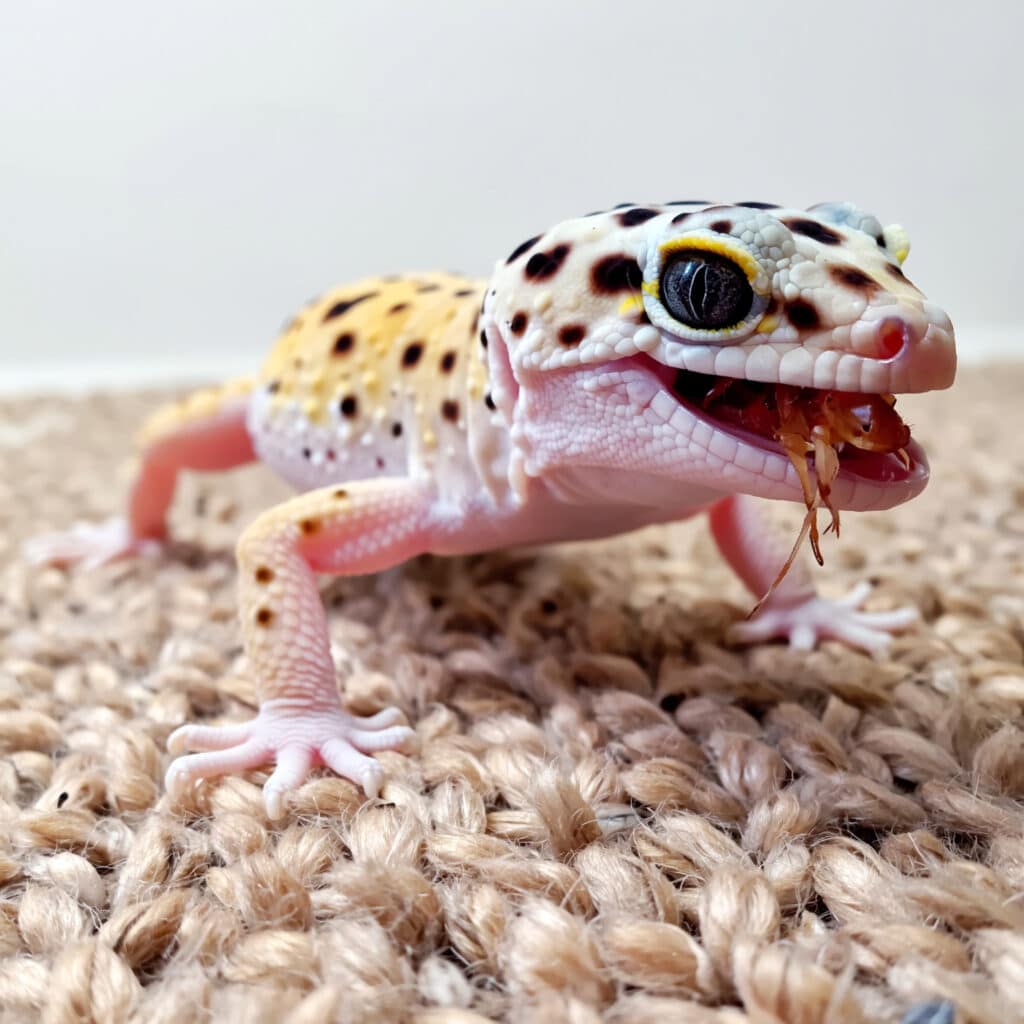
Hatchlings grow rapidly during their first weeks of life, which means their feeding schedule must be frequent and consistent. At this stage, they require small, soft-bodied insects that are easy to digest.
A baby leopard gecko should be offered food once per day, typically 5–7 appropriately sized crickets or mealworms. The insects should never be larger than the space between the gecko’s eyes, as oversized feeders can cause impaction or digestive stress.
Calcium supplementation is especially important for hatchlings. Dusting feeders with calcium and vitamin D3 several times per week supports proper bone development and prevents metabolic bone disease. More details on the role of supplements are discussed in the article on Calcium & Vitamin Needs for Leopard Geckos.
For variety, hatchlings can be introduced to other safe options like dubia roach nymphs, provided they are small enough. A detailed comparison of feeder choices can be found in the guide on Best Insects for Leopard Geckos.
Feeding Juveniles (3–10 months)
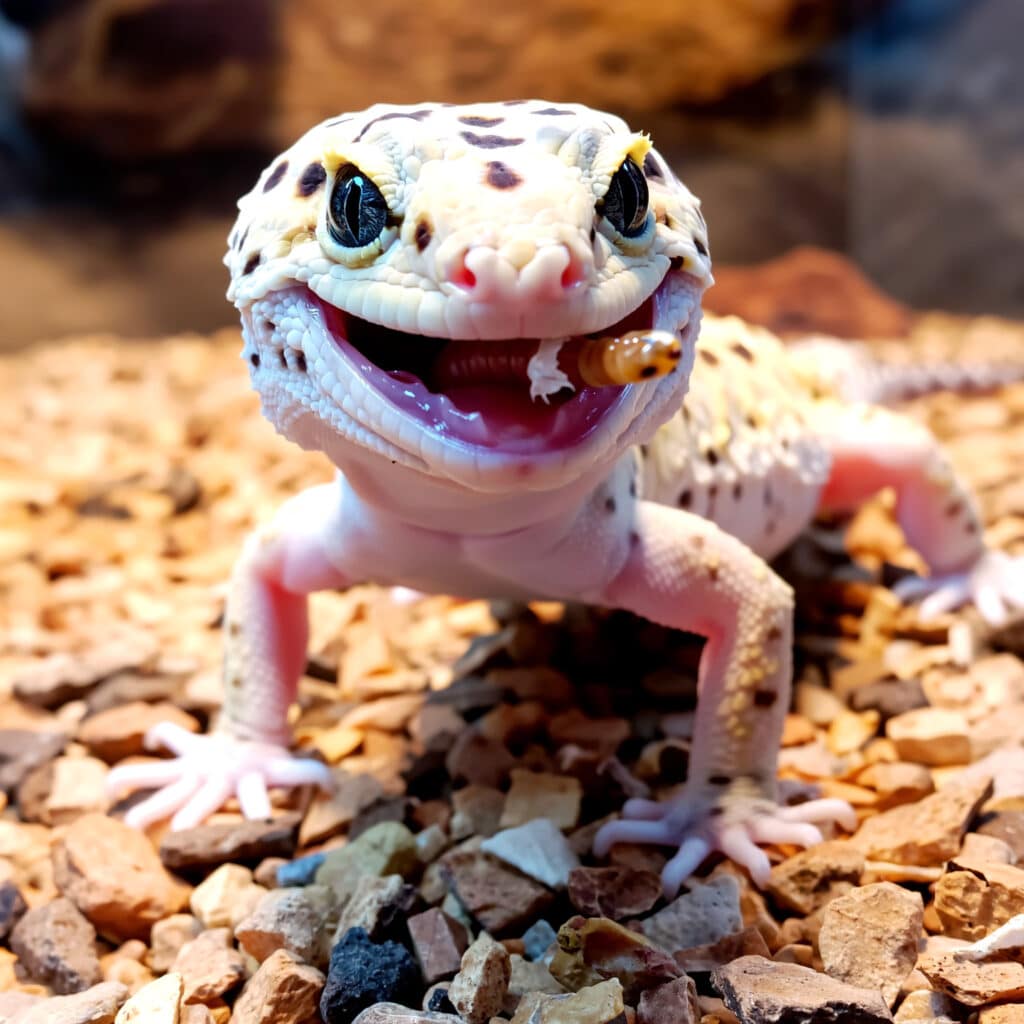
As leopard geckos transition from hatchlings to juveniles, their growth remains steady but not as rapid as in the first few months. Feeding frequency can be slightly reduced, though their diet should still focus on variety and balanced nutrition.
Juveniles generally thrive when fed every other day, with 6–8 medium-sized insects per meal. Crickets, dubia roaches, and mealworms remain reliable staples at this stage. Occasional treats such as superworms can be introduced, but only in moderation due to their higher fat content.
Since juveniles are still building strong skeletal structures, calcium supplementation continues to be essential. Most keepers dust insects with calcium powder at least three times per week. A broader overview of supplementation schedules and gut-loading practices is available in the Feeding & Nutrition hub.
Portion sizes should always be monitored. Uneaten insects should not be left inside the tank, as they may bite or stress the gecko. Adjustments may also be necessary depending on the individual’s metabolism, growth rate, and activity level.
Feeding Adults (10+ months)
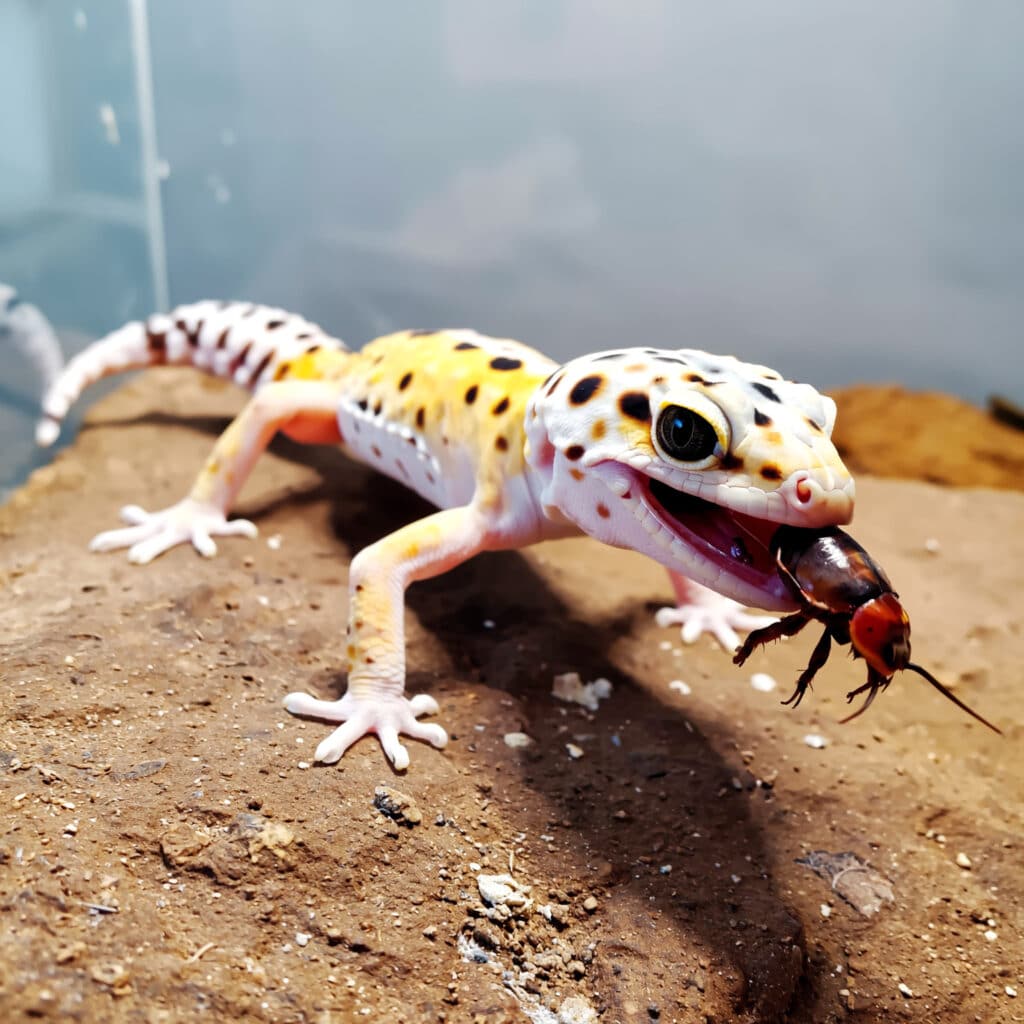
Once leopard geckos reach adulthood, their metabolism slows and their growth stabilizes. At this stage, feeding should be adjusted to prevent unnecessary weight gain while still maintaining proper nutrition.
Adult geckos typically do best when offered food two to three times per week, with about 6–8 large insects per feeding. Staple options include dubia roaches, mealworms, and crickets. High-fat insects such as waxworms or superworms can be given sparingly, but they should never replace the main diet.
Monitoring body condition becomes critical in adulthood. A plump, rounded tail indicates healthy fat reserves, but excessive body weight can lead to obesity and related health problems. Practical advice on maintaining balance is outlined in the cluster article on Obesity Prevention in Leopard Geckos.
Supplements remain important even in adulthood. Calcium and vitamin D3 should be provided regularly, though frequency can be slightly reduced compared to juveniles. Owners who choose to use UVB lighting may adjust supplement schedules accordingly, depending on the strength and duration of UVB exposure.
Feeding Tips & Common Mistakes
Even experienced keepers can make errors in feeding routines. Understanding the most common mistakes helps ensure leopard geckos receive consistent, safe, and healthy nutrition.
Portion Control
Overfeeding is one of the main risks for adult geckos. While a healthy gecko should have a plump tail, excess body fat can lead to liver problems and reduced lifespan. More strategies on managing diet are explored in the guide on Obesity Prevention in Leopard Geckos.
Uneaten Insects
Leaving live insects inside the enclosure is another frequent error. Crickets, in particular, can bite geckos while they rest, causing stress and injury. Uneaten feeders should always be removed after each session.
Feeding at Night
Leopard geckos are crepuscular, meaning they are most active during twilight and night hours. Offering food during the evening often results in better feeding responses. Details on this routine are discussed further in Feeding Leopard Geckos at Night.
Picky Eaters
Some geckos may refuse certain feeders or stop eating altogether for short periods. While occasional fasting is normal, consistent refusal can signal underlying health issues or environmental stress. Helpful solutions are provided in the article on Feeding Picky Leopard Geckos.
Conclusion
Establishing the right feeding schedule is one of the most important aspects of leopard gecko care. Hatchlings need daily meals to fuel rapid growth, juveniles thrive on an every-other-day routine, and adults remain healthy with two to three feedings per week. Adjusting portion size, supplementing with calcium, and offering a variety of insects ensures balanced nutrition at every stage of life.
Feeding practices are closely tied to overall wellbeing, from growth and shedding to long-term health. Owners who want a broader view of diet, supplementation, and gut-loading can refer to the Feeding & Nutrition hub, while those seeking a complete overview of husbandry will find the Leopard Gecko Care Guide a valuable resource.
🦎 “Discover everything you need to know about leopard geckos – visit Reptizen today!”
FAQ Section – Expert Answers
What is the best feeding schedule for Leopard Geckos?
For hatchlings, feed daily with as many small insects as they can eat in 10–15 minutes. Juveniles should eat every other day, while adults do well with 2–3 feedings per week. Adjust portions based on activity level, age, and weight.
Can Leopard Geckos go 4 days without food?
A healthy adult leopard gecko can safely go 4 days without eating, but this should not be routine. Hatchlings and juveniles need more frequent feeding to support growth, and prolonged fasting in younger geckos can lead to health issues.
Should I feed my leopard gecko at night or day?
Feed leopard geckos in the evening, ideally 1–2 hours after lights go off. This aligns with their nocturnal nature and ensures they are alert, active, and ready to hunt.
How often should you mist your leopard gecko tank?
Mist the moist hide lightly every 2–3 days to maintain humidity for shedding. Avoid over-misting the entire tank, as high humidity can cause respiratory problems.
Should Leopard Geckos be in the dark at night?
Yes. Leopard geckos are nocturnal and rely on darkness for their natural activity cycles. Use a low-output heat source for nighttime warmth instead of bright lights.
Author

