
Introduction
As leopard geckos age, their needs change. While adults are generally hardy, seniors (10+ years) require adapted husbandry to remain comfortable and healthy. Their metabolism slows, their immune system weakens, and their activity decreases.
Senior care goes beyond regular feeding and cleaning—it involves adjusting diet, monitoring health more closely, and creating a safer enclosure to prevent injuries. These adjustments ensure that leopard geckos continue to thrive well into their later years.
This cluster provides practical tips on feeding, health monitoring, habitat modifications, and stress reduction to help older geckos live long and fulfilling lives.
Adjusting Diet for Senior Geckos
Senior leopard geckos often experience changes in appetite, chewing ability, and digestion speed. Adapting their diet ensures they continue to receive proper nutrition without unnecessary stress.
1. Softer Feeders
- Some seniors struggle with hard-shelled insects like mealworms.
- Offer softer options such as silkworms, black soldier fly larvae, or pureed insect mixes.
2. Portion Control
- Metabolism slows with age, so excessive feeding can lead to obesity.
- Feeding 2–3 times per week is usually sufficient.
3. Supplements Remain Crucial
- Calcium and vitamin D3 should still be provided, even though growth has stopped.
- Supplements help maintain bone strength and organ health.
4. Monitor Appetite
- Sudden appetite loss may indicate underlying illness.
- Dietary preferences and frequency adjustments are detailed further in the Feeding & Nutrition pillar.
A senior-friendly diet is one of the most important ways to extend a leopard gecko’s life and ensure comfort in its later years.
Health Monitoring for Senior Geckos
Older leopard geckos are more vulnerable to illness, making regular observation and veterinary care essential.
1. Weight Tracking
- Weigh weekly with a digital scale.
- Unexplained weight loss is one of the earliest signs of disease.
2. Physical Examination
- Check for dull eyes, retained shed, or unusual lumps.
- Monitor skin condition, as seniors may shed less efficiently.
3. Behavior & Activity
- Reduced movement is normal with age, but excessive lethargy may signal illness.
- Observe feeding response and interaction with their environment.
4. Veterinary Visits
- Annual checkups are recommended, even if no obvious problems are present.
- Exotic vets can perform fecal tests for parasites and detect age-related organ issues.
- More details are explained in the Vet & Medical Care cluster.
Consistent health checks allow owners to catch problems early, extending both lifespan and quality of life.
Habitat Modifications for Seniors
As leopard geckos age, their physical abilities decline. Simple enclosure adjustments can make life easier and safer for them.
1. Accessibility
- Provide low hides and remove tall climbing décor that could cause falls.
- Use gentle ramps instead of steep structures.
2. Substrate Choice
- Seniors may have thinner, more fragile skin.
- Opt for smooth, non-abrasive substrates like reptile carpet, tile, or paper towels.
3. Heating Stability
- Aging geckos are less tolerant of temperature fluctuations.
- Double-check thermostat accuracy and provide a steady heat gradient.
4. Hydration Support
- Ensure easy access to a shallow water dish.
- Add a humid hide to prevent shedding problems.
5. Comfort Enrichment
- Gentle enrichment like soft artificial plants and stable décor provide stimulation without risk.
- More setup ideas are covered in the Tank Décor & Enrichment pillar.
These small modifications reduce stress and injury risks, giving older geckos a more supportive living space.
Stress Reduction in Senior Geckos
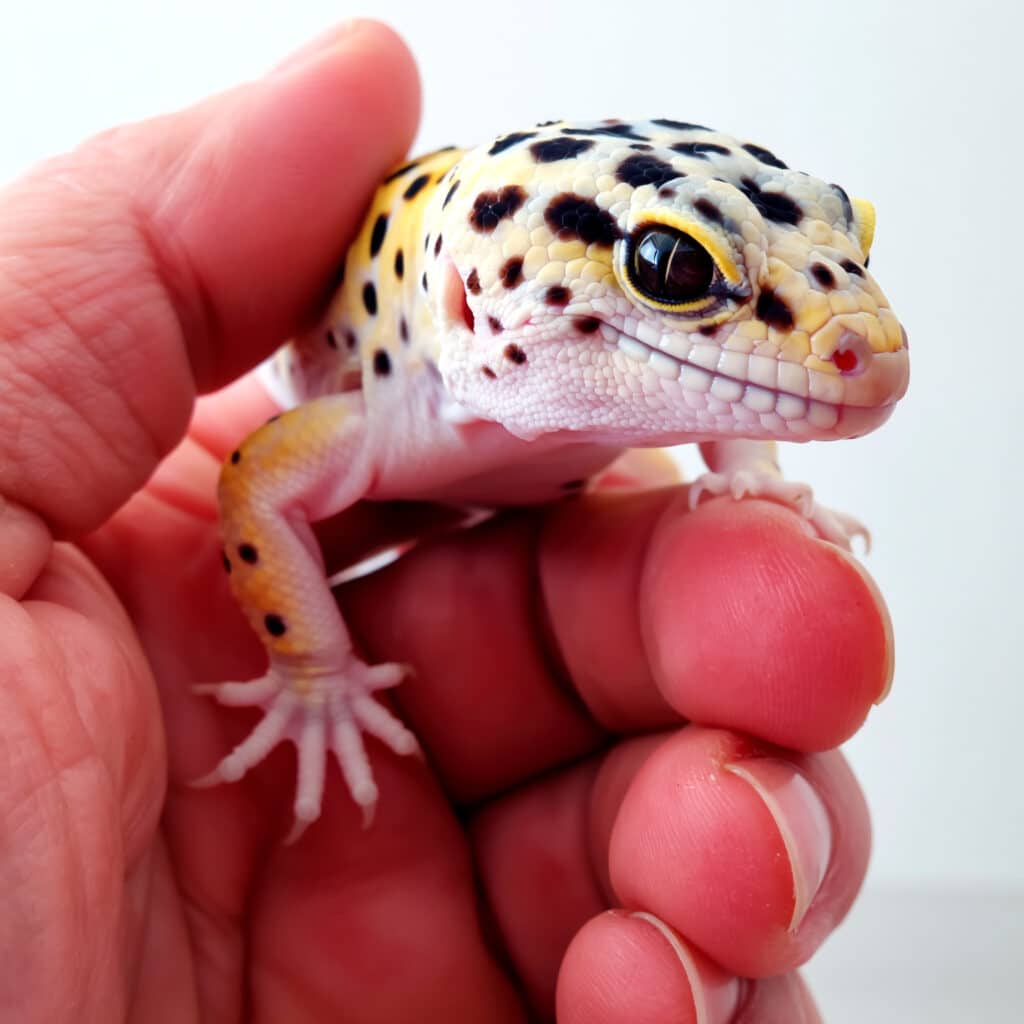
Senior leopard geckos have less energy to cope with stress. Minimizing disruptions helps them stay healthy and maintain appetite.
1. Gentle Handling
- Limit handling sessions to short, calm interactions.
- Avoid handling immediately after feeding or shedding.
- Guidance on safe interaction is detailed in the Handling & Bonding pillar.
2. Consistent Routine
- Keep feeding and lighting schedules predictable.
- Sudden changes can unsettle older geckos.
3. Quiet Environment
- Reduce noise and vibrations around the enclosure.
- Keep the tank away from busy walkways, pets, or loud appliances.
4. Reduce Competition
- House senior geckos individually to avoid stress from dominance or food competition.
5. Observe Behavioral Signals
- Seniors may show stress through excessive hiding, refusal to eat, or lethargy.
- These behaviors overlap with early illness signs, making close monitoring essential.
Reducing stress allows older geckos to conserve energy for digestion, healing, and general wellbeing.
Conclusion
Caring for a senior leopard gecko requires a thoughtful shift in husbandry. While younger geckos grow rapidly and show resilience, seniors need gentler diets, closer health monitoring, safer enclosures, and reduced stress to maintain quality of life.
Small adjustments—such as providing softer insects, lowering hides, and weighing regularly—help detect problems early and keep older geckos comfortable. Annual veterinary checkups, discussed in Vet & Medical Care, are invaluable in spotting age-related issues before they become severe.
This cluster ties directly into the broader Growth & Lifespan pillar, reminding keepers that leopard geckos are long-lived companions. With attentive care, seniors can continue to thrive well into their late teens or even twenties.
FAQs – Senior Care Tips for Leopard Geckos
What age is a leopard gecko considered a senior?
Most leopard geckos are considered seniors at 10 years or older, though some may show age-related changes earlier.
How often should I feed an older leopard gecko?
Senior geckos usually do well with 2–3 feedings per week, with softer, easy-to-digest insects.
What health problems are common in senior leopard geckos?
Older geckos may face weight loss, organ decline, shedding issues, or metabolic concerns, requiring closer monitoring.
How can I make my senior leopard gecko more comfortable?
Provide low hides, stable heating, soft substrate, and gentle handling, while reducing stress from noise or competition.
Author

