
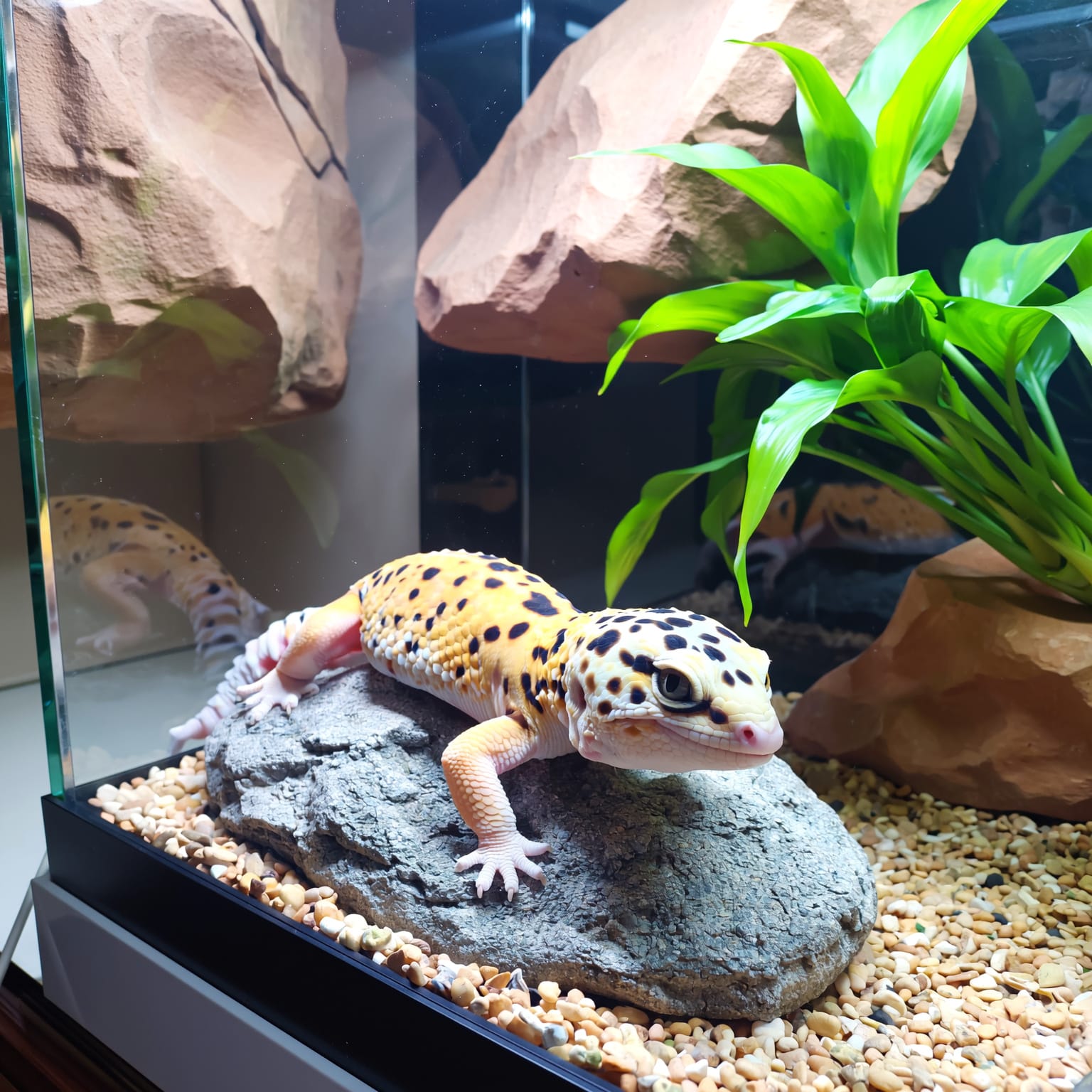
Leopard geckos are desert reptiles, but that doesn’t mean they can thrive in completely dry conditions. In fact, maintaining the right humidity levels is crucial for shedding, hydration, and overall health. Too little humidity can cause stuck shed, while too much can lead to respiratory issues.
In this guide, we’ll cover the ideal humidity range for leopard geckos, how to measure it accurately, and practical tips for creating a healthy environment without risking mold or stress.
Why Humidity Matters for Leopard Geckos
Role of Humidity in Shedding
Leopard geckos shed their skin regularly as they grow. Proper humidity — especially inside a humid hide — helps the skin loosen and peel away naturally. Without it, geckos may experience retained shed around the toes, tail, or eyes, which can lead to circulation problems and infections.
Impact on Respiratory Health and Hydration
- Too Low: Chronic dehydration, difficulty shedding, and lethargy.
- Too High: Respiratory infections from mold and bacterial growth.
- Balanced Humidity: Keeps skin healthy, supports natural hydration, and prevents health complications.
If your gecko struggles with incomplete sheds, our shedding problems guide explains how to fix and prevent stuck skin safely.
Ideal Humidity Ranges

Leopard geckos thrive in arid environments, but their tanks should not be bone dry. The key is balancing a generally low-humidity enclosure with a moist microclimate for shedding.
General Tank Humidity (30–40%)
- The enclosure as a whole should stay between 30–40% relative humidity.
- This range mimics their natural desert habitat, where the air is dry but geckos can retreat to burrows with higher humidity.
- Too much moisture in the full tank encourages mold and bacteria.
Humid Hide Range (60–70%)
- Inside the humid hide, aim for 60–70% humidity.
- This helps soften old skin during shedding and prevents stuck shed on toes and eyes.
- The humid hide should always be available, not just during shed cycles.
Seasonal or Regional Adjustments
- Dry Winter Climates: Indoor heating can reduce tank humidity — you may need to moisten the humid hide more frequently.
- Humid Regions: If ambient humidity is already high, keep the hide drier to avoid excessive moisture buildup.
Humidity works hand in hand with temperature — if the warm side is too cool, evaporation drops and the humid hide won’t function properly. For full setup advice, check our tank setup guide.
Tools to Measure and Monitor Humidity
You can’t manage what you don’t measure. Many new keepers rely on cheap stick-on gauges, but these are notoriously inaccurate. For leopard geckos, precise monitoring is essential.
Digital Hygrometers vs. Analog Gauges
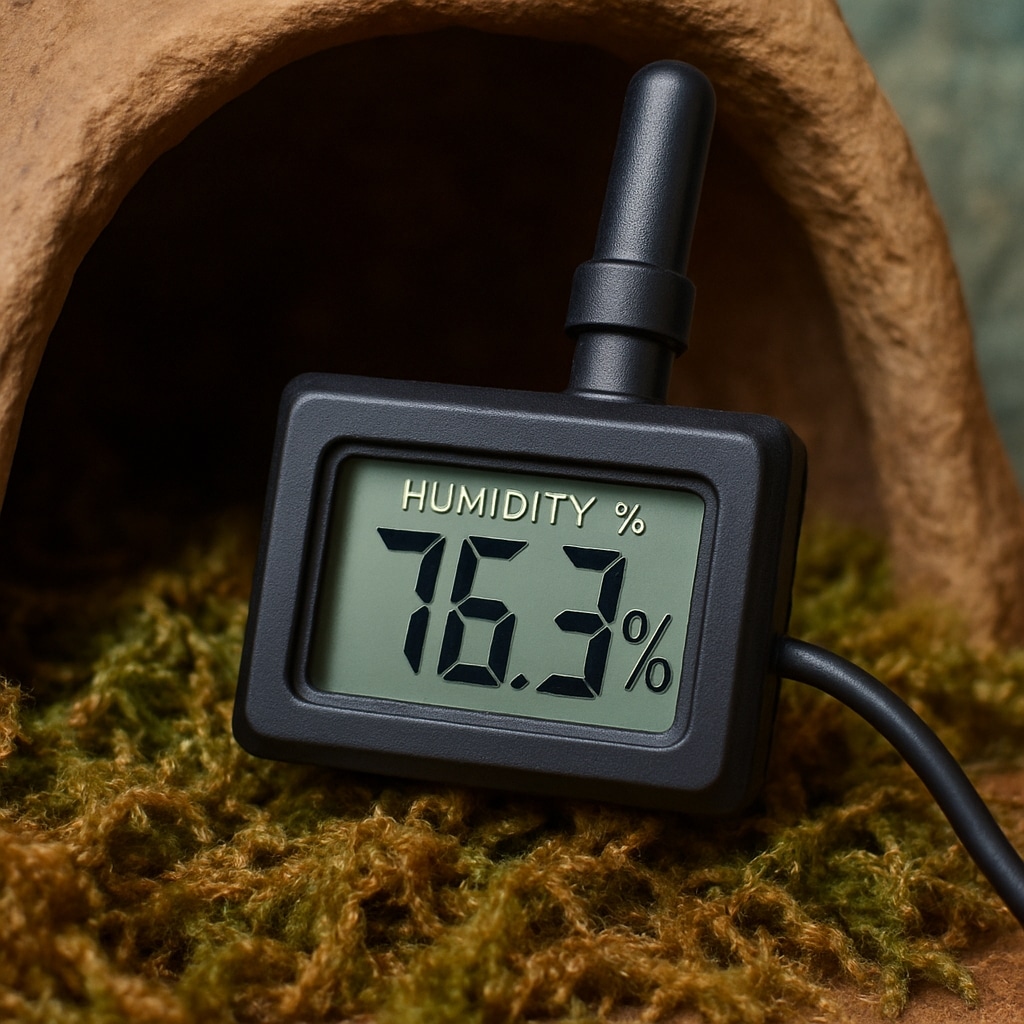
- Digital Hygrometers: Far more accurate and reliable than analog. Many models include probes that can be placed directly inside hides.
- Analog Gauges: Inexpensive but often off by 10–20%, making them unreliable for reptile care.
Best Placement for Accurate Readings
- Place the probe of a digital hygrometer inside the humid hide — this is where humidity matters most.
- Keep a second hygrometer in the general tank area to monitor ambient humidity (should stay around 30–40%).
- Avoid placing hygrometers directly under heat lamps or CHEs, as heat can distort readings.
By monitoring correctly, you’ll catch humidity issues early before they lead to shedding problems or even broader health issues in leopard geckos.
Creating a Humid Hide
A humid hide is the most reliable way to control humidity for leopard geckos. Instead of misting the entire enclosure, you provide one secure, moist space your gecko can access as needed.
Container Choices
- Plastic Containers: Simple and cheap. Cut an entrance hole and smooth edges to prevent injury.
- Commercial Hides: Available in pet stores, often shaped like rocks or caves for a natural look.
- DIY Options: Ceramic flowerpots turned on their side or Tupperware boxes with cut-out holes.
Substrate for Humid Hides
- Sphagnum Moss: Holds moisture well and resists mold. Replace regularly to avoid bacterial buildup.
- Damp Paper Towels: Easy to replace and very hygienic, though less natural-looking.
- Eco-Friendly Substrates: Coconut fiber or soil mixes can work but must be kept clean to avoid mold.
Placement on the Warm Side for Evaporation
Always place the humid hide on the warm side of the enclosure. Heat increases evaporation, helping maintain 60–70% humidity inside the hide. A humid hide on the cool side won’t function properly.
If your gecko has experienced retained shed, especially on toes or around the eyes, providing a properly placed humid hide often prevents repeat issues. More troubleshooting tips can be found in our shedding guide.
Adjusting Humidity in the Tank
While the humid hide is the main source of moisture, sometimes you’ll need to make small adjustments to maintain proper levels in the enclosure.
Using Moss Strategically
- Place small amounts of sphagnum moss inside the humid hide or under décor pieces.
- Keep it damp, not soaking, to prevent mold.
- Replace weekly to maintain freshness and hygiene.
Covering Part of the Lid to Retain Moisture
- Many glass tanks with mesh lids lose humidity quickly.
- Cover part of the mesh with plastic wrap, acrylic, or foil to reduce evaporation.
- Always leave some ventilation to avoid stale air.
Room Humidifiers in Dry Climates
- If you live in a very dry region or use heating in winter, a room humidifier can help stabilize ambient humidity.
- Keep it at a distance so it raises room humidity slightly without fogging the gecko’s enclosure.
These adjustments should only fine-tune humidity — the primary balance still comes from the humid hide. For full tank optimization tips, see our leopard gecko tank setup guide.
Common Humidity Mistakes to Avoid
Even experienced keepers sometimes make mistakes with humidity. These errors can lead to stuck shed, mold growth, or even respiratory infections.
Misting the Entire Tank
- Leopard geckos are desert animals, not tropical species.
- Spraying the full enclosure raises humidity too high and creates bacterial growth.
- Instead, concentrate moisture inside the humid hide only.
Overfilling Moss or Substrate
- Soggy moss or overly damp substrates can lead to mold.
- Always keep the moss damp, not wet. A light misting is usually enough.
- Replace moss regularly to avoid bacterial buildup.
Ignoring Seasonal Changes
- In winter, indoor heating often dries out the air, reducing humidity below safe levels.
- In summer, high ambient humidity can raise tank levels too much, especially in closed rooms.
- Adjust care seasonally — check hygrometer readings daily.
These mistakes are among the most common causes of shedding difficulties. If your gecko shows stuck skin, see our shedding problems guide for safe fixes.
Signs of Incorrect Humidity
Monitoring hygrometers is important, but your gecko’s body will often tell you if humidity levels aren’t right.
Stuck Shed on Toes, Tail, or Eyes
- The most obvious sign of low humidity is retained shed.
- Skin left on toes can cut off circulation, sometimes leading to loss of digits.
- Around the eyes, stuck shed may cause irritation or infection.
Breathing Issues from Excess Moisture
- If humidity is too high, geckos may develop respiratory infections.
- Symptoms include wheezing, mucus around the nose, or lethargy.
- A consistently damp enclosure often causes these issues.
Appetite Loss Linked to Dehydration
- Geckos struggling with hydration often lose their appetite.
- If humidity is too low for extended periods, dehydration may lead to lethargy and feeding refusal.
- For more details, see our guide on why your gecko won’t eat.
📝 Tip: Always check both your hygrometer and your gecko’s physical condition. A healthy gecko sheds cleanly, eats regularly, and breathes without difficulty.
Signs of Incorrect Humidity
Monitoring hygrometers is important, but your gecko’s body will often tell you if humidity levels aren’t right.
Stuck Shed on Toes, Tail, or Eyes
- The most obvious sign of low humidity is retained shed.
- Skin left on toes can cut off circulation, sometimes leading to loss of digits.
- Around the eyes, stuck shed may cause irritation or infection.
Breathing Issues from Excess Moisture
- If humidity is too high, geckos may develop respiratory infections.
- Symptoms include wheezing, mucus around the nose, or lethargy.
- A consistently damp enclosure often causes these issues.
Appetite Loss Linked to Dehydration
- Geckos struggling with hydration often lose their appetite.
- If humidity is too low for extended periods, dehydration may lead to lethargy and feeding refusal.
- For more details, see our guide on why your gecko won’t eat.
📝 Tip: Always check both your hygrometer and your gecko’s physical condition. A healthy gecko sheds cleanly, eats regularly, and breathes without difficulty.
Conclusion & Next Steps
Maintaining proper humidity levels is one of the simplest yet most important parts of leopard gecko care. While they thrive in arid conditions, they still need a moist retreat to shed and stay hydrated.
Key takeaways:
- ✅ Keep general tank humidity around 30–40%.
- ✅ Provide a humid hide at 60–70%, always available.
- ✅ Use digital hygrometers for accurate readings.
- ✅ Avoid misting the whole tank — focus on the hide.
- ✅ Adjust care seasonally to prevent dryness or excess moisture.
By following these guidelines, you’ll prevent shedding problems, dehydration, and respiratory issues, ensuring your gecko stays healthy and stress-free.
For further setup advice, check our Ultimate Leopard Gecko Tank Setup Guide and our in-depth shedding guide.
FAQs About Leopard Gecko Humidity
Can I spray my leopard gecko directly?
No. Misting the gecko itself can cause stress and isn’t necessary. Instead, keep the humid hide properly maintained at 60–70% humidity.
How often should I change moss in the humid hide?
Replace sphagnum moss every 1–2 weeks, or sooner if it looks dirty or moldy. Paper towels should be replaced every few days.
What humidity level is too high?
Anything above 50% in the main enclosure is excessive and can increase the risk of respiratory infections. Always focus on keeping the humid hide moist rather than the entire tank.
Can I use coconut fiber or soil for humidity?
Yes, but only in the humid hide and not as full-tank substrate. Keep it damp (not wet) and replace it frequently to avoid mold.
Does shedding always mean I need to adjust humidity?
Not always. A healthy gecko may shed cleanly even with low ambient humidity if the humid hide is well maintained. Problems usually happen when the hide is missing or too dry.
For additional details on skin health, check our leopard gecko shedding guide.
Author

