
Getting Tank Size Right from the Start
When setting up your first leopard gecko habitat, the tank size is often the most misunderstood detail. Many new keepers focus on décor or lighting first, but space—and how it’s used—defines every other aspect of your gecko’s comfort and health.
Leopard geckos need room to move, thermoregulate, and explore safely. A tank that’s too small traps heat unevenly, while a tank that’s too large for a hatchling can make it difficult for them to find food or warmth. In this part of our Leopard Gecko Tank Size by Age guide, we’ll explore how to match enclosure dimensions to your gecko’s growth stages.
Before diving in, it’s worth reviewing the Leopard Gecko Tank Setup Guide to understand how tank size interacts with heating, décor, and ventilation—it’s the foundation of a healthy environment.
Baby Leopard Gecko (0–6 Months): The Starter Stage
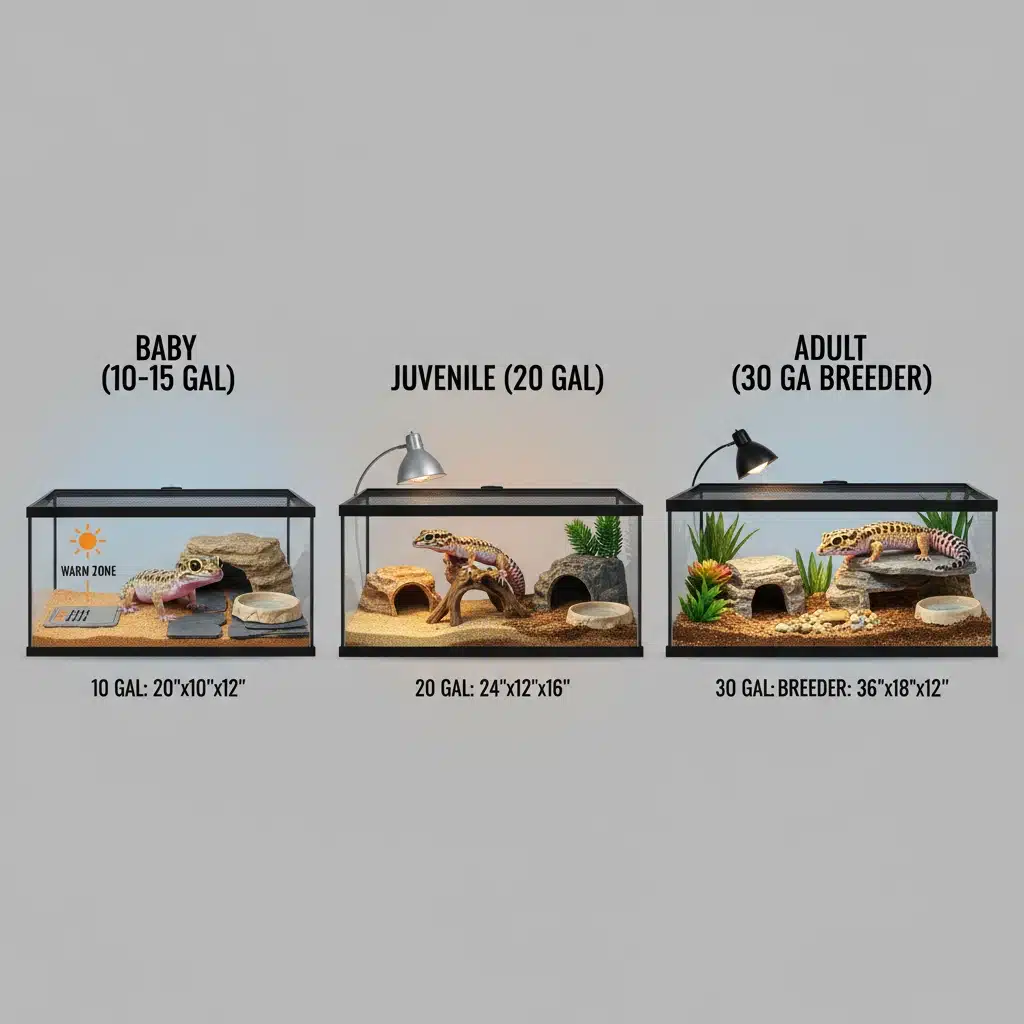
When your gecko is still small and learning to navigate, a 10- to 15-gallon tank is ideal. At this stage, stability and simplicity matter more than size.
Recommended Specs:
- Tank Size: 10–15 gallons (20–24 inches long)
- Material: Glass or PVC with a tight mesh lid
- Substrate: Paper towel or reptile carpet (easy to clean and safe)
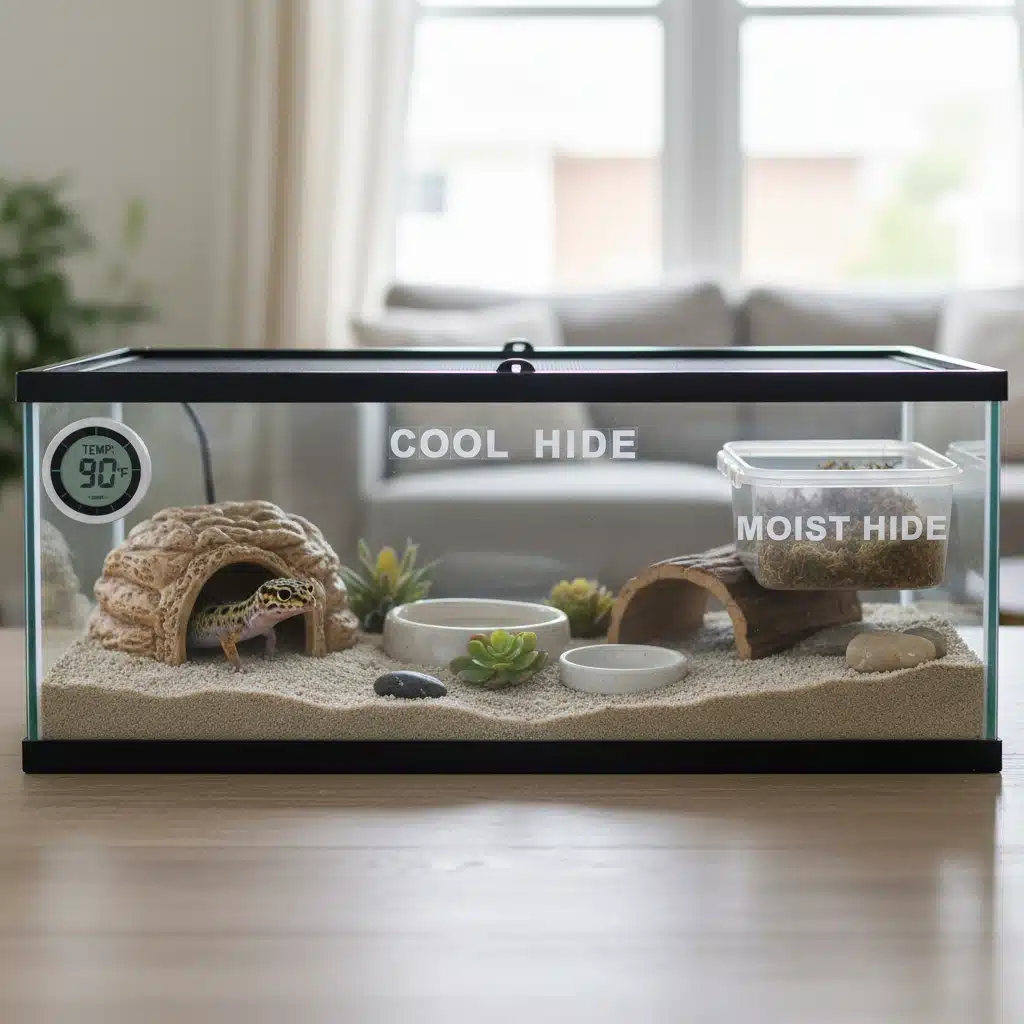
- Hides: Three—warm, cool, and moist
- Heating: Under-tank heat mat regulated by a thermostat
A compact tank helps your baby gecko locate belly heat easily and feel secure. Wide tanks may look impressive but can overwhelm a hatchling and cause inconsistent heat.
For a stress-free setup, check the Leopard Gecko Starter Kit Essentials — it lists affordable gear that’s safe for beginners and ensures even temperature control.
Why Smaller Works Best Early On
Baby geckos are naturally timid. In large tanks, they may spend too much time hiding, skip meals, or fail to shed properly.
A small, organized space allows them to establish clear “warm” and “cool” zones, encouraging exploration while still feeling protected.
You can always expand later—but starting too big often means unstable heat zones and wasted space.
This is also the perfect time to practice spot-cleaning and temperature monitoring, two habits that will make maintenance effortless once you upgrade.
Signs of a Healthy Baby Habitat
- The gecko moves freely between hides.
- Belly heat (88–90°F) is consistent.
- No condensation buildup (humidity too high).
- Feeding response is strong, usually within minutes.
If you notice the gecko hugging the corners or refusing to leave one hide, the tank might be too cool or too open.
Learn to interpret these early signs using our Behavior Explained Guide — it helps decode movement patterns that reveal comfort levels and stress.
Juvenile & Adult Tank Sizes (6 Months +)
As your leopard gecko grows, it becomes more curious and active. By around six months, most juveniles outgrow their starter setup. This is where an upgrade to a 20-gallon long enclosure makes all the difference.
A longer tank allows a full temperature gradient, giving your gecko space to self-regulate — warm basking zones on one end, a cooler retreat on the other. This setup mimics their natural desert environment and supports digestion.
Juvenile Stage (6–12 Months)
Recommended Specs:
- Tank Size: 20 gallons (30″ L × 12″ W × 12″ H)
- Material: Glass or PVC
- Hides: Three, plus climbing décor for enrichment
- Heating: Belly heat via under-tank pad + thermostat
- Lighting: Optional 2–5 % UVB or LED light on a timer
A 20-gallon tank gives room for exploration but remains easy to monitor. It’s also the ideal point to experiment with simple natural décor—rocks, cork bark, and safe artificial plants. For styling inspiration that blends safety with realism, visit our Tank Décor Basics Guide.
If you live in a cooler region, you might add a low-wattage heat lamp to supplement belly heat. To compare safe heating setups, our Heating Mats vs Lamps Guide explains how to balance both systems without overheating.
Adult Stage (12 Months +)
An adult leopard gecko (8–10 inches long) thrives in a 20- to 30-gallon enclosure. This provides more room for exercise and enrichment items such as tunnels and climbing platforms.
Recommended Specs:
- Preferred Size: 30-gallon breeder (36″ L × 18″ W × 12″ H)
- Material: PVC or front-opening glass tank
- Décor: Rocks, branches, and two levels of hides
- Temperature Gradient: 88–92°F warm side, 75–80°F cool side
PVC tanks are great for heat retention and easy access. However, ensure proper airflow; lack of ventilation leads to condensation and mold. For detailed airflow guidance, see our Ventilation and Airflow Importance Guide.
Upgrading should happen gradually. Move your gecko’s familiar hides and water dish into the new enclosure so it smells and feels recognizable. A seamless transition helps reduce relocation stress.
Cohabitation: Proceed with Caution
While it might be tempting to house two geckos together, these reptiles are territorial.
Even same-sex pairs can fight when resources are shared. Males, especially, will battle over territory or dominance, risking tail loss and injury.
If you ever experiment with group housing (females only, plenty of hides), monitor constantly. Our Safety & Wellbeing Guide outlines safe space ratios and warning behaviors that indicate conflict.
Recognizing When to Upgrade
Your gecko’s behavior gives clear signals:
- Persistent pacing or glass-surfing
- Lethargy despite correct temps
- Outgrown décor or hides
- Uneven heat zones
When you notice these signs, don’t delay. A timely upgrade encourages activity, natural thermoregulation, and feeding consistency.
Long-Term Habitat Planning & Pro Setup Tips
Once your leopard gecko reaches adulthood, tank size becomes a lifestyle decision: comfort, enrichment, and long-term convenience. A properly scaled enclosure not only looks professional but simplifies maintenance and temperature stability.
Going Beyond Minimum Size
While 20 gallons is the accepted minimum, experienced keepers often prefer 30- to 40-gallon tanks for single adults.
The extra space supports enrichment: caves, ledges, and artificial plants that encourage exploration. Just ensure your heat mat covers about one-third of the tank’s floor to maintain a strong warm zone.
Ideal Layout Example:
| Zone | Main Features | Temperature Range |
|---|---|---|
| 🧊 Cool Side | Water dish, cool hide | 75–80°F (24–27°C) |
| 💧 Moist Center | Humid hide with moss, stones | ~85°F (29°C) |
| 🔥 Warm Side | Heat mat + warm hide + basking rock | 88–92°F (31–33°C) |
This simple layout keeps thermoregulation natural and easy to monitor. You can download a printable version in our Complete Tank Setup Guide.
Advanced Enrichment Ideas
Larger tanks allow creative environments that stimulate natural behaviors:
- Layered terrain: Flat slate and cork bark for gentle climbing.
- Artificial plants: Non-toxic décor for cover and confidence.
- Background textures: Desert rock panels or foam walls.
These elements not only look good but reduce stress by giving your gecko privacy and control over its surroundings.
To keep your setup both aesthetic and hygienic, follow the cleaning routine outlined in our Tank Cleaning Routine Guide — it details safe disinfectants and monthly deep-clean steps.
Humidity and Ventilation Balance
Even in large tanks, humidity should remain moderate—around 35–40 %. Use cross-flow ventilation or mesh lids to keep air circulating. If moisture builds up, reduce misting or open vents slightly.
For a refresher on humidity management, revisit the Hydration & Water Needs Guide — it explains how moisture and airflow affect shedding quality.
Breeding or Multi-Tank Considerations
If you plan to breed or maintain several geckos, individual tanks are mandatory.
Each adult should have its own enclosure to avoid aggression and ensure feeding control.
Stackable PVC enclosures save space while maintaining proper heat zones across multiple levels.
Use identical thermometers and thermostats for consistency, and label each tank with feeding and cleaning dates. This routine helps prevent health mix-ups when managing multiple reptiles.
Quick Reference: Leopard Gecko Tank Sizes by Age
| Life Stage | Age Range | Recommended Size | Tank Type | Notes |
|---|---|---|---|---|
| Baby | 0–6 months | 10–15 gal | Glass / PVC | Stable heat, easy monitoring |
| Juvenile | 6–12 months | 20 gal | Glass / PVC | Allows full heat gradient |
| Adult | 12 months + | 20–30 gal | Glass / PVC | Ideal long-term enclosure |
Final Thoughts
The right tank size evolves as your gecko grows. Start compact, expand gradually, and focus on function before decoration.
When combined with proper heating and safe décor, the enclosure becomes a balanced ecosystem that supports digestion, shedding, and exploration.
To complete your setup, head over to the full 🏗️ Leopard Gecko Tank Setup Guide — it ties together everything you’ve learned here with heating, lighting, and décor tips for the perfect habitat.
Frequently Asked Questions — Leopard Gecko Tank Size by Age
What size tank is best for a baby leopard gecko?
A baby leopard gecko does best in a 10–15-gallon tank with an under-tank heat mat and three hides (warm, cool, moist).
Smaller enclosures help maintain stable belly heat and make it easier for young geckos to find food.
For a safe beginner setup, see our full Leopard Gecko Starter Kit Essentials — it lists affordable, heat-safe gear for hatchlings.
When should I upgrade my leopard gecko’s tank?
Most geckos outgrow their starter tank by 6–8 months old.
When your gecko starts pacing, scratching at the glass, or seems restless, it’s time to upgrade to a 20-gallon long tank.
Learn how to set up your new enclosure properly in our Leopard Gecko Tank Setup Guide — it shows where to position heat sources and décor safely.
What size tank do adult leopard geckos need?
Adult leopard geckos thrive in 20–30-gallon enclosures that allow for full heat gradients and enrichment.
A 30-gallon breeder tank offers more space for climbing décor and hiding areas, promoting natural behavior.
For ideas on arranging hides, rocks, and plants, visit the Tank Décor Basics Guide.
Can two leopard geckos live in the same tank?
Generally, no — leopard geckos are solitary and territorial.
Housing two together can cause stress, tail loss, or fighting injuries.
If you’re considering group housing, only experienced keepers should attempt female-only pairs with abundant space (40+ gallons) and multiple hides.
Read more about safe enclosures in our Safety & Wellbeing Guide.
Is a 10-gallon tank too small for an adult leopard gecko?
Yes, a 10-gallon tank is too small for an adult gecko.
It prevents proper temperature zoning and limits exercise.
Adults need at least a 20-gallon long tank to thermoregulate safely between warm and cool sides.
For heating layout examples, check the Heating Mats vs Lamps Guide.
Should I get a glass or PVC tank for my leopard gecko?
Both work well if properly equipped.
Glass tanks are budget-friendly and widely available but lose heat faster.
PVC enclosures retain warmth better, are lighter, and ideal for cooler climates.
To decide which is right for your setup, compare materials in our Glass vs PVC Tanks Guide.
Author

