
1. Introduction
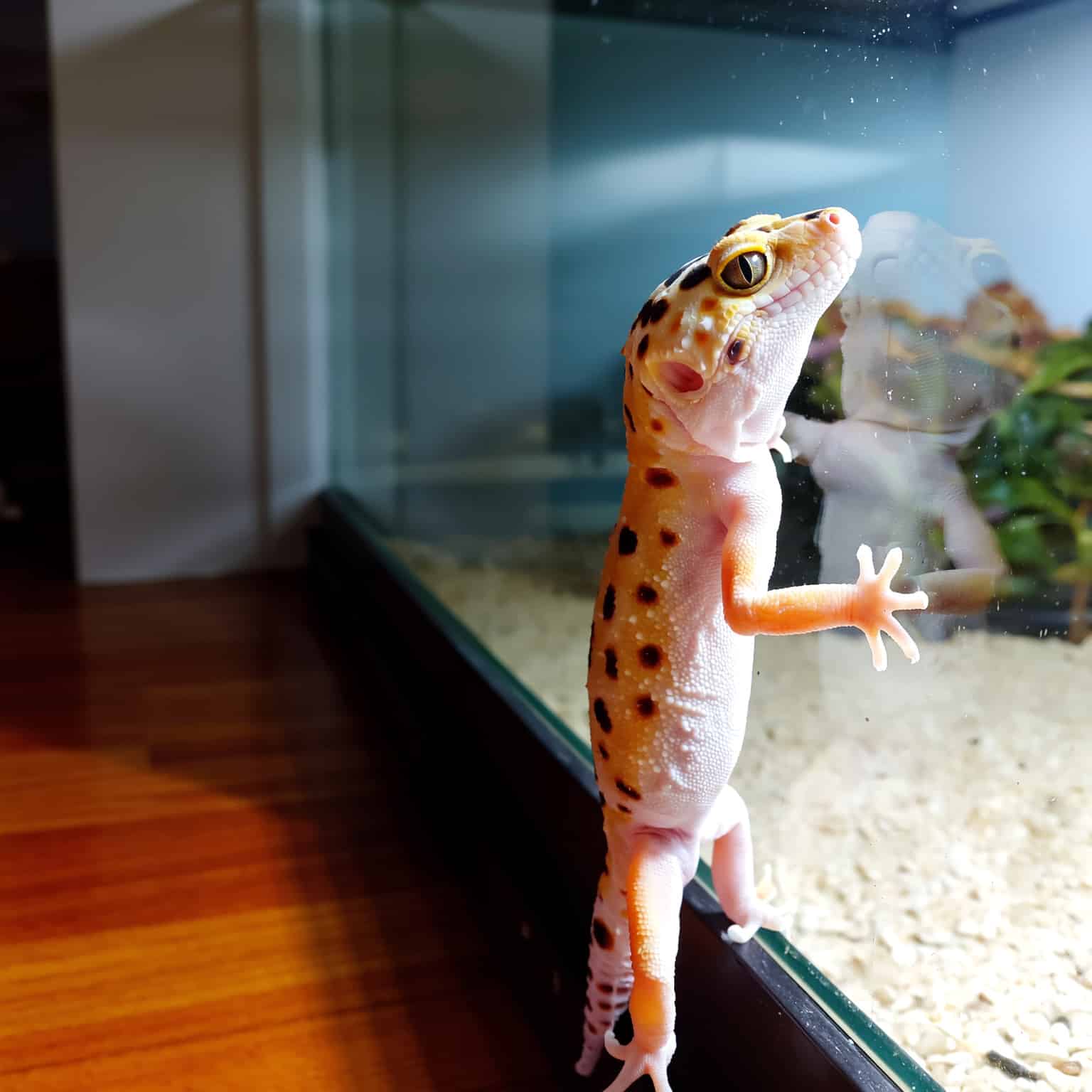
Many new leopard gecko owners are surprised to see their pet repeatedly climbing the glass walls of the enclosure. This behavior—known as glass surfing—can look playful, but it often indicates stress or discomfort.
Understanding why your leopard gecko glass surfs helps identify potential problems in the tank setup or environment.
This action is one of the most common stress & behavior signs in leopard geckos and should never be ignored.
2. What Glass Surfing Looks Like
Glass surfing in leopard geckos happens when your gecko repeatedly climbs or scratches at the walls of its enclosure, often pressing its belly or feet against the glass. It can last several minutes and may occur multiple times per day.
A leopard gecko glass surfing usually appears restless—its tail moves, eyes stay alert, and it may look like it’s trying to escape.
This behavior is one of the clearer stress signs in leopard geckos and can indicate issues with temperature, lighting, or territory boundaries (see Tank Setup Guide).
Sometimes, geckos also glass surf after recent changes in their habitat or substrate.
3. Main Causes of Glass Surfing in Leopard Geckos
3.1 Incorrect Temperature or Humidity
One of the most common reasons for glass surfing in leopard geckos is poor environmental control.
If the tank is too cold or too hot, the gecko may try to escape. The same happens when humidity drops below 30%.
To ensure balance, check the Humidity & Temperature Management guide.
3.2 Reflections or Tank Placement
Leopard geckos can see their reflection in the glass and mistake it for another animal. This confusion can lead to stress and repetitive leopard gecko glass surfing.
Proper tank placement away from direct sunlight or mirrors helps reduce visual stress (Enclosure Placement & Environment).
3.3 New Habitat or Rearranged Décor
When moved to a new environment or after cleaning the enclosure, glass surfing leopard geckos often explore excessively until they feel secure again.
This behavior is temporary and linked to environmental changes (see Tank Décor & Enrichment).
3.4 Lack of Hides or Space
A gecko without enough hiding spots or floor space feels exposed. This triggers leopard gecko glass surfing as it searches for safety.
Ensure at least two hides (warm and cool side) and follow the Tank Setup Guide for ideal layout.
3.5 Presence of Other Pets or Vibrations
Loud noises, other reptiles nearby, or frequent vibrations can trigger defensive behaviors.
If your leopard gecko glass surfs suddenly, check for external stressors in the room before assuming illness.
4. When Glass Surfing Becomes a Concern
4.1 Duration and Frequency
Occasional glass surfing in leopard geckos can be harmless, especially after changes to their tank.
However, if your leopard gecko glass surfs daily for long periods, it likely signals a deeper issue—environmental or psychological.
Persistent climbing and scratching suggest the gecko feels unsafe, overheated, or unable to hide properly (see Stress & Behavior Signs in Leopard Geckos).
4.2 Physical Signs Accompanying the Behavior
- Loss of appetite or irregular feeding (Leopard Gecko Feeding & Nutrition)
- Weight loss or wrinkled skin (Signs of Dehydration in Leopard Geckos)
- Excessive hiding or aggression (Handling & Bonding Tips)
- Pale or dull coloration during stress
These symptoms combined with frequent leopard gecko glass surfing mean the issue has become chronic.
4.3 When to Seek Veterinary Help
If your gecko also shows lethargy, open-mouth breathing, or persistent restlessness, it might indicate illness.
Consult a reptile vet for possible underlying causes such as parasites (Parasites in Leopard Geckos) or respiratory problems.
5. How to Stop Glass Surfing in Leopard Geckos
5.1 Check Temperature and Humidity
The first step in stopping glass surfing in leopard geckos is ensuring their environment matches their natural habitat.
Maintain a warm side of 88–92°F and a cool side around 75°F.
Humidity should stay between 30–40%.
For guidance, see Humidity & Temperature Management.
5.2 Improve Enclosure Design
A small or poorly structured tank can make geckos restless.
Add hides, climbing decor, and visual barriers to help them feel safe.
Follow the Leopard Gecko Tank Setup Guide and Tank Décor & Enrichment for ideal layouts.
5.3 Limit Reflections and Noise
If your leopard gecko glass surfs near windows or mirrors, it may be reacting to its reflection or to vibrations from external noise.
Move the enclosure to a quieter location as recommended in Enclosure Placement & Environment.
5.4 Provide a Consistent Routine
Feeding and lighting schedules affect gecko behavior.
A sudden change in timing can cause stress and trigger leopard gecko glass surfing.
Maintain regular routines following Feeding & Nutrition advice.
5.5 Avoid Overhandling
Too much handling—especially for new or young geckos—often increases stress.
If your leopard gecko glass surfs right after being handled, give it time to adjust.
See Handling & Bonding Tips for gentle introduction methods.
6. Conclusion & Final Thoughts
Glass surfing in leopard geckos is more than a curious behavior — it’s communication.
When a leopard gecko glass surfs, it’s expressing stress, discomfort, or confusion within its habitat.
By observing frequency, body language, and environmental triggers, keepers can identify and fix the root causes.
Maintaining proper temperature, humidity, hiding spots, and a calm environment significantly reduces stress.
If glass surfing continues despite ideal conditions, review your setup or consult a reptile vet for deeper health issues.
For a broader understanding of behavioral signals, explore Stress & Behavior Signs in Leopard Geckos and related guides like Handling & Bonding Tips or Enclosure Placement & Environment.
FAQs
Why is my leopard gecko glass surfing at night?
Leopard geckos are nocturnal, so glass surfing at night often means the enclosure conditions are off — usually temperature, humidity, or lighting imbalance.
Is glass surfing in leopard geckos a sign of stress?
Yes. Persistent leopard gecko glass surfing commonly signals stress, especially if paired with hiding, loss of appetite, or rapid breathing.
How can I stop my leopard gecko from glass surfing?
Check tank temperature, humidity, and hide placement. Reduce noise and reflections, and ensure your gecko feels secure.
Do all leopard geckos glass surf sometimes?
Occasional glass surfing is normal, particularly in new environments. It becomes a concern only if it’s repetitive or linked to other stress signs.
Author

