
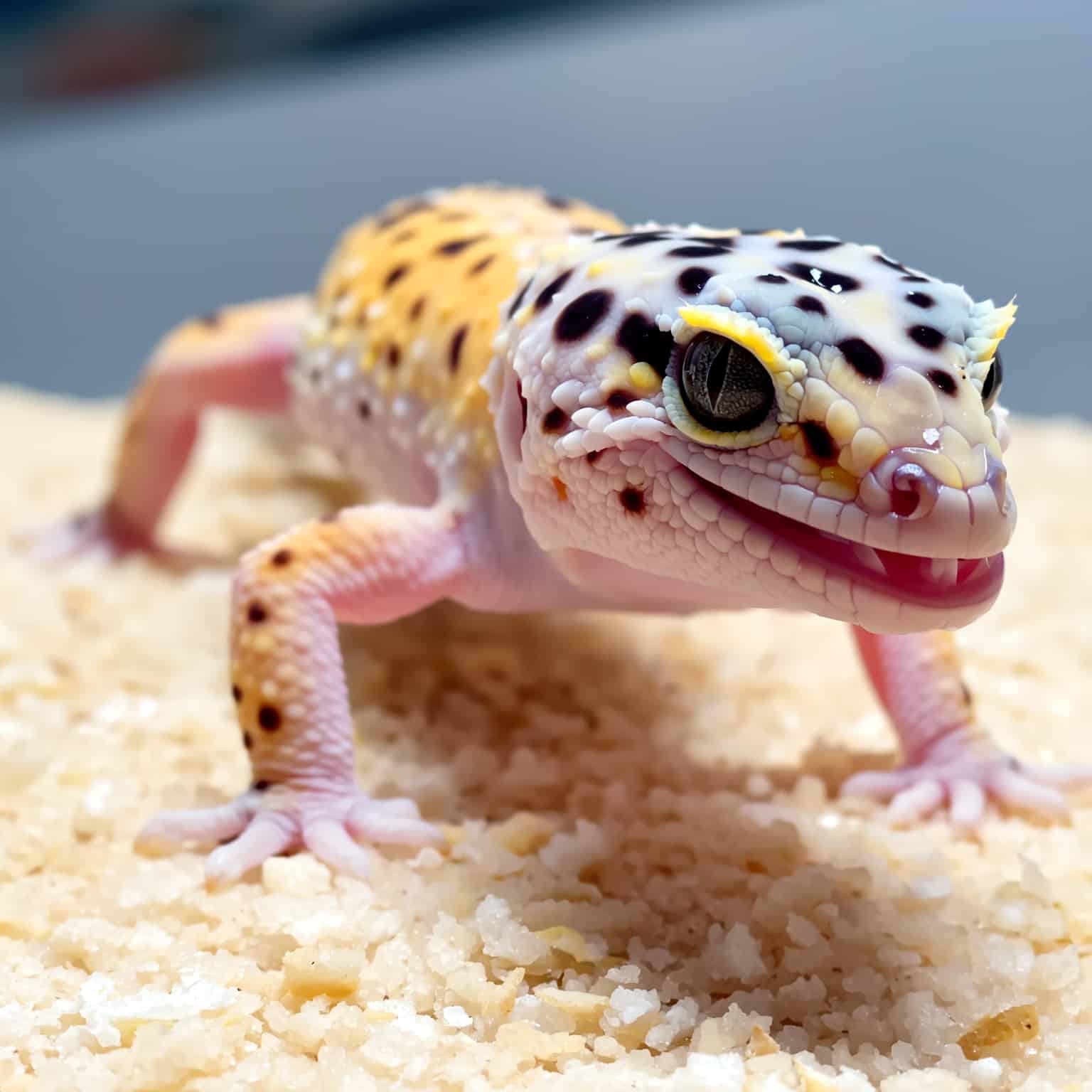
Shedding is a natural part of a leopard gecko’s life, but when conditions aren’t ideal, it can quickly turn into a health concern. Problems like stuck shed in geckos are among the most common issues keepers face, and if left untreated, they can cause pain, restricted blood flow, and even permanent damage.
Humidity plays a huge role in healthy shedding. Enclosures that are too dry often lead to stuck skin around the toes and eyes, which is why understanding proper leopard gecko temperature and humidity management is critical. Stuck shed can also lead to secondary complications, many of which are discussed in our detailed leopard gecko health guide.
With the right care, shedding can be smooth and stress-free, keeping your gecko’s skin healthy throughout its life.
Understanding Leopard Gecko Shedding
How Often Do Leopard Geckos Shed?
Leopard geckos shed regularly throughout their lives, but the frequency changes with age:
- Hatchlings & juveniles: every 1–2 weeks, as they grow rapidly
- Adults: every 4–6 weeks, depending on diet, environment, and health
Unlike snakes, leopard geckos shed in pieces rather than one whole skin. They often eat their shed to recycle nutrients and avoid attracting predators in the wild, so don’t be alarmed if you rarely see leftover skin in the enclosure.
Normal Shedding Behavior vs. Warning Signs
A healthy shed usually happens overnight or within a few hours. Signs that your gecko is preparing to shed include:
- Dull or whitish skin before the process starts
- Reduced appetite in the days leading up
- Increased use of the moist hide
Warning signs of shedding problems include:
- Skin sticking around the toes, eyes, or tail tip
- Restless behavior or excessive scratching
- Visible irritation or swelling under stuck skin
If you notice these issues, it’s time to step in with supportive care before the problem worsens.
Causes of Leopard Gecko Shedding Problems

Low Humidity & Inadequate Moist Hides
The number one cause of leopard gecko shedding problems is low humidity. If the air inside the enclosure is too dry, the old skin doesn’t loosen properly and can stick to delicate areas like toes, eyes, and tail tips.
Every leopard gecko enclosure should include a moist hide filled with damp sphagnum moss, paper towels, or eco-friendly substrate. This provides a localized humidity pocket (around 70–80%) while the rest of the tank remains at the safe 30–40% range.
Nutritional Deficiencies & Hydration Issues
Poor nutrition can also make shedding more difficult. Leopard geckos lacking essential vitamins and minerals—particularly vitamin A—are more prone to retained shed, especially around the eyes. Dehydration is another common factor; without consistent access to clean water, skin loses elasticity and becomes harder to shed.
A proper feeding routine with gut-loaded insects and supplements is vital for overall skin health. If you’re unsure about feeder choices or supplementation, our leopard gecko feeding guide explains the best diet practices to prevent both nutritional deficiencies and shedding issues.
Stuck Shed in Leopard Geckos

Common Areas Where Shed Gets Stuck (Toes, Eyes, Tail Tip)
When shedding doesn’t go smoothly, pieces of skin can cling to sensitive areas. The most common problem spots include:
- Toes: Retained skin here can cut off circulation, leading to infections or even toe loss.
- Eyes: Shed that builds up around or under the eyelids can cause irritation, swelling, and impaired vision.
- Tail tip: Retained shed may harden, restricting blood flow and causing the tail tip to drop.
These areas should always be checked after a shed cycle to ensure skin has come off completely.
Complications from Untreated Stuck Shed
If stuck shed is ignored, complications can quickly escalate. Constricted toes may fall off, eye infections may develop, and untreated tail issues can lead to necrosis. In severe cases, multiple layers of retained skin can build up, making future sheds even harder.
Shedding difficulties are often linked to environmental factors. Flooring that doesn’t support proper humidity regulation, or enclosures without a moist hide, create conditions where retained skin becomes common. Details on safe flooring choices are explained in the leopard gecko substrate guide, which also highlights why loose substrates can worsen health problems.
Helping a Gecko with Stuck Shed
Safe Methods: Warm Soaks & Cotton Swabs
If stuck shed appears, gentle intervention can help. The safest approach is to provide a shallow warm soak for 10–15 minutes, allowing the skin to soften naturally. After the soak, use a damp cotton swab to gently roll away the loosened skin.
For toes and tail tips, patience is key. Sometimes multiple short soaks are necessary to avoid stressing the gecko. A moist hide should also remain in the enclosure so the gecko can continue working off the skin on its own.
What NOT to Do When Removing Shed
There are common mistakes owners make when dealing with stuck shed:
- Never pull dry skin off forcefully. This can tear healthy tissue underneath.
- Avoid sharp tools or tweezers. These increase the risk of injury.
- Do not use oily substances. While sometimes suggested, they can trap bacteria and make the problem worse.
If stubborn shed doesn’t improve after several soaks, or if circulation is at risk, veterinary treatment may be necessary.
Preventing Shedding Problems
Optimizing Humidity & Enclosure Setup
Most leopard gecko shedding problems can be prevented with the right environment. A healthy enclosure balances ambient humidity (30–40%) with a dedicated moist hide that reaches 70–80%. This gives the gecko a choice of microclimates, supporting smooth shed cycles without risking respiratory issues from an overly damp tank.
Heating and humidity work together; if temperatures are too low, the body won’t process water correctly, and if humidity is unstable, skin dries out before shedding is complete.
Diet, Hydration & Supplements for Healthy Skin
Shedding isn’t just about the environment—nutrition plays a major role in skin health. A diet of gut-loaded feeder insects, dusted with calcium and multivitamins, ensures proper vitamin A levels that keep skin soft and eyes clear.
Hydration also matters. While leopard geckos don’t drink large amounts, they still need access to a shallow water dish at all times. Dehydrated geckos are more prone to dry skin and retained shed. Feeding and supplementation strategies are detailed in the leopard gecko feeding guide, which outlines schedules and nutrients essential for healthy shedding cycles.
When to Seek Veterinary Help
Signs Shedding Problems Are Serious
Most shedding difficulties can be managed at home, but there are situations where professional care is essential. Warning signs that require a reptile veterinarian include:
- Multiple layers of stuck shed that don’t improve after several soaks
- Skin constricting toes, cutting off circulation
- Persistent swelling around the eyes from retained shed
- Signs of infection such as redness, pus, or foul odor
- Loss of digits or tail tip from restricted blood flow
These symptoms indicate that the shedding issue has progressed beyond home care and may need medical intervention.
How a Vet Treats Severe Shedding Issues
Reptile veterinarians have tools and treatments not available at home. They may use specialized solutions to soften retained skin, prescribe topical or oral medications to fight infection, or remove damaged tissue under controlled conditions.
In some cases, shedding problems are a symptom of a broader health issue such as dehydration, malnutrition, or improper habitat setup. Addressing the root cause is just as important as resolving the immediate problem, which is why veterinary consultation is vital when home remedies aren’t enough.
Conclusion
Shedding is a natural part of a leopard gecko’s life, but when it goes wrong, the consequences can be serious. Problems like stuck shed in geckos are most often caused by low humidity, poor hydration, or nutritional gaps. With the right husbandry—balanced humidity, safe substrates, consistent hydration, and a vitamin-rich diet—most shedding issues can be prevented.
Routine checks after each shed cycle ensure skin comes off completely, especially around the toes, eyes, and tail tip. When problems persist or circulation is threatened, veterinary care is essential. By staying proactive, owners can prevent small shedding issues from developing into long-term health complications, keeping their geckos healthy and comfortable through every shed.
🦎 “Discover everything you need to know about leopard geckos – visit Reptizen today!”
Author

