
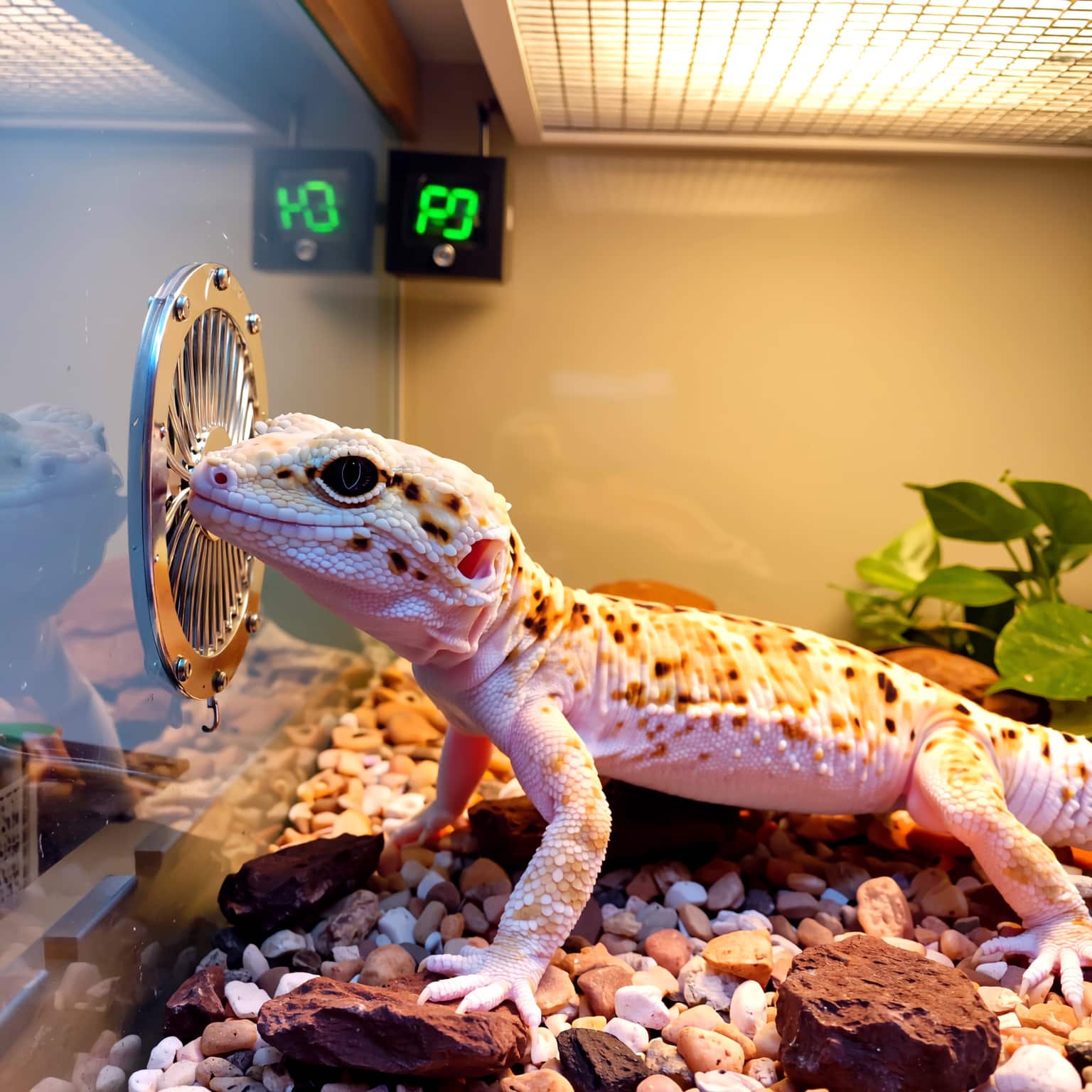
Why Ventilation Is So Important
Ventilation might not be as flashy as décor or lighting, but it’s one of the core foundations of a healthy enclosure.
Leopard geckos need a stable air exchange to prevent mold, control humidity, and keep respiratory health strong.
Poor airflow leads to stale, damp air — which can trigger bacterial growth, stuck sheds, and infections.
Even though geckos come from arid desert regions, their tanks shouldn’t be bone-dry. The trick is balance: enough ventilation for freshness, but not so much that humidity drops below 30–40%.
Before optimizing airflow, make sure your tank size is correct for consistent circulation.
👉 Check our Leopard Gecko Tank Size by Age guide to confirm the right enclosure dimensions.
How Airflow Works in Reptile Enclosures
Air moves through two main areas:
- Entry points (vents, mesh lids, side holes)
- Exit points (upper vents or screen tops)
Warm air naturally rises, while cool air stays low — meaning your heating system also affects airflow.
If your tank is poorly ventilated, heat and humidity will collect unevenly, creating microclimates that stress your gecko.
To understand how material affects air exchange, compare your setup with our Glass vs PVC Tanks Guide — glass offers more airflow, while PVC retains heat and moisture better.
Signs of Poor Ventilation
- Condensation on walls or lid
- Musty odor
- Shedding issues or respiratory noises
- Mold or mildew on décor
- Gecko frequently staying on lid or near vents
If any of these appear, it’s time to adjust your airflow immediately.
Ideal Ventilation Setup for Leopard Geckos
A well-designed leopard gecko tank should provide cross-ventilation — meaning air enters from one side and exits from another, ensuring a gentle, consistent flow.
Basic Setup Principles
- Front or side vents (low): Allow cool air entry.
- Top or back vents (high): Let warm, moist air escape.
- Mesh lids: Excellent for glass tanks (natural air exchange).
- Drilled vents: Necessary for PVC tanks to prevent stagnation.
For beginners using glass tanks, a screen lid is usually enough — just avoid covering it completely.
PVC or wooden enclosures, however, need custom vent holes or small mesh panels to ensure balance.
🔗 For lid ideas and positioning examples, refer to the diagrams in our Complete Tank Setup Guide.
Balancing Ventilation and Humidity
Too much airflow can dry out the moist hide; too little can lead to mold.
Here’s how to fine-tune your balance:
| Problem | Cause | Fix |
|---|---|---|
| Humidity below 25% | Too many open vents / strong fan | Partially cover lid with foil or acrylic |
| Mold or condensation | Not enough airflow | Add extra vent holes / raise lid slightly |
| Uneven humidity | Heat mat too strong or mispositioned | Use thermostat & check probe placement |
Your moist hide should remain around 70–80% humidity, while ambient tank humidity stays 35–40%.
For detailed guidance on moist hide setup, visit the Starter Kit Checklist — it explains how to keep moss damp without overdoing it.
DIY Trick for Perfect Balance
If your humidity drops too fast:
- Partially cover half of your mesh lid with acrylic sheet or foil tape.
- Place a small water bowl near the warm side for mild evaporation.
If it’s too humid:
- Increase cross-ventilation by drilling small vents in the sides.
- Use an air stone or small USB fan outside the tank to circulate air.
Balance is achieved when you see no condensation, no smell, and your gecko sheds cleanly.
Seasonal Adjustments
Your ventilation needs change throughout the year.
- Winter: Homes are drier, so reduce airflow slightly to preserve humidity.
- Summer: Hot weather increases evaporation — open vents more often.
PVC tanks retain more moisture, while glass tanks lose it quickly.
If you notice shedding difficulties during seasonal shifts, lightly mist the moist hide, not the entire tank.
For humidity control without stressing your gecko, follow the recommendations in our Heating Mats vs Lamps Guide — since heat direction directly affects moisture loss.
Cleaning and Maintenance
Ventilation areas often collect dust, debris, and calcium buildup. Regular cleaning ensures consistent airflow.
Weekly Tasks
- Dust mesh lids and side vents.
- Wipe moisture residue with a microfiber cloth.
Monthly Tasks
- Deep clean vents using a soft toothbrush.
- Check that airflow isn’t blocked by décor or cables.
Avoid spraying chemical cleaners near vent holes. Instead, use reptile-safe disinfectant — full instructions available in the Tank Cleaning Routine Guide.
Final Tips & Best Practices
1️⃣ Combine Heat and Vent Placement
Always align vents opposite your heat source — warm air should flow toward the cool side to create a natural circulation pattern.
2️⃣ Avoid Overcrowding
Too many large rocks, branches, or fake plants can block airflow and create “dead zones” of trapped humidity.
3️⃣ Use a Digital Hygrometer
Keep one on each side to track humidity and adjust ventilation accordingly.
4️⃣ Watch Behavior
If your gecko spends too much time near the lid or hides, it may be reacting to uncomfortable humidity or airflow.
For stress signs and behavior decoding, see our Safety & Wellbeing Guide.
Final Thoughts
Ventilation isn’t about letting air rush through — it’s about gentle balance.
Fresh air in, warm air out, humidity stable, and no condensation.
When airflow is right, your gecko stays calm, sheds easily, and the enclosure smells clean.
Combine proper airflow with accurate heating and safe décor, and you’ll have a long-lasting, low-maintenance habitat that mimics your gecko’s natural desert home.
For the next optimization step, visit our Tank Décor Basics Guide — it shows how to arrange hides and plants without disrupting airflow.
FAQs — Ventilation & Airflow
How much ventilation does a leopard gecko tank need?
Moderate cross-ventilation — air should enter from one side and exit the opposite, keeping humidity between 30–40%.
Can poor airflow make my gecko sick?
Yes. Stagnant air causes respiratory issues, mold, and stress. Regular vent cleaning is essential.
Should I cover part of my mesh lid?
Yes, especially in dry climates. Covering half helps retain humidity while maintaining air exchange.
Do PVC tanks need ventilation holes?
Absolutely. PVC holds heat but traps air, so drill side vents for circulation.
What’s the ideal humidity level for leopard geckos?
Keep it between 30–40% overall, with a moist hide around 70–80% for shedding.
Can I use a small fan for airflow?
A low-speed external USB fan helps regulate temperature without drying the tank too much.
How do I prevent mold buildup in vents?
Clean monthly with reptile-safe disinfectant and maintain steady airflow to prevent moisture stagnation.
Author

