
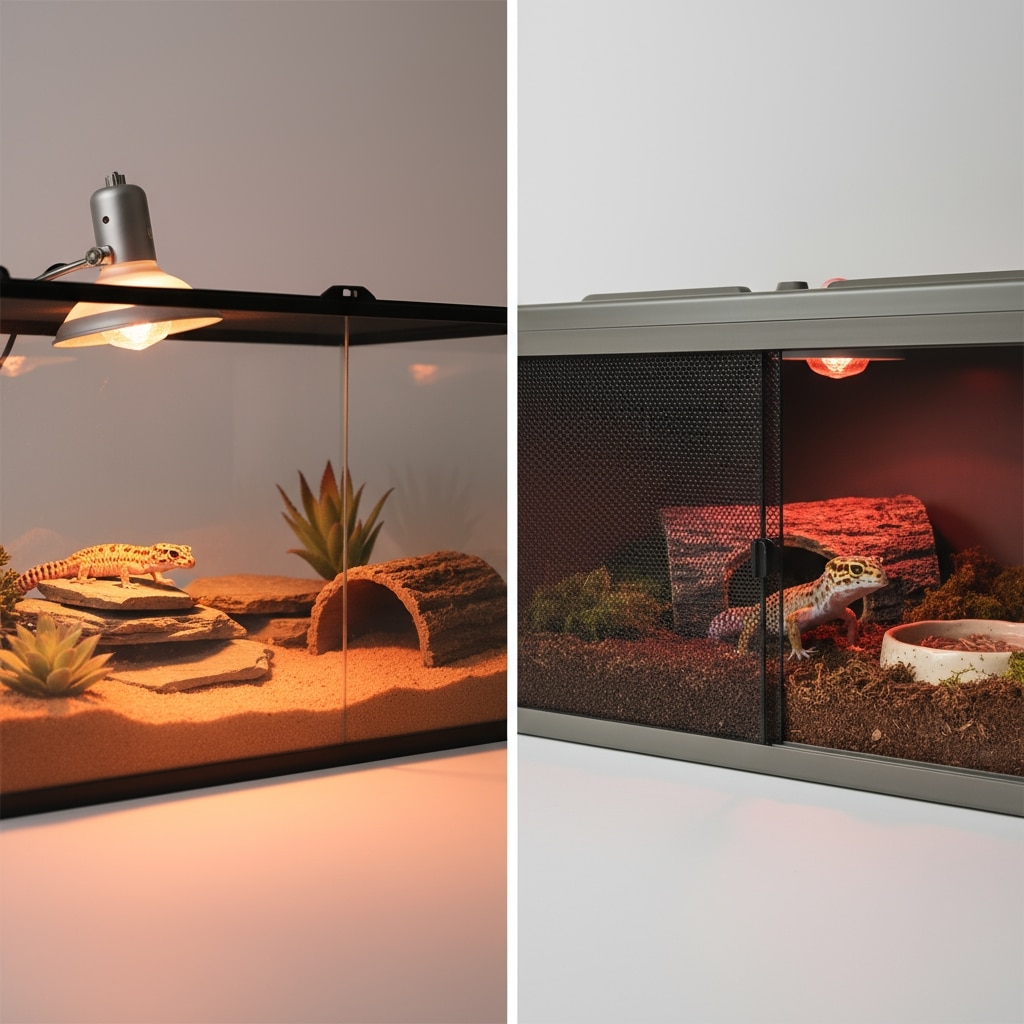
Why Tank Material Matters
Not all leopard gecko tanks are created equal. While many new owners focus on size and décor, the material of your tank directly affects temperature regulation, humidity control, and even your gecko’s stress levels.
Glass tanks are classic and affordable, but they tend to lose heat and humidity faster. PVC enclosures, on the other hand, are modern, lightweight, and excellent at holding warmth — but they cost more upfront.
Choosing the right one depends on your climate, experience level, and budget.
If you’re still deciding on tank dimensions, review our Leopard Gecko Tank Size by Age Guide — it helps you match the right size before you worry about material.
How Tank Material Impacts Gecko Health
Leopard geckos depend entirely on their environment to regulate body temperature.
A tank that loses heat too quickly causes stress, poor appetite, and digestion problems.
On the flip side, poor ventilation or excess humidity can lead to bacterial growth and shedding issues.
The goal? A tank that maintains 88–92°F on the warm side, 75–80°F on the cool side, and 35–40% humidity — with good airflow and no condensation.
That balance is easier to achieve with the right material, so let’s compare both options in detail.
The Case for Glass Tanks
Glass tanks are the most widely available reptile enclosures — affordable, durable, and visually appealing. They’re ideal for beginners who want something simple and transparent.
Advantages of Glass Tanks
- 💰 Budget-Friendly – Easy to find in pet stores or second-hand.
- 👀 High Visibility – Perfect for observing your gecko’s behavior and décor.
- 🧼 Easy to Clean – Smooth surfaces make deep cleaning simple.
- 🔧 Compatible with Accessories – Fits heat mats, clips, and mesh lids easily.
For first-time keepers, glass tanks are the standard recommendation because they provide full visibility and integrate well with under-tank heating mats — crucial for belly heat.
Check the installation section in our Leopard Gecko Starter Kit Checklist to see how to mount heat mats safely under glass tanks.
Disadvantages of Glass Tanks
- ❄️ Heat Loss: Glass doesn’t insulate well, especially in cool rooms.
- 💨 Low Humidity Retention: Moisture escapes through mesh lids.
- 🧱 Heavy & Fragile: Difficult to move or stack.
- 🔊 Noise & Reflection: Some geckos get stressed by reflections or vibrations.
If you live in a cold or dry environment, you may spend more on heating and humidity maintenance with glass tanks.
You can minimize these issues by adding an insulating foam board under the tank and switching to a solid top lid with ventilation holes — a setup explained in our Ventilation Importance Guide.
The Case for PVC Tanks
PVC (polyvinyl chloride) enclosures are becoming the gold standard among experienced reptile keepers. They’re lighter, more efficient at holding heat, and available in customizable designs with front-opening doors.
Advantages of PVC Tanks
- 🔥 Superior Heat Retention – Maintains stable temps with less energy use.
- 💧 Humidity Control – Keeps moisture consistent for smoother shedding.
- 🚪 Front Access Doors – Easier cleaning and interaction.
- 🧱 Stackable & Lightweight – Great for collections or small spaces.
- 🦎 Professional Look – Matte black interior reduces stress and reflection.
PVC is particularly helpful for geckos in cooler regions or for keepers maintaining multiple reptiles in climate-controlled racks.
If you’re upgrading from glass, see our Tank Décor Basics Guide — it explains how to rearrange hides and plants inside a new enclosure for a smooth transition.
Disadvantages of PVC Tanks
- 💵 Higher Cost: Usually 1.5–2× the price of glass tanks.
- 🔩 Limited Store Availability: Mostly sold online.
- 🔥 Can Overheat in Warm Homes: Retains more heat than glass, so use a thermostat carefully.
- 🧽 Needs Proper Cleaning Products: Avoid harsh chemicals to prevent surface dulling.
PVC tanks are worth the investment if you value long-term stability and aesthetics, especially for adult geckos. They also pair beautifully with bioactive setups, as the insulation supports consistent temperature for live moss and microfauna.
Side-by-Side Comparison
Here’s how glass vs PVC tanks perform across key categories:
| Feature | Glass Tank | PVC Tank |
|---|---|---|
| 🔥 Heat Retention | Moderate | Excellent |
| 💧 Humidity Control | Low | High |
| 💰 Cost | Affordable | Expensive |
| 🧼 Cleaning | Easy | Easy (mild cleaners only) |
| 🚪 Access | Top (mesh lid) | Front-opening |
| ⚖️ Weight | Heavy | Light |
| 🌡️ Thermostat Use | Required | Required |
| 🧱 Durability | Fragile | High |
| 🪟 Visibility | High | Moderate (non-reflective) |
| 🔊 Noise/Vibration | Higher | Minimal |
Verdict:
- Choose Glass → if you’re a beginner, live in a warm climate, or prefer clear visibility.
- Choose PVC → if you live in a cold/dry area, plan a bioactive setup, or want a professional-looking tank that’s energy-efficient.
Need help choosing your heating equipment? The Heating Mats vs Lamps Guide explains how each material interacts with different heat sources.
Setup, Maintenance & Final Recommendation
Installation Tips
For Glass Tanks:
- Always place on a heat-resistant stand.
- Use insulating foam underneath for efficiency.
- Secure the lid with clips or locks to prevent escapes.
For PVC Tanks:
- Use a thermostat to prevent overheating.
- Add small ventilation holes or a side mesh panel.
- Clean monthly with reptile-safe cleaners only.
For visual guidance, the Complete Leopard Gecko Tank Setup Guide includes diagrams showing safe heating pad placement for both glass and PVC.
Long-Term Care
Both tanks require consistent monitoring:
- Daily: Check thermometers and humidity.
- Weekly: Spot-clean waste and wipe down surfaces.
- Monthly: Deep-clean hides and corners.
Our Tank Cleaning Routine Guide provides a full maintenance schedule that works for both materials.
Final Recommendation
If you’re a beginner, start with a 20-gallon glass tank — it’s simple, budget-friendly, and works perfectly when combined with a thermostat and proper décor.
If you’re an experienced keeper or live in a cooler climate, upgrade to PVC for better insulation, humidity control, and easier maintenance.
Whichever you choose, consistency is key: stable temperature, low stress, and safe materials matter more than the brand or model.
For next steps, read our Safe Accessories & Monitoring Tools Guide — it lists thermometers, timers, and thermostats to perfect your setup.
FAQs — Glass vs PVC Tanks
Are PVC tanks better for leopard geckos?
PVC tanks retain heat and humidity better, making them ideal for cold or dry environments.
Can I use a heat mat under a PVC tank?
Yes, but it must be regulated by a thermostat to avoid overheating.
Do glass tanks hold humidity well?
Not as well as PVC. Add a moist hide and partially cover mesh lids to reduce evaporation.
Which tank lasts longer, glass or PVC?
PVC tanks last longer due to higher impact resistance and durability.
Are PVC tanks safe for beginner gecko keepers?
Absolutely, but they require careful heat management. Glass tanks are often easier for first setups.
Author

