
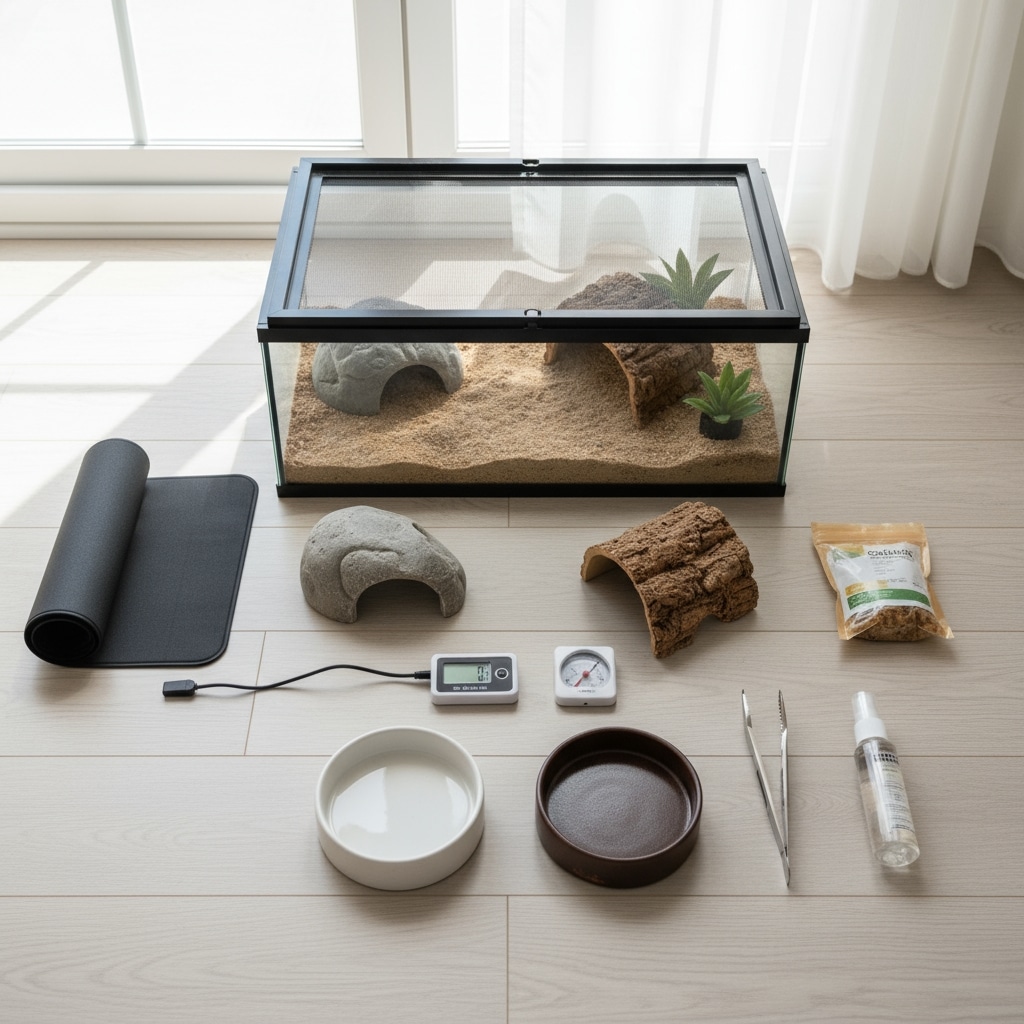
The Foundation: Why Your Starter Kit Matters
Setting up your first leopard gecko tank is one of the most exciting steps for new reptile keepers. But it can also be overwhelming — hundreds of kits online promise “everything you need,” yet many include unsafe or unnecessary items.
A good starter kit isn’t about having more things; it’s about having the right things.
Your gecko depends on consistent heat, secure hides, and stable humidity to survive. The wrong lamp or substrate can quickly lead to stress or even health problems.
That’s why this guide breaks your setup into essentials, upgrades, and common mistakes — so you can build a comfortable, safe, and easy-to-maintain habitat.
If you haven’t already, start by reading the Leopard Gecko Tank Setup Guide — it explains how tank size, heating, and ventilation work together. Once you understand the basics, this checklist will fill in every item you actually need.
The Essential Equipment List
Here’s what every leopard gecko owner must have before bringing one home.
| Category | Essential Item | Purpose |
|---|---|---|
| 🏠 Enclosure | 20-gallon long tank (glass or PVC) | Space for warm/cool zones |
| 🔥 Heating | Under-tank heat mat + digital thermostat | Stable belly heat (88–92°F) |
| 🌡️ Monitoring | 2 digital thermometers | Track both sides of the tank |
| 💧 Water & Food | Shallow dishes | Hydration & feeding control |
| 🪨 Hides | Warm, cool, and moist hide | Comfort, thermoregulation, shedding |
| 🧻 Substrate | Paper towel or tile | Easy cleaning, prevents impaction |
| 💡 Lighting | Optional LED or 2–5% UVB | Day/night rhythm & visibility |
Why these matter:
- Tank: A 20-gallon long enclosure provides enough horizontal space for temperature gradients.
- Heat mat: Geckos absorb heat through their bellies, not from above.
- Thermostat: Prevents burns and overheating.
- Moist hide: Keeps humidity for shedding and hydration.
- Substrate: Paper towel or tile keeps things safe and hygienic.
Avoid any “all-in-one” kits with colored bulbs or heat rocks — they’re unsafe and unnecessary.
To confirm your tank dimensions by age, check our Leopard Gecko Tank Size by Age guide — it shows how to upgrade safely as your gecko grows.
Step-by-Step Assembly
- Position the tank on a sturdy surface away from direct sunlight.
- Install the heat mat under one-third of the tank floor (the warm side).
- Connect it to a thermostat and set to 90°F.
- Place hides on warm, cool, and moist sides.
- Add dishes for food and water.
- Check temperatures on both ends before introducing your gecko.
This basic setup provides all the comfort your gecko needs during the first weeks at home.
Smart Upgrades for Comfort & Convenience
Once you have the essentials, consider adding a few strategic upgrades that make the tank easier to manage and more natural for your gecko.
1️⃣ Digital Hygrometer
Keeps humidity between 30–40%. Place near the moist hide for accuracy.
2️⃣ Smart Plug or Timer
Automates your heating or lighting schedule for a steady day/night rhythm.
3️⃣ Decorative Background
Reduces reflections that may stress your gecko.
4️⃣ Reptile-Safe Décor
Flat rocks, cork bark, or fake plants add enrichment.
Need décor inspiration? Explore our Tank Décor Basics Guide — it lists safe materials and layout tips.
5️⃣ Feeding Tools
Use long tweezers or tongs to hand-feed insects safely.
Each upgrade adds value without clutter. Focus on features that help you maintain consistent temperature, humidity, and enrichment — the keys to a thriving gecko.
If you want to build a low-cost version of this setup, check our Budget-Friendly Tank Setups section for affordable equipment ideas under $100.
Avoid These Common Beginner Mistakes
Even with the right intentions, first-time owners often make errors that can harm their pet. Here’s what to watch out for:
❌ Using Loose Sand or “Calcium Sand”
It looks natural but causes impaction if swallowed. Stick with solid substrates like paper towel or tile until you’re more experienced.
❌ Installing Bright or Colored Bulbs
Red and blue bulbs disrupt your gecko’s nocturnal rhythm. Use daylight LEDs or no light at night.
❌ Skipping the Thermostat
Heat mats can exceed 110°F if left unregulated. A thermostat is a must for safety.
❌ Overcrowding with Décor
Too many decorations block airflow and reduce movement. Keep it simple and functional.
❌ Ignoring Humidity
Dry air causes shedding problems; overly humid air encourages mold. Keep it balanced at 30–40%.
If your gecko shows stress signs (constant hiding, refusing food, or staying on the cool side), revisit your heating and ventilation setup.
Our Safety & Wellbeing Guide explains how to recognize early stress and dehydration symptoms.
How to Fix Common Setup Errors
| Problem | Likely Cause | Fix |
|---|---|---|
| Cold tank | No thermostat / weak mat | Add regulated heat source |
| Gecko hiding constantly | Bright lights / stress | Use low lighting and more hides |
| Shedding stuck on toes | Dry tank | Add moist hide with damp moss |
| Bad odor | Dirty substrate | Deep-clean with reptile-safe disinfectant |
For a complete cleaning checklist, follow our Tank Cleaning Routine Guide — it keeps your enclosure fresh and safe.
Maintaining & Evolving Your Setup
Your gecko’s environment will evolve as it grows. Routine maintenance ensures it stays healthy and odor-free while letting you fine-tune temperature and humidity.
Daily Tasks
- Check warm and cool side temperatures.
- Replace water and remove waste.
- Observe your gecko’s behavior (appetite, shedding, movement).
Weekly Tasks
- Wipe down glass and replace paper towel substrate.
- Check thermostat calibration.
Monthly Tasks
- Deep-clean hides, dishes, and décor.
- Inspect cables, lids, and heating pad condition.
A clean, stable enclosure helps prevent respiratory infections and keeps your gecko active.
If you want to enrich your setup further, experiment with bioactive substrates or PVC enclosures once you’ve mastered the basics. These advanced builds are explained in the Complete Tank Setup Guide for intermediate keepers.
Final Thoughts
Your leopard gecko starter kit is the foundation of everything that follows.
Start simple: heat, hides, and safety first. Then, slowly expand into décor and advanced setups as you gain confidence.
The right environment not only keeps your gecko healthy — it lets you observe its natural behavior and enjoy its unique personality for years to come.
For more guidance, continue your setup journey with the Leopard Gecko Tank Size by Age and Heating Equipment Guide — they’ll help you refine every detail of your reptile’s home.
FAQs — Leopard Gecko Starter Kit
What do I need for a leopard gecko starter kit?
A 20-gallon tank, under-tank heat mat with thermostat, 3 hides, 2 thermometers, and shallow dishes for food and water.
Do leopard geckos need light at night?
No. Keep lights off at night — geckos are nocturnal. Use only belly heat from a heat mat.
Can I use sand for my leopard gecko?
Avoid it. Loose sand can cause impaction. Choose paper towel, tile, or reptile carpet.
What temperature should my leopard gecko tank be?
Warm side 88–92°F, cool side 75–80°F. Always use a thermostat for safety.
How often should I clean the tank?
Spot-clean daily and deep-clean every 2–3 weeks with reptile-safe disinfectant.
Author

