
🟩 Introduction
A leopard gecko may seem low-maintenance compared to mammals, but its health depends on constant observation and preventive care. Because these reptiles hide illness until it becomes severe, regular veterinary care is vital. Many conditions—respiratory infections, metabolic bone disease, or internal parasites—can be treated early when spotted by a qualified exotic-animal veterinarian.
Proper medical attention doesn’t only extend lifespan; it also improves the animal’s comfort, appetite, and mobility. Understanding when and how to involve a reptile specialist is a key part of responsible ownership, aligning with the principles in the Leopard Gecko Health Issues & Common Diseases guide.
🟩 Why Veterinary Care Matters
Leopard geckos live on average 10 to 20 years in captivity, far longer than in the wild. Over that lifetime, they encounter numerous potential problems—shedding complications, nutritional imbalances, or injuries from poor habitat setups. A reptile vet performs examinations that detect subtle signs owners often miss:
- irregular breathing or wheezing,
- unexplained weight loss,
- retained shed around toes or eyes,
- soft or swollen limbs indicating calcium deficiency.
Preventive veterinary visits once a year can help evaluate diet, lighting, and enclosure hygiene. This check complements good practices discussed in Feeding & Nutrition and Tank Cleaning & Maintenance.
🟩 Early Warning Signs to Watch For
Because geckos are prey animals, they instinctively conceal weakness. Knowing subtle warning signs can mean the difference between minor treatment and a fatal illness:
| Category | Observable Sign | Possible Cause |
|---|---|---|
| Appetite | Refusing food for more than a week | Parasites, low temps, stress |
| Behavior | Staying in hide constantly, lethargy | Infection, incorrect humidity |
| Physical | Sunken tail, dull coloration | Dehydration, nutrient loss |
| Respiration | Clicking or open-mouth breathing | Respiratory infection |
| Eyes/Nose | Discharge or swelling | Bacterial infection |
When any of these appear, owners should isolate the animal in a clean quarantine enclosure and consult a professional. Cross-reference these signs with the Respiratory Infections in Leopard Geckos article for deeper insights
🟢 Finding the Right Exotic Vet
Not every veterinarian is trained to treat reptiles. Leopard geckos require a specialist familiar with their unique anatomy, metabolism, and environmental needs. A general vet might overlook subtle issues like temperature-induced dehydration or calcium metabolism disorders.
When searching for a qualified exotic veterinarian, look for these criteria:
1️⃣ Specialization in herpetology – ideally certified or experienced in reptile medicine.
2️⃣ Clinic environment – clean, quiet, with separate waiting areas for reptiles and mammals.
3️⃣ Diagnostic tools – access to radiography, fecal testing, and UV index measurement.
4️⃣ Communication – a vet who explains care instructions clearly and encourages owner questions.
📌 Tip: It’s worth checking local reptile associations or forums for recommendations. These communities often list trusted vets for specific species.
Many owners refer to guides such as Ethical Gecko Ownership to understand the responsibility of proper medical follow-up.
🩺 What Happens During a Vet Visit
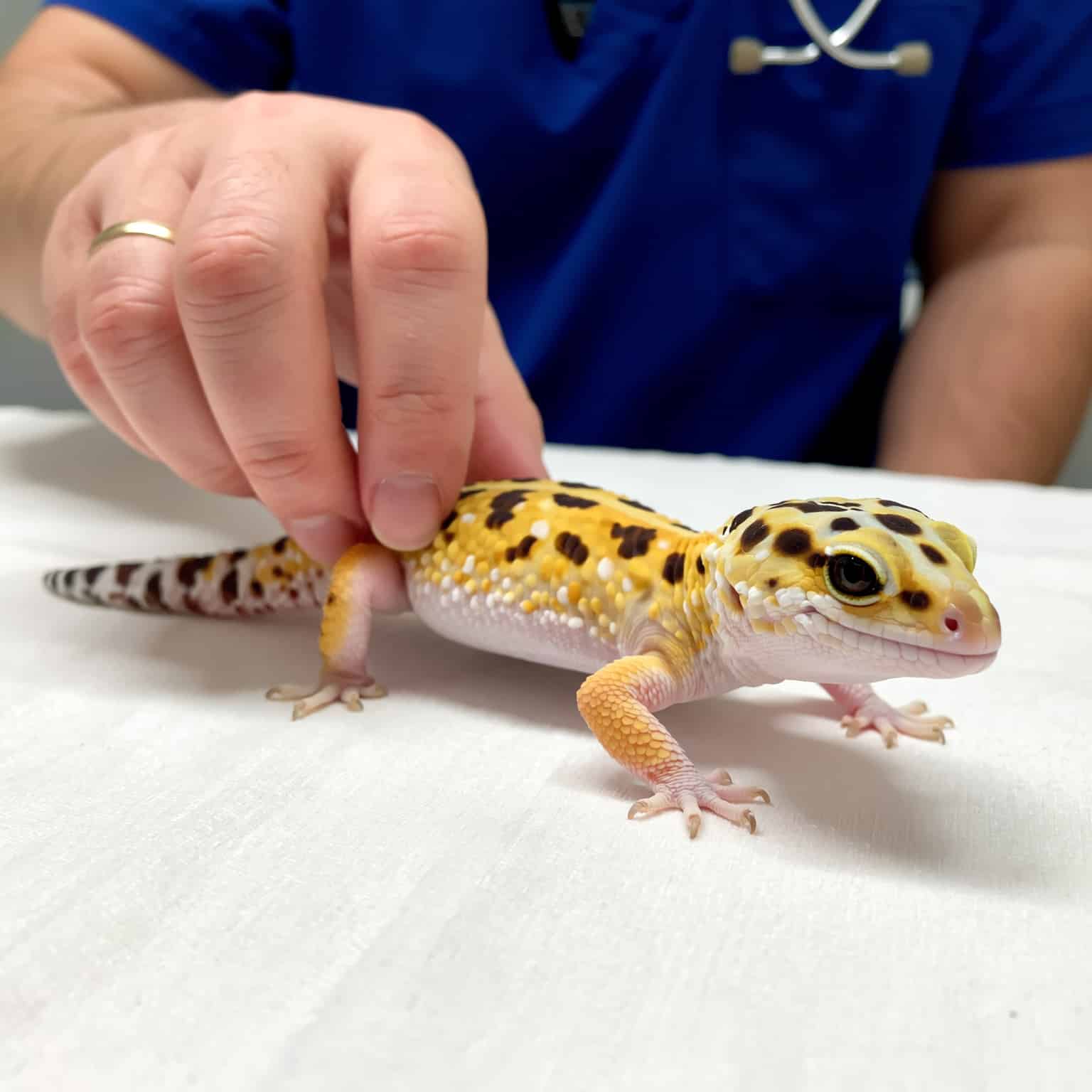
A routine consultation for a leopard gecko usually lasts 20–30 minutes. The veterinarian performs a thorough physical exam and asks about habitat conditions, recent diet, and behavioral changes.
Typical steps include:
- Visual inspection – eyes, skin, vent, and tail for swelling or discoloration.
- Weighing & body scoring – compared with the standard Leopard Gecko Growth Chart.
- Temperature & humidity review – ensuring ideal gradients (88–92°F warm side / 70–75°F cool side).
- Mouth check – to detect stomatitis (mouth rot) or respiratory irritation.
- Fecal test – screening for parasites or bacterial imbalance.
If the gecko appears underweight or lethargic, the vet may recommend blood tests or X-rays to identify calcium or metabolic issues (often tied to MBD). These exams are particularly relevant after reviewing cases described in Metabolic Bone Disease in Leopard Geckos.
🧰 Preparing for the Appointment
Before visiting the clinic:
- Bring the gecko in its familiar hide box to reduce stress.
- Include a small amount of substrate and a recent stool sample.
- Note any changes in appetite, behavior, or shedding frequency.
- Photograph the enclosure to help the vet assess environmental factors.
During the visit, stay calm and avoid overhandling. Geckos often stiffen or vocalize when anxious—behaviors described in Leopard Gecko Behavior Explained.
🟢 Post-Consultation Care: Supporting Recovery
After a veterinary visit, your leopard gecko may need time to readjust. Reptiles often experience stress from transport or handling, which can suppress appetite for a few days.
To ensure recovery:
- Isolate the gecko in a quiet terrarium away from other pets.
- Keep lighting and temperature consistent (no sudden changes).
- Offer soft, easily digestible feeders such as small crickets or waxworms.
- Monitor stool consistency and frequency over the following week.
If medication is prescribed (oral antibiotics or calcium supplements), administer them exactly as directed. Skipping doses can lead to incomplete recovery or resistant infections.
📎 Related article: Leopard Gecko Feeding & Nutrition – for tips on maintaining appetite during recovery.
💊 Common Veterinary Treatments
Depending on the diagnosis, the vet may recommend specific treatments:
| Condition | Typical Treatment | Duration | Home Notes |
|---|---|---|---|
| Respiratory infection | Antibiotics + temperature correction | 10–14 days | Increase enclosure warmth to 90°F |
| Parasites | Antiparasitic medication | 7–10 days | Disinfect all décor and substrate |
| MBD (Metabolic Bone Disease) | Liquid calcium + UVB correction | Several weeks | Supplement dusted feeders daily |
| Skin infections | Antifungal or antiseptic topical | 5–10 days | Keep humidity moderate and clean hides |
| Dehydration | Rehydration bath or electrolyte drops | 2–3 days | Mist gently or use humid hide |
All handling should be limited until full recovery. Stress can interfere with digestion and medication effectiveness.
If new symptoms arise during treatment, immediately contact your reptile vet—especially signs of open-mouth breathing, weight loss, or inactivity.
🧼 Preventive Health Routines at Home
Most veterinary emergencies can be prevented through consistent environmental and nutritional care. Follow these steps weekly:
1️⃣ Clean enclosure surfaces and replace substrate – reference Tank Cleaning & Maintenance.
2️⃣ Check temperatures using a digital thermometer and thermostat.
3️⃣ Dust feeders with calcium and vitamin D3.
4️⃣ Observe behavior daily—changes in movement or appetite are early warning signs.
5️⃣ Weigh your gecko monthly and compare it with the Leopard Gecko Growth Chart.
Incorporating these steps builds trust and allows you to catch health problems early—before they become severe.
🧠 Summary of Preventive Strategy
Healthy leopard geckos thrive under stable, stress-free conditions. Regular vet visits, clean enclosures, and a proper diet collectively form a powerful shield against disease. Remember: preventive care costs far less than emergency treatment.
For owners committed to lifelong responsibility, see Ethical Gecko Ownership for guidance on long-term well-being.
🦎 Recognizing a True Emergency
Some health problems in leopard geckos require immediate attention, as delays can be fatal.
A reptile’s metabolism is slow, so even a few days of deterioration can mean the difference between life and death.
Common emergency situations include:
- Open-mouth breathing or wheezing (respiratory distress)
- Swollen limbs or jaw softness (advanced MBD)
- No stool for 10+ days despite eating
- Visible parasites around vent or skin
- Sudden collapse, tremors, or unresponsiveness
- Egg-binding in females (straining, bloated abdomen)
In such cases, don’t attempt risky home remedies. Keep the animal warm, hydrated, and isolated while preparing transport to a qualified exotic vet.
🔗 Reference: Check Emergency Signs in Leopard Geckos for a full checklist and first-response actions.
🧊 Stabilizing at Home Before the Vet
While waiting for a professional consultation, you can provide supportive care that stabilizes the gecko’s condition without causing harm.
🟩 1. Temperature Management
Place the gecko in a warm side enclosure (90°F) to support immune function and prevent hypothermia. Avoid direct heat lamps—use under-tank heating pads regulated by a thermostat.
🟩 2. Hydration Support
Offer shallow water in a small dish or gently mist the sides of the enclosure. In severe dehydration, prepare a lukewarm electrolyte soak (10–15 minutes).
🟩 3. Safe Isolation
Use a simple paper-towel substrate to easily monitor droppings and prevent contamination. Keep the room quiet and dim.
🟩 4. Documentation for the Vet
Note all recent changes: feeding, temperature readings, behavior, shedding schedule. Bring this log and a stool sample to the appointment.
These steps, though basic, can buy valuable time and improve recovery chances once the vet begins treatment.
🧰 Emergency Kit Essentials for Gecko Owners
Every leopard gecko keeper should maintain a small first-aid kit to manage emergencies safely:
| Item | Use |
|---|---|
| Digital thermometer + hygrometer | Monitor conditions |
| Electrolyte solution (e.g., Reptaboost) | Rehydration |
| Calcium & D3 powder | Emergency supplementation |
| Tweezers & sterile gauze | Cleaning small wounds |
| Disinfectant (chlorhexidine) | Safe for reptiles |
| Travel container | Stress-free vet transport |
⚠️ Common Mistakes to Avoid During Crises
🚫 Force-feeding without vet approval — risk of aspiration.
🚫 Applying human ointments — toxic for reptiles.
🚫 Drastic enclosure changes — cause further stress.
🚫 Over-misting — may worsen respiratory issues.
Instead, focus on stability, warmth, and documentation until professional care is available.
🟢 Annual Vet Checkups
Even if your leopard gecko appears perfectly healthy, an annual veterinary visit is essential. Many conditions progress silently—parasites, early metabolic bone disease, and organ decline may not show visible symptoms.
During the checkup, the vet will:
- Assess weight and body condition, comparing with the Growth Chart.
- Perform fecal exams for parasites.
- Inspect bone density and limb structure.
- Evaluate shedding and skin texture for signs of dehydration or infection.
- Review diet and supplements, ensuring proper calcium-phosphorus ratios.
Owners who follow this routine often notice their geckos live longer and remain active well into senior years, supporting insights from Leopard Gecko Growth & Lifespan Guide.
📒 Keeping Medical Records
Maintaining a health log is one of the most underrated habits in reptile care. Record-keeping helps detect subtle changes over time and provides valuable data for vets.
Your log should include:
- Dates of feedings, shed cycles, and vet visits.
- Weight (measured monthly).
- Fecal observations (color, frequency, texture).
- Notes on appetite and behavior changes.
- Photos every few months to track growth and body tone.
Digital tools or even a simple spreadsheet can make tracking easy. Reference logs are particularly helpful during emergencies or breeding seasons when behavior changes rapidly.
🌿 Long-Term Health Management
Once your gecko reaches adulthood, maintaining wellness becomes a balancing act between nutrition, habitat, and observation. Follow these lifelong guidelines:
1️⃣ Stable Environment: Maintain a temperature gradient (90°F hot side / 74°F cool side).
2️⃣ Calcium-Rich Diet: Continue dusting feeders 3–4 times per week.
3️⃣ Regular Habitat Cleaning: Disinfect hides and bowls weekly (see Tank Cleaning & Maintenance).
4️⃣ Controlled Breeding: Avoid overbreeding females to prevent egg-binding and nutrient depletion.
5️⃣ Stress Management: Limit loud noises, frequent handling, and overcrowding.
By combining annual checkups with proper daily care, you ensure not only longevity but also quality of life.
🧠 Key Takeaway
Veterinary care isn’t only for emergencies—it’s part of responsible reptile ownership. Routine checkups, careful observation, and a healthy environment form the triad of long-term wellness.
As highlighted in Ethical Gecko Ownership, caring for a leopard gecko means anticipating its needs before problems arise. Preventive medicine remains the most effective—and compassionate—approach.
✅ Conclusion
Leopard geckos rely entirely on their keepers for health and safety. By establishing a relationship with a qualified exotic vet, maintaining clean living conditions, and tracking health metrics, owners can extend their pet’s lifespan well beyond a decade.
This completes the Vet & Medical Care Guide, central to the Care & Health Silo, supporting other key topics such as Feeding, Disease Prevention, Growth, and Senior Care.
Author

