
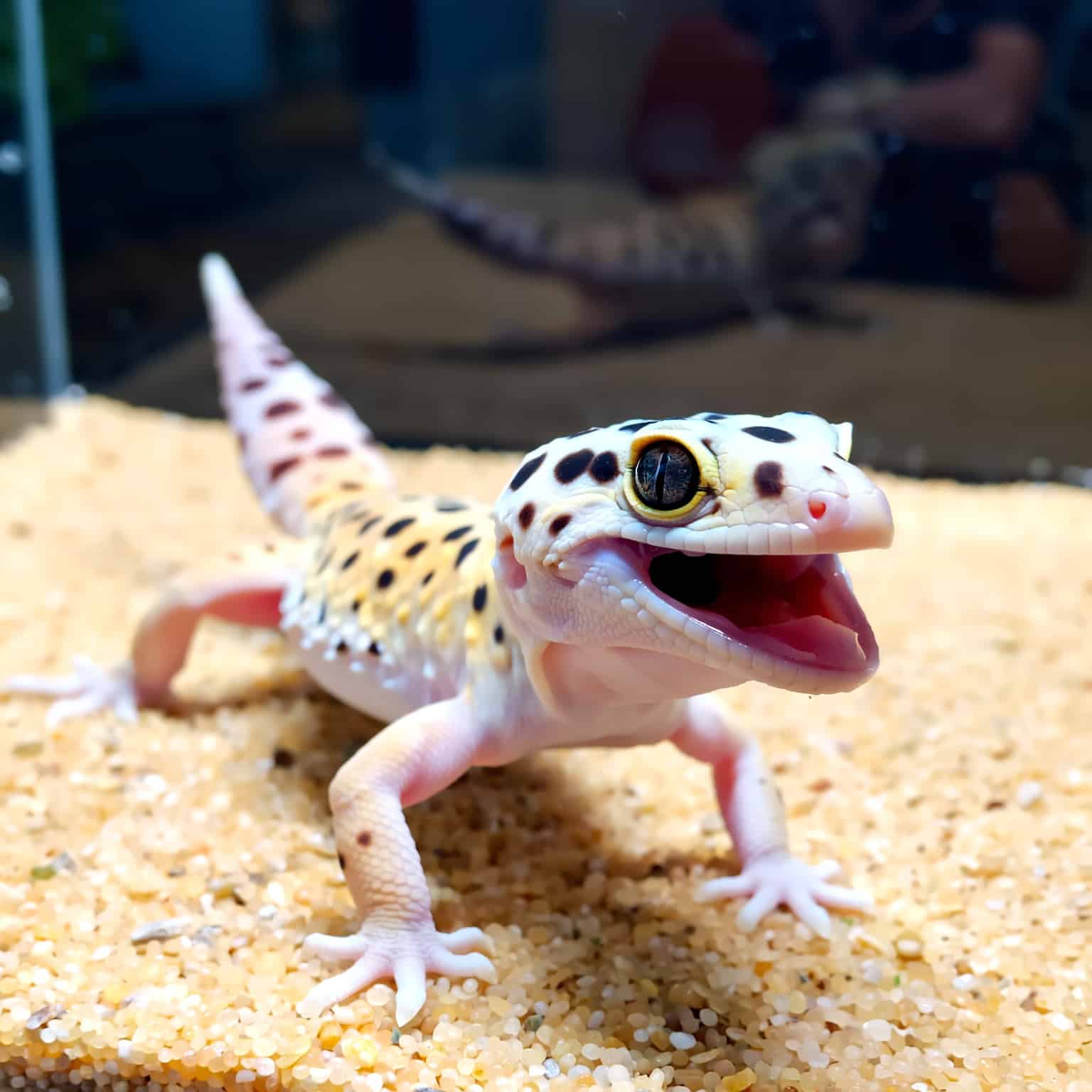
🦎The Language of Leopard Geckos
Leopard geckos may be silent most of the time, but when they do make noise, each sound has meaning. From gentle chirps to sudden squeaks, vocal sounds in leopard geckos are part of a subtle communication system that reflects emotion, defense, and environmental response.
These reptiles don’t use vocal cords like mammals. Instead, their leopard gecko noises come from vibrations of the glottis (the opening at the back of the throat). Each sound corresponds to a specific trigger — whether it’s stress, hunger, or territorial alert.
Understanding leopard gecko vocal sounds is essential for reading their emotional and physical state. A squeak might signal discomfort, while a chirp can show mild curiosity or communication with other geckos. Observing these cues helps owners ensure proper care and avoid stress-related issues.
For instance, persistent squeaking during handling often means the gecko feels threatened. This connects closely to the signs covered in Stress & Behavior Signs in Leopard Geckos, where vocalization is one of the earliest indicators of tension.
In contrast, quiet clicking during feeding or exploring the enclosure is perfectly normal and can even indicate excitement — a topic related to Feeding & Nutrition and Tank Décor & Enrichment, where environmental comfort encourages natural behavior.
🦎The Science Behind Gecko Vocalization
2.1 How Leopard Geckos Produce Sound
Unlike snakes, which hiss by forcing air through the glottis, leopard geckos make vocal sounds by rapidly contracting throat muscles. These small bursts of air create clicks, squeaks, or chirps.
The sounds serve as a non-verbal warning system — vital for a solitary species that relies on vibration and tone to communicate rather than sight or smell.
2.2 Why Vocalization Differs Among Geckos

Not all geckos vocalize in the same way. Juveniles tend to chirp or squeak more frequently, often expressing fear or confusion. Adult males, particularly during breeding season, produce loud mating calls or defensive barks to claim territory or attract a partner.
Environmental conditions can also affect leopard gecko noises. For example:
- Low humidity can make their throat dry, causing harsher squeaks.
- Cold temperatures may suppress sound production altogether.
Maintaining balanced enclosure conditions through Humidity & Temperature Management ensures natural, healthy vocal behavior.
2.3 The Role of Body Language
Vocal sounds rarely occur alone. When a leopard gecko chirps or squeaks, body language reinforces the message: tail posture, eye dilation, or movement speed reveal whether the sound indicates fear, excitement, or aggression.
This link between voice and gesture makes observation crucial, tying directly to Tail Waving Meaning in Leopard Geckos and other behavioral signals.
🦎Types of Leopard Gecko Vocal Sounds and What They Mean
Every sound a leopard gecko makes carries meaning — a message tied to emotion, environment, or interaction. By learning to interpret these vocal sounds leopard gecko owners can better understand what their reptile is trying to say.
3.1 Chirping Sounds
Leopard gecko chirping is the most recognizable vocalization. It’s short, high-pitched, and usually heard when the gecko is startled or handled unexpectedly.
- Meaning: Defensive or alert reaction.
- Context: Handling, sudden noise, or seeing another gecko.
If your gecko chirps while you pick it up, it’s not being aggressive — just nervous. Over time, with gentle interactions (see Handling & Bonding Tips), chirping should decrease.
Occasionally, geckos chirp softly while exploring or feeding. This is a sign of low-level excitement or curiosity — a natural behavior linked to comfort in the habitat. Check the Tank Décor & Enrichment article to ensure your gecko has stimulating surroundings that encourage exploration.
3.2 Clicking and Popping Sounds
Clicking is a mild, almost mechanical noise — like a faint “tick.” Some leopard gecko noises sound like tiny pops or soft clicks.
- Meaning: Communication or alert signal.
- Context: Often between males or during feeding.
If clicking is constant or accompanied by open-mouth breathing, it might indicate a respiratory infection. This connects directly to Health Issues & Common Diseases, where respiratory problems can alter or intensify vocal sounds.
3.3 Squeaking or Screaming

A leopard gecko screaming can startle new owners, but it’s simply a high-pitched, elongated squeak made when the gecko feels threatened.
- Meaning: Fear or self-defense.
- Context: Sudden handling, loud noises, or new environments.
Young geckos squeak more often than adults. Inexperienced keepers might interpret this as pain, but it’s a defensive response, similar to tail waving (see Tail Waving Meaning in Leopard Geckos).
If your leopard gecko squeaks regularly when you approach, review your handling technique and ensure that its enclosure placement avoids constant movement or noise (Enclosure Placement & Environment).
3.4 Hissing Sounds
Hissing is one of the most primal vocal sounds leopard gecko owners will encounter. It happens when the gecko rapidly expels air through its glottis — a universal sign of warning and discomfort.
- Meaning: Territorial defense or frustration.
- Context: Common in adult males, especially during mating season.
If your gecko hisses when another gecko approaches the glass, consider separating them. Leopard geckos are solitary animals, and prolonged visual contact can lead to stress (Gecko Social Behavior).
3.5 Clicking During Breeding
During courtship, males often make repetitive clicking or chirping sounds while vibrating their tails.
- Meaning: Courtship or mating readiness.
- Context: Interaction between male and female geckos.
This sound is paired with physical vibration of the tail and gentle nudging behavior. It’s completely natural and should not be interrupted. For deeper insight, refer to Breeding Basics in Leopard Geckos.
3.6 Silence — The Unspoken Language
Sometimes, silence itself is meaningful. A quiet, calm gecko resting in its hide is a sign of security and good care.
Excessive silence paired with lethargy, on the other hand, may indicate poor temperature regulation or illness (Humidity & Temperature Management, Vet & Medical Care).
🧠 Summary:
Each leopard gecko vocal sound represents an instinctive form of communication:
| Sound | Meaning | Emotional State | Context |
|---|---|---|---|
| Chirping | Startled or curious | Alert | Handling or exploring |
| Clicking | Mild warning or communication | Neutral | Feeding, interacting |
| Screaming | Fear, defense | Highly stressed | Handling, new environment |
| Hissing | Territorial aggression | Defensive | Mating, invasion of space |
| Breeding clicks | Courtship | Excited | Male-female pairing |
| Silence | Security or illness | Calm or weak | Resting or unwell |
🦎 Environmental and Health Factors Affecting Vocalization
4.1 Temperature and Humidity Balance
The environment has a direct impact on vocal sounds in leopard geckos. These reptiles rely on optimal temperatures to regulate metabolism and muscle control — both essential for sound production.
If the tank becomes too cold (below 75°F), vocal frequency drops, and geckos become lethargic. When it’s too hot (above 95°F), geckos may squeak or hiss in distress, showing clear signs of discomfort. Maintaining a temperature gradient with warm and cool zones, as outlined in Humidity & Temperature Management, ensures their sounds remain natural and healthy.
Humidity that’s too low can dry the throat, making leopard gecko noises sound raspy. Too much humidity (over 50%) can cause respiratory issues, sometimes altering vocal tone.
4.2 Lighting and Circadian Rhythm
Leopard geckos are nocturnal creatures; inappropriate lighting schedules can disturb their sleep and increase stress vocalizations. Continuous bright light may lead to agitation, resulting in frequent leopard gecko chirping or squeaking.
Use soft red or blue night bulbs for minimal disturbance, following the setup in the Tank Setup Guide. Consistent day-night cycles promote calm behavior and more predictable sound patterns.
4.3 Tank Design and Space
An overcrowded or bare enclosure can trigger anxiety. Leopard geckos vocalize more in tanks lacking hiding places or visual barriers. A good enclosure includes multiple hides, climbing decor, and a safe humid hide.
This concept is explained further in Tank Décor & Enrichment — enriched environments lower vocal stress by giving the gecko options for retreat and exploration.
4.4 Health and Illness-Related Vocalization
When a leopard gecko’s vocal sounds suddenly increase or change tone, illness may be the cause. Common health triggers include:
- Respiratory infections — lead to wheezing or clicking noises (Health Issues & Common Diseases).
- Parasites — internal irritation may cause erratic squeaking or stress chirps (Parasites in Leopard Geckos).
- Shedding problems — dryness or tight skin can make the gecko restless and more vocal (Shedding & Skin Care).
- Dehydration — results in strained or irregular vocal tones (Signs of Dehydration in Leopard Geckos).
Healthy leopard geckos vocalize sparingly; frequent or abnormal sounds are almost always linked to stress, environmental imbalance, or pain.
4.5 Psychological Triggers
Fear, territorial stress, or lack of social space can cause leopard gecko noises to increase dramatically. Males kept in visual contact with each other may hiss or click repeatedly as a dominance display (Gecko Social Behavior).
New environments, loud household sounds, or frequent handling also cause temporary vocal bursts. Reducing stimuli and allowing time to adapt helps minimize defensive squeaks and hisses.
🦎Interpreting Vocal Sounds in Context & Owner Response
5.1 Reading the Situation Before Reacting
Not every leopard gecko vocal sound requires intervention. The key lies in reading context: when and why the noise occurs.
If your gecko chirps during handling but calms after a few seconds, it’s a mild stress response. However, constant squeaking or screaming paired with tail waving suggests high tension, linking directly to Stress & Behavior Signs in Leopard Geckos.
Always observe environmental clues — lighting, temperature, and recent changes — before assuming illness. Behavior often explains the sound more than the noise itself.
5.2 When to Intervene
You should act when leopard gecko noises become repetitive, accompanied by open-mouth breathing, glass surfing, or weight loss. These symptoms indicate that vocalization is a cry for help.
Steps to take:
- Check temperature and humidity levels — ensure proper gradient (see Humidity & Temperature Management).
- Inspect for shedding or respiratory issues — look for stuck skin or clicking sounds (Shedding & Skin Care).
- Review handling habits — limit physical contact if the gecko squeaks every time it’s touched (Handling & Bonding Tips).
- Ensure calm surroundings — isolate from loud rooms or constant motion (Enclosure Placement & Environment).
5.3 When Silence Speaks
A calm, silent leopard gecko resting in its hide usually means it feels safe. However, if it remains quiet for days while refusing food or moving little, silence becomes a concern.
Long silence with visible weakness may suggest dehydration, internal parasites, or other medical problems — areas covered in Parasites in Leopard Geckos and Vet & Medical Care.
5.4 Developing the Gecko’s Comfort Language
Every gecko has its unique “vocal personality.” Some individuals chirp more than others. By observing your pet’s routine, you’ll begin to associate sounds with specific emotions.
Creating a predictable daily rhythm — same feeding time, lighting cycle, and minimal disruptions — helps stabilize vocal sounds in leopard geckos. Over time, the noises become rare, gentle, and easily interpreted.
5.5 Summary of Key Interpretations
| Vocal Sound | Meaning | Likely Cause | Response |
|---|---|---|---|
| Chirping | Startled / Curious | Handling, exploring | Pause handling, let calm |
| Clicking | Alert or mild defense | Feeding, territory | Observe; normal if brief |
| Squeaking | Fear / Stress | Handling, noise | Reduce stimuli |
| Hissing | Aggression or warning | Mating, dominance | Avoid contact |
| Silence | Comfort or weakness | Resting / illness | Evaluate environment |
🦎 Conclusion
Vocalization in leopard geckos is a window into their inner world. Every chirp, click, or hiss reveals a piece of emotional data. By listening and observing carefully, owners can ensure comfort, identify stress early, and promote a stable, trusting relationship.
When understood correctly, vocal sounds in leopard geckos become less mysterious and more meaningful — a natural part of reptile communication that reflects health, environment, and individual temperament.
For more insight, explore related behavioral guides such as Glass Surfing in Leopard Geckos and Tail Waving Meaning in Leopard Geckos for a complete understanding of gecko body language.
FAQs
Why is my leopard gecko making squeaking noises?
Squeaking or screaming is a defensive response. It usually means your gecko feels stressed, frightened, or overhandled. Provide hiding spots and reduce contact until it calms.
What does chirping mean in leopard geckos?
Chirping is a mild vocalization often triggered by curiosity or low-level stress. Some geckos chirp when exploring, hunting, or communicating during breeding.
Are leopard geckos supposed to be noisy?
No. Leopard gecko vocal sounds are generally rare. Frequent hissing, squeaking, or clicking may point to stress, environmental imbalance, or illness.
Why is my leopard gecko clicking constantly?
Soft clicking can be normal communication or courtship. However, persistent clicking with open-mouth breathing might indicate a respiratory issue.
Author

