

Creating a leopard gecko terrarium doesn’t have to break the bank. With a little creativity, you can design a safe, functional, and even beautiful enclosure on nearly any budget. Whether you’re a beginner who wants a simple starter setup or an advanced keeper looking for a fully custom build, DIY terrarium ideas give you flexibility and savings.
In this guide, we’ll explore budget-friendly enclosures under $100, mid-range builds, and advanced setups. We’ll also cover essential supplies, safety tips, and the pros and cons of DIY compared to store-bought tanks.
Why Build a DIY Terrarium?
Cost Savings for New Keepers
Pet store kits often include unnecessary or even unsafe items (like loose sand or red bulbs). Building your own terrarium lets you buy only what your gecko actually needs — saving money while improving safety.
Customization for Enrichment and Aesthetics
DIY builds allow you to:
- Add multiple hides for better thermoregulation.
- Create backgrounds and climbing ledges for enrichment.
- Choose décor that matches your room’s style.
A DIY approach ensures you’re not limited to generic kits. Instead, you can create an enclosure that’s both gecko-friendly and visually appealing. For layout inspiration, see our guide on leopard gecko tank layouts.
Essential Supplies for a DIY Setup
Before diving into creative ideas, it’s important to gather the basics. Every leopard gecko enclosure, DIY or not, needs a few non-negotiable elements.
Tanks and Enclosures
- Glass Tanks: Affordable, widely available, and perfect for display. A 20-gallon long is the standard.
- PVC Enclosures: Lightweight, excellent insulation, and professional-looking, though pricier.
- Plastic Bins: Budget-friendly for juveniles or temporary housing, but not ideal as permanent display tanks.
For details on which size works best, check our full guide on leopard gecko tank size requirements.
Heating and Lighting Basics
- Heat Mat with Thermostat: Provides belly heat, essential for digestion.
- Optional UVB Light: Low-level UVB can improve vitamin D3 absorption.
- Thermometers/Hygrometers: Digital versions are best for monitoring conditions accurately.
Our comparison of heat mats vs. heat lamps explains which heating method is safest for DIY setups.
Safe Substrates and Hides
- Recommended Substrates: Reptile carpet, slate tile, or paper towels.
- Avoid: Loose sand, crushed walnut, or soil mixes that can cause impaction.
- Hides: At least three — one on the warm side, one on the cool side, and a humid hide filled with moss or damp paper towels.
If you’re unsure which flooring to use, see our article on best substrate options for safe recommendations.
Budget-Friendly DIY Terrarium Ideas (<$100)
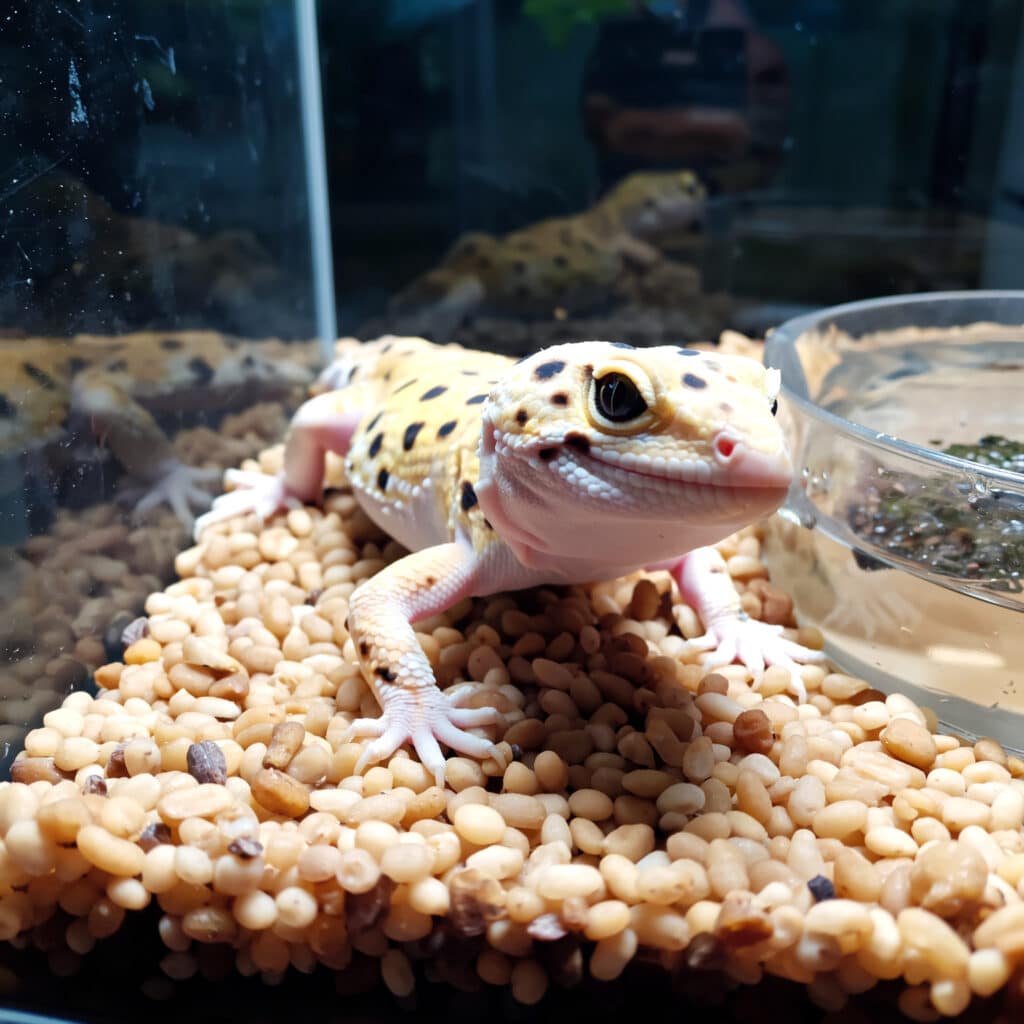
Even with a limited budget, you can build a safe and functional terrarium for your leopard gecko. The key is focusing on essentials only and skipping unnecessary add-ons often included in pet store kits.
20-Gallon Long with Reptile Carpet
- Tank: A basic 20-gallon long glass aquarium (often found secondhand).
- Substrate: Reptile carpet or paper towels (washable or disposable).
- Hides: Three simple plastic hides or DIY versions made from containers.
- Heating: An under-tank heating mat with a thermostat.
This simple setup costs under $100 and provides everything your gecko needs.
Plastic Bin Setups for Juveniles
Some keepers use sterilite or Rubbermaid tubs as temporary housing for young geckos.
- Easy to clean and cheap.
- Lightweight and secure when fitted with a ventilated lid.
- Works well for quarantine or as a starter before upgrading to glass/PVC.
While not ideal for display, this option is practical and affordable.
DIY Hides Using Plastic Containers
You don’t have to buy fancy hides from the pet store. Instead:
- Cut a hole in a plastic food container to make a warm or cool hide.
- Add damp moss or paper towel for a humid hide.
- Cover containers with reptile-safe paint or place décor around them to blend into the enclosure.
For more creative ideas, see our DIY terrarium setups that balance low cost with functionality.
Mid-Range DIY Terrarium Ideas ($100–$250)
If you have a bit more to spend, you can create a terrarium that combines practicality, safety, and aesthetics. Mid-range setups are ideal for pet owners who want a display-worthy enclosure without going full custom.
Tile Flooring with Rock Décor
- Substrate: Slate or ceramic tile — durable, easy to clean, and natural-looking.
- Décor: Stacked rocks and caves to mimic a desert environment.
- Heating: Under-tank heater with thermostat to maintain belly heat.
- Extras: Digital thermometer and hygrometer for accuracy.
This setup gives a naturalistic appearance while staying safe and easy to clean.
Foam Backgrounds with Climbing Ledges
For keepers who enjoy DIY projects, foam backgrounds add depth and enrichment.
- Use styrofoam or expanding foam to create ledges and rocky walls.
- Seal with non-toxic grout or reptile-safe sealant.
- Adds climbing opportunities and a realistic desert vibe.
When done correctly, foam builds create enrichment without relying on unsafe substrates.
Artificial Plants for Natural Coverage
Adding plants makes a terrarium look more complete:
- Use silk or plastic plants for shade and cover.
- Place them strategically to provide visual barriers and reduce stress.
- Avoid live plants that may alter humidity in the enclosure.
We covered more in our leopard gecko décor guide, which explores safe and unsafe decoration options.
Advanced Custom Builds ($250+)
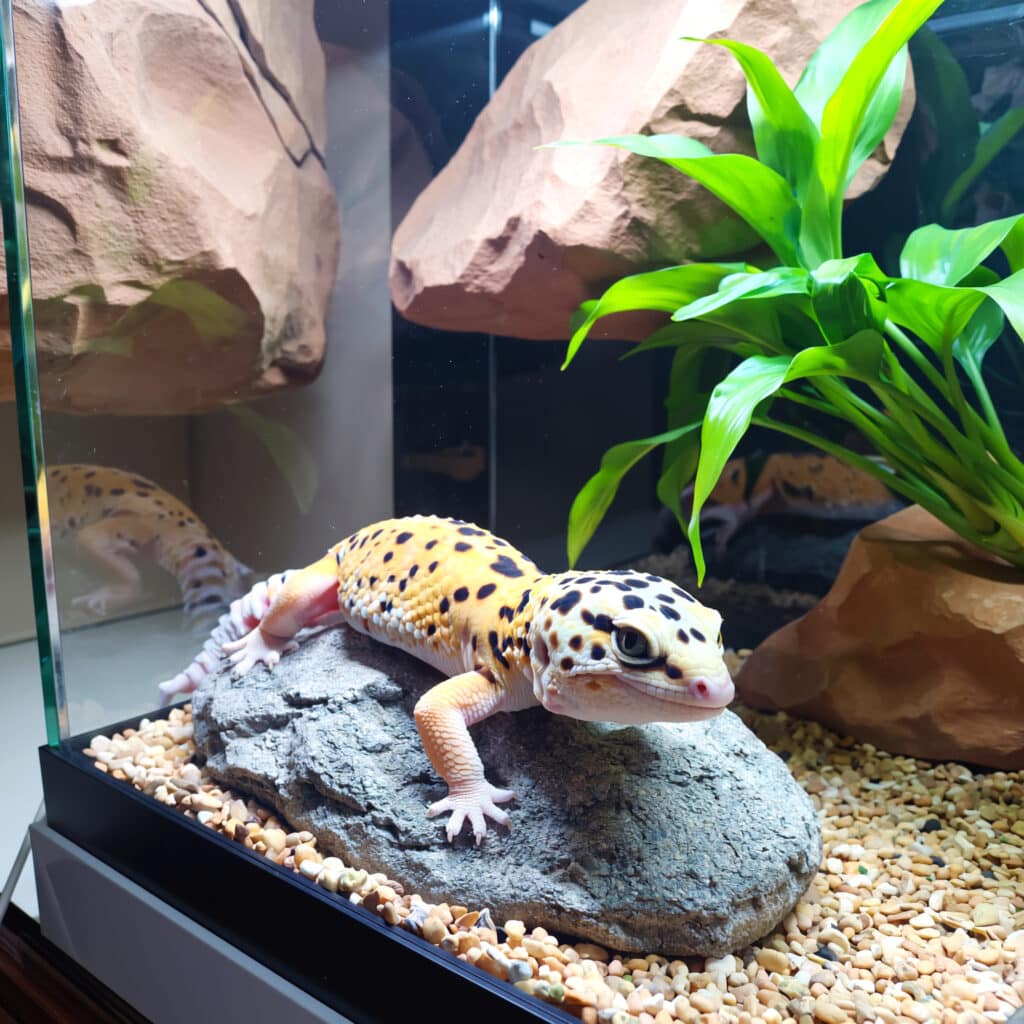
For keepers who want to go beyond the basics, advanced terrarium builds allow you to design a long-lasting, visually stunning, and fully functional enclosure. These setups are perfect for display tanks or dedicated reptile rooms.
PVC Enclosures with Sliding Doors
- Material: PVC retains heat better than glass, making it energy-efficient.
- Doors: Sliding front doors provide easy access for cleaning and feeding.
- Durability: Lightweight, moisture-resistant, and long-lasting.
These enclosures are a popular upgrade among serious hobbyists.
Integrated Heating Systems
Advanced builds may use heating beyond the standard under-tank mat:
- Radiant Heat Panels (RHP): Mounted overhead, ideal for even heat distribution.
- Heat Cables: Built into décor or backgrounds to provide subtle warmth.
- Smart Thermostats: Allow remote control and monitoring via Wi-Fi.
For a deeper breakdown of heating choices, see our guide on heat mats vs. heat lamps.
Custom 3D Rock Walls with Built-In Hides
Some keepers craft fully customized enclosures with:
- Foam backgrounds shaped into rocky ledges.
- Hidden caves built directly into the design.
- Integrated basking spots and natural-looking ledges.
This type of build transforms the terrarium into a centerpiece for your home while giving your gecko enrichment and security.
Safety Tips for DIY Builds
While DIY terrariums give you flexibility, it’s important to make sure everything you build is safe for your leopard gecko. Small mistakes in materials or construction can lead to injuries or health problems.
Non-Toxic Sealants and Adhesives
- Use aquarium-safe silicone or reptile-safe grout/sealants when building foam backgrounds or securing décor.
- Avoid construction adhesives or paints that release harmful fumes.
Securing Heavy Rocks and Décor
- Always place rocks directly on the tank floor, not on top of substrate.
- Use silicone to glue stacked rocks together to prevent collapse.
- Test stability before introducing your gecko.
Avoiding Unsafe Materials
- Treated Wood: May contain chemicals and oils toxic to reptiles.
- Loose Sand or Crushed Walnut: Increases the risk of impaction.
- Sharp Decorations: Edges on rocks or décor can cut your gecko’s skin.
Many of these safety issues overlap with broader care concerns — for example, poor substrate choice can cause digestive blockages. For a full breakdown, see our guide on safe and unsafe substrates.
📝 Tip: When in doubt, ask yourself: Is this easy to clean, non-toxic, and stable? If the answer is yes, it’s likely safe for your gecko.
Pros and Cons of DIY vs Store-Bought
When setting up a leopard gecko terrarium, you’ll face a choice: build your own or buy a ready-made enclosure. Both options work, but each comes with trade-offs.
Pros of DIY Terrariums
- Cost Savings: You buy only what you need, often spending less than commercial kits.
- Customization: Choose layouts, hides, and décor that fit your space and style.
- Enrichment: Custom builds can provide unique climbing ledges, hides, and enrichment that store-bought kits may lack.
Cons of DIY Terrariums
- Time Investment: Foam backgrounds, rock walls, and custom décor require planning and patience.
- Safety Risks: Using the wrong materials (like toxic adhesives or unstable rocks) can create hazards.
- Trial and Error: Beginners may need to adjust their setup multiple times before it’s perfect.
Pros of Store-Bought Kits
- Convenience: Everything is included in one package.
- Beginner-Friendly: Easy setup for new gecko owners.
- Standardized Sizes: Tanks are often labeled for reptiles, so you know what you’re getting.
Cons of Store-Bought Kits
- Unnecessary Items: Many kits include unsafe substrates (sand) or bulbs geckos don’t need.
- Higher Cost: Starter kits are often more expensive than piecing together your own setup.
- Limited Flexibility: You may have to replace certain items anyway to meet proper care standards.
If you’re deciding between the two, our tank setup guide explains the essentials that every enclosure must have — whether DIY or store-bought.
Conclusion
Building your own leopard gecko terrarium is one of the most rewarding parts of reptile keeping. Whether you’re working with a tight budget or ready to invest in a custom PVC enclosure, DIY setups let you design a habitat that balances safety, functionality, and aesthetics.
Key takeaways:
- ✅ Budget builds under $100 are safe and simple with reptile carpet, plastic hides, and a heat mat.
- ✅ Mid-range terrariums ($100–$250) allow for upgrades like slate tiles, rock décor, and foam backgrounds.
- ✅ Advanced builds ($250+) offer PVC enclosures, integrated heating systems, and custom 3D backgrounds.
- ✅ Safety always comes first — use non-toxic materials, secure heavy décor, and avoid loose substrates.
By planning your setup around your budget and your gecko’s needs, you’ll create not just a tank, but a thriving environment that supports natural behaviors and long-term health.
For a full breakdown of essentials (heating, lighting, humidity, substrate, and décor), don’t miss our Ultimate Leopard Gecko Tank Setup Guide.
FAQs About DIY Leopard Gecko Terrariums
Can I use a fish tank as a gecko terrarium?
Yes, many leopard gecko owners repurpose standard glass aquariums. A 20-gallon long fish tank works perfectly. Just be sure it has a secure lid and proper heating from below.
What’s the cheapest safe setup?
The most affordable option is a 20-gallon long glass tank with reptile carpet or paper towels, a heat mat with thermostat, and three hides (which can be made from plastic containers). This setup can be built for under $100.
How do I make my DIY tank look natural?
Use slate tiles for flooring instead of plain carpet.
Add artificial plants for coverage.
Create foam or cork backgrounds for depth.
These upgrades provide a natural look without compromising safety.
Is it safe to build hides or décor myself?
Yes, as long as you use non-toxic, reptile-safe materials and make sure everything is stable. Avoid sharp edges, loose sand, or adhesives not meant for aquarium/reptile use.
For more inspiration, see our article on tank layouts that mimic natural habitats.
Author

