

Choosing the right tank size is one of the most important steps in setting up a healthy environment for your leopard gecko. While many pet stores suggest small 10-gallon tanks, these quickly become unsuitable as geckos grow. The size and shape of the enclosure directly affect your gecko’s behavior, appetite, and overall health.
In this guide, we’ll cover the best tank sizes for leopard geckos at different life stages, why long enclosures are better than tall ones, and how to safely upgrade your setup as your pet matures.
Why Tank Size Matters for Leopard Geckos
Leopard geckos are terrestrial reptiles that spend most of their time on the ground, exploring and thermoregulating. A tank that’s too small can lead to stress, poor digestion, and limited natural behaviors.
Impact on Health and Behavior
- Temperature Gradient: Larger tanks allow for a proper warm and cool side, essential for digestion and thermoregulation.
- Activity Space: Geckos need room to explore, hunt, and stretch out. In cramped enclosures, they often become lethargic.
- Stress Reduction: Tanks with enough space for multiple hides and décor reduce stress and encourage natural behaviors.
Stress behaviors like glass surfing or constant hiding are often linked to poor setups. For more insight into these signs, see our guide on leopard gecko behavior.
Recommended Tank Sizes by Age
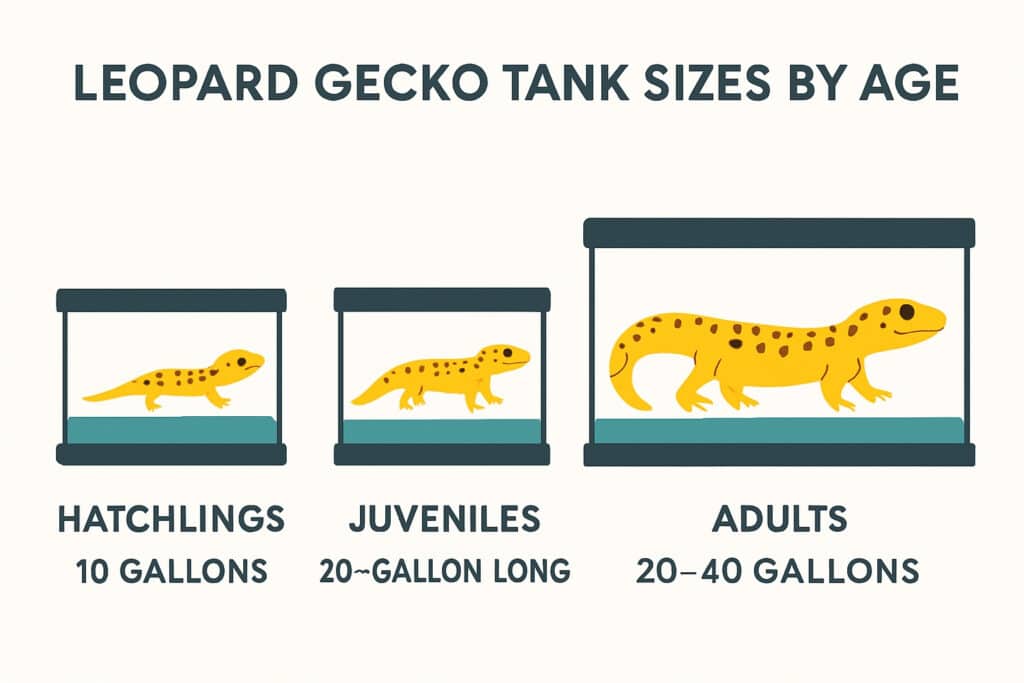
Leopard geckos grow quickly during their first year of life, and their enclosure should grow with them. The right tank size helps ensure healthy development and reduces stress.
Hatchlings (0–6 months): 10 Gallons Minimum
A 10-gallon tank is enough for a baby gecko, as it makes it easier to monitor feeding and waste. However, babies will outgrow this size within a few months.
Juveniles (6–12 months): 20-Gallon Long
By six months, leopard geckos are more active and require additional space. A 20-gallon long tank is the standard upgrade. It provides the floor space needed for a warm side, a cool side, and multiple hides.
Adults (12+ months): 20–40 Gallons
For a fully grown leopard gecko, a 20-gallon long remains the minimum, but many keepers prefer 30–40 gallons. A larger tank allows for more enrichment and a better thermal gradient.
Some owners ask if “bigger is always better.” While large tanks provide more enrichment opportunities, overly spacious enclosures can overwhelm hatchlings or sick geckos. Start small and expand as they grow.
Housing Multiple Geckos — Why It’s Not Recommended
While some reptiles can cohabitate, leopard geckos are generally solitary. Housing more than one gecko together often leads to territorial aggression, stress, and even injuries. The only exceptions are carefully monitored breeding setups, and even then, they should not be housed long-term together.
Cohabitation stress is a common issue noted in leopard gecko health problems, making separate tanks the safest option.
Tank Dimensions vs. Gallon Size
When choosing a tank, many keepers only look at the gallon rating. But gallon size can be misleading — what matters most for leopard geckos is floor space, not height.
Why Long Tanks Are Better Than Tall Tanks
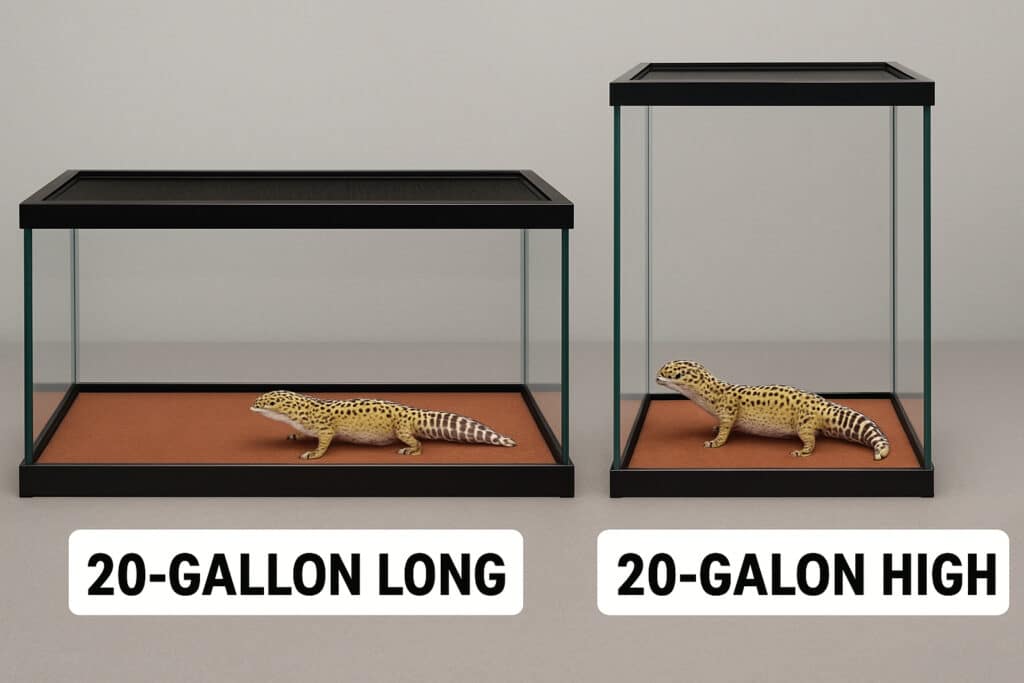
Leopard geckos are ground-dwelling reptiles. They don’t climb like geckos from arboreal species, so extra vertical space is wasted.
- A 20-gallon long tank (30″ L x 12″ W x 12″ H) gives plenty of floor space.
- A 20-gallon high tank (24″ L x 12″ W x 16″ H) may have the same gallon rating but less usable ground area.
The extra floor length is what allows you to create a temperature gradient — with a warm basking area on one end and a cool resting zone on the other.
Width and Floor Space Matter More Than Height
- Minimum Width: 12 inches is the baseline, but wider tanks (18″) are better for adults.
- Length Over Height: Go for tanks that maximize ground coverage. Leopard geckos prefer exploring horizontally, not vertically.
- Bigger Tanks for Enrichment: Extra length allows for more hides, climbing rocks, and enrichment without crowding.
If you’re aiming to recreate a more naturalistic environment, tank shape matters just as much as size. For layout ideas, see our article on leopard gecko tank layouts that mimic their natural habitat.
Glass vs. PVC vs. Plastic Tubs
Not all leopard gecko enclosures are created equal. The material you choose affects insulation, visibility, cost, and long-term durability. Here’s a breakdown of the most common options:
Glass Tanks
- Pros: Widely available, affordable, and great for display. Clear walls allow you to observe your gecko easily.
- Cons: Heat escapes quickly, meaning you’ll need reliable heating equipment. Heavier and harder to move.
Glass tanks are the standard choice for beginners and are often sold as reptile starter kits. If you’re considering one, make sure to pair it with the correct heating setup (see our guide on heat mats vs. heat lamps).
PVC Enclosures
- Pros: Excellent heat retention, lightweight, durable, and resistant to moisture. Often come with sliding doors for easy access.
- Cons: More expensive and less available than glass.
PVC is popular among advanced keepers who want a professional-looking, long-term setup.
Plastic Tubs (Sterilite, Rubbermaid)
- Pros: Budget-friendly, lightweight, and easy to clean. Great for breeders managing multiple geckos.
- Cons: Poor visibility, not suitable for display tanks, limited enrichment options.
Plastic tubs are best suited for temporary housing, breeding setups, or quarantine tanks. They aren’t ideal for permanent display enclosures.
Best Choice for Different Keepers
- Beginner Pet Owners: 20-gallon glass tank.
- Intermediate Keepers: PVC enclosure for improved insulation and ease of maintenance.
- Breeders/Temporary Housing: Plastic tubs for efficiency.
Signs Your Gecko’s Tank Is Too Small
Even if a tank technically “fits” a leopard gecko, the enclosure may still be too restrictive. A cramped environment can affect your gecko’s behavior, appetite, and long-term health.
Stress Behaviors to Watch For
- Glass Surfing: Constantly climbing the walls in an attempt to escape.
- Restlessness: Excessive pacing around the tank instead of relaxing in hides.
- Constant Hiding: Spending nearly all the time inside hides due to lack of security or comfort in the environment.
These behaviors are covered in more depth in our guide on leopard gecko behavior, where you’ll learn how to distinguish normal activity from stress.
Appetite Loss and Digestion Problems
When a tank is too small, it often lacks a proper temperature gradient. Without a warm side and cool side, digestion slows down, leading to appetite loss or food refusal. If your gecko suddenly stops eating, enclosure size and temperature may be contributing factors, as we explain in why your leopard gecko won’t eat.
Stunted Activity and Boredom
Leopard geckos may seem low-energy, but they still require space to explore. A cramped tank reduces enrichment opportunities, leading to inactivity and lethargy.
Upgrading Your Tank Safely
As your leopard gecko grows, upgrading its enclosure is a natural step. However, sudden changes can stress your pet if not done carefully.
Transitioning from Small to Larger Enclosures
- For Hatchlings: Start with a 10-gallon tank or a small tub, then move to a 20-gallon long once the gecko is around 6 months old.
- For Juveniles/Adults: Transition gradually — move hides, décor, and even the same water dish into the new tank so the gecko recognizes familiar items.
- Monitor Behavior: For the first few days, observe appetite and activity. Some geckos may hide more while adjusting.
Essential Upgrades to Include When Expanding
- Temperature Gradient: Make sure the warm side (88–92°F) and cool side (75–80°F) are properly set up in the larger space. A digital thermometer on each side is ideal. (See our comparison of the top thermometers for leopard gecko tanks).
- Hides: Keep at least three (warm, cool, humid). Adding more in a larger tank provides extra security.
- Décor: Use rocks, branches, and artificial plants to fill space and reduce open, empty areas that might make geckos feel exposed.
Avoiding Common Mistakes
- Upgrading Too Early: Babies can struggle in large enclosures, making it harder to find food and heat.
- Neglecting Heat Placement: Heat mats or lamps must still cover about one-third of the tank floor, not the whole enclosure.
- Empty Large Tanks: A 40-gallon tank without enough décor can overwhelm a gecko. Fill it with hides and enrichment.
A well-planned upgrade keeps your gecko comfortable while giving them the extra room they need for a long, healthy life.
Conclusion & Tank Size Checklist
Choosing the right tank size is one of the first and most important steps in leopard gecko care. From hatchlings in 10-gallon tanks to adults thriving in 20–40 gallon long enclosures, providing enough space directly impacts your gecko’s health, appetite, and behavior.
A quick reference checklist:
- ✅ Hatchlings (0–6 months): 10 gallons minimum
- ✅ Juveniles (6–12 months): 20-gallon long
- ✅ Adults (12+ months): 20–40 gallon long
- ✅ Multiple geckos: Separate tanks (cohabitation not recommended)
- ✅ Prioritize length and floor space over height
Remember, the enclosure is more than just a box — it’s your gecko’s world. The right tank size, combined with proper heating, hides, and décor, sets the foundation for a long and stress-free life. For a full breakdown of heating, lighting, substrate, and décor, check our complete tank setup guide.
FAQs About Gecko Tank Size
Can a leopard gecko live in a 10-gallon tank forever?
A 10-gallon tank is only suitable for hatchlings. Once your gecko reaches juvenile or adult size, a 20-gallon long is the minimum. Keeping an adult in a 10-gallon long-term can cause stress and limit natural behaviors.
Is bigger always better for leopard geckos?
Not always. While adults thrive in 30–40 gallon tanks, hatchlings can feel overwhelmed in large enclosures. The key is matching the tank size to the gecko’s age and providing enough hides and décor to make them feel secure.
How do I know if my gecko is happy in its tank?
A content gecko will explore, use both warm and cool hides, eat regularly, and shed properly. Signs of stress — like glass surfing or appetite loss — may indicate that the enclosure is too small, improperly heated, or missing hides. (See our guide on leopard gecko behavior for more details.)
Author

