
Why Tank Security Matters
Leopard geckos are quiet but surprisingly skilled climbers and diggers.
A single gap in the lid or cable port can lead to an escape — and a frightened gecko is at serious risk of dehydration, injury, or predation (even from household pets).
A properly secured enclosure:
- Prevents escapes and falls.
- Maintains stable temperature & humidity.
- Reduces stress behavior caused by drafts and noise.
Before modifying the lid or locks, make sure your heating and airflow are already correct (see the Ventilation Guide).
Common Escape Points
Knowing where geckos slip out is half the battle.
Typical weak spots include:
1️⃣ Loose Mesh Lids — especially on older glass tanks.
2️⃣ Feeding Gaps — when removing lid corners for tongs.
3️⃣ Cable Openings — thermostat or probe holes left uncovered.
4️⃣ Warped PVC Doors — expansion with heat creates small spaces.
5️⃣ Improper Weight on Lids — light tops can lift when geckos push from below.
Inspect your tank weekly. Run a flashlight around edges at night; if you see light leaking through, the gap is big enough for a gecko nose!
🔗 For compatible enclosure models, reference the Glass vs PVC Tanks Guide.
Lid & Locking Solutions
Different tank types require specific closure systems.
For Glass Tanks
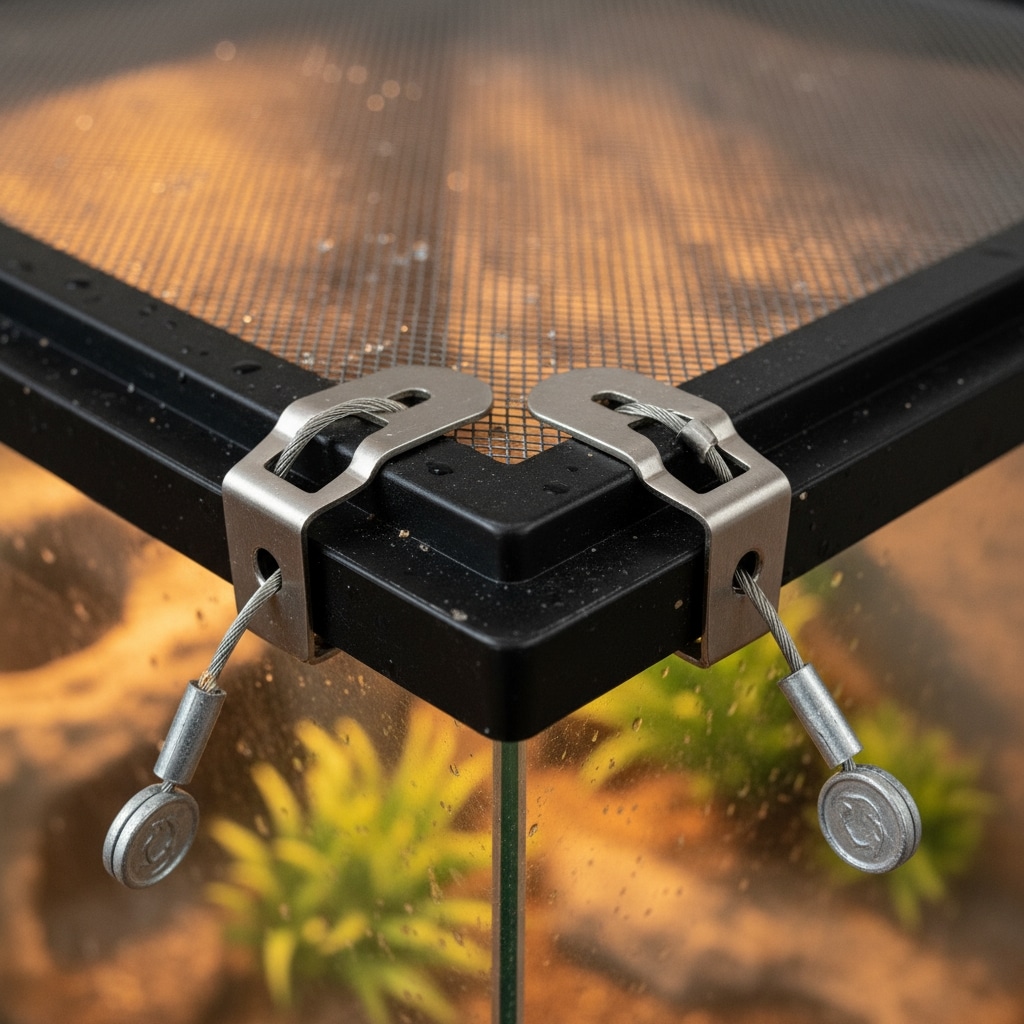
- Use locking mesh lids with metal clips or latch bars.
- Add binder clips or spring clamps for backup.
- Never rest heat lamps directly on the lid; mount them on a lamp stand to avoid warping.
For PVC Tanks
- Install magnetic latches or turn locks on doors.
- Seal cable ports with rubber grommets or foam plugs.
- Use silicone to close any rear panel gaps.
Universal Add-ons
| Tool | Function |
|---|---|
| Lid clamps | Prevent accidental lifting |
| Door magnets | Quiet, vibration-free closure |
| Cable seals | Block thermostat probe holes |
| Edge foam strips | Tighten imperfect joints |
For visual reference, check the “security accessories” section in the Tank Setup Guide.
Safe Cable & Access Management
Every thermostat probe, heat-mat cable, and thermometer wire passes through the tank — and each is a potential escape tunnel.
Best Practices:
- Route all cables through one sealed port.
- Use rubber grommets or foam plugs to close spaces.
- Avoid pinching cables under lids — this creates heat leaks and gaps.
- Bundle wires externally using Velcro ties to keep things tidy.
If you use multiple devices (mat + lamp + hygrometer), combine them with a multi-port thermostat like the Inkbird ITC-306A for both control and cable management.
You can find setup examples in the Heating Mats vs Lamps Guide.
Testing & Monitoring Security
Once your tank is sealed, stress-test it before introducing your gecko.
Checklist
- 🔦 Gently press each lid corner — no lift should occur.
- 💨 Blow lightly across vents — air should pass, not heat.
- 🪞 Shine a mirror along edges — look for visible gaps.
- 📹 Use a night camera or phone on time-lapse to check movement overnight.
Smart Add-Ons
- Wi-Fi temp sensors alert you if lid displacement causes a heat drop.
- Small motion cameras provide peace of mind when you’re away.
Keep monitoring daily for the first week, especially after cleaning or décor rearrangement.
For safety calibration, pair this routine with the Safety & Wellbeing Guide.
Behavioral Signs of Stress or Escape Attempts
If your gecko repeatedly scratches, climbs glass, or presses the lid, it’s communicating discomfort.
Possible causes:
- Temps too low → searching for warmth.
- Reflections → mistaking glass for open space.
- Noise/vibration → trying to flee disturbance.
Fixes
- Add background paper to reduce reflections.
- Increase hides or décor to create shaded zones.
- Recheck temperature gradient (see Tank Décor Basics).
A calm gecko explores slowly and returns to hides regularly — that’s your signal the environment feels secure.
Maintenance & Long-Term Safety
Tank security isn’t “set and forget.” Heat expansion, humidity, and cleaning gradually loosen parts.
Weekly
- Inspect clips and magnets.
- Check cable plugs remain sealed.
Monthly
- Tighten hinges or lid brackets.
- Clean tracks of PVC doors to prevent warping.
Every 6 Months
- Replace worn foam strips or grommets.
- Test locks for rust or stiffness.
During deep cleans (see the Tank Cleaning Routine Guide), verify every seal before re-introducing your gecko.
Final Thoughts
A secure tank means peace of mind — for both you and your reptile.
Investing in reliable locks, tight vents, and organized cables keeps temperature stable and your gecko safe from danger.
Combine escape prevention with strong ventilation, proper heating, and smart décor placement to create a professional-grade, stress-free enclosure.
Next up, you can refine your setup further with the Safe Accessories & Monitoring Tools Guide — your next cluster in the pillar.
FAQs — Escape-Proof Tanks
How do I stop my leopard gecko from escaping the tank?
Use locking mesh lids or magnetic PVC doors, seal cable ports, and test for gaps with a flashlight.
Can geckos climb glass?
Yes — briefly, using their claws on condensation or silicone edges. Smooth, dry glass prevents climbing.
What if my gecko already escaped?
Search at night with a flashlight; check under warm appliances. Once found, review every tank edge for gaps.
Are sliding-door tanks safe?
Yes, if they include door stoppers or locks. Add side clips for extra stability.
Do I need heavy objects on top of the lid?
Not recommended — use clips or latches instead of weights, which can break glass.
How often should I check my locks?
Weekly quick checks, monthly deep inspections keep everything tight and safe.
Can kids open reptile tank lids easily?
Install child-proof locks or latches to avoid accidental opening during feeding.
Author

