
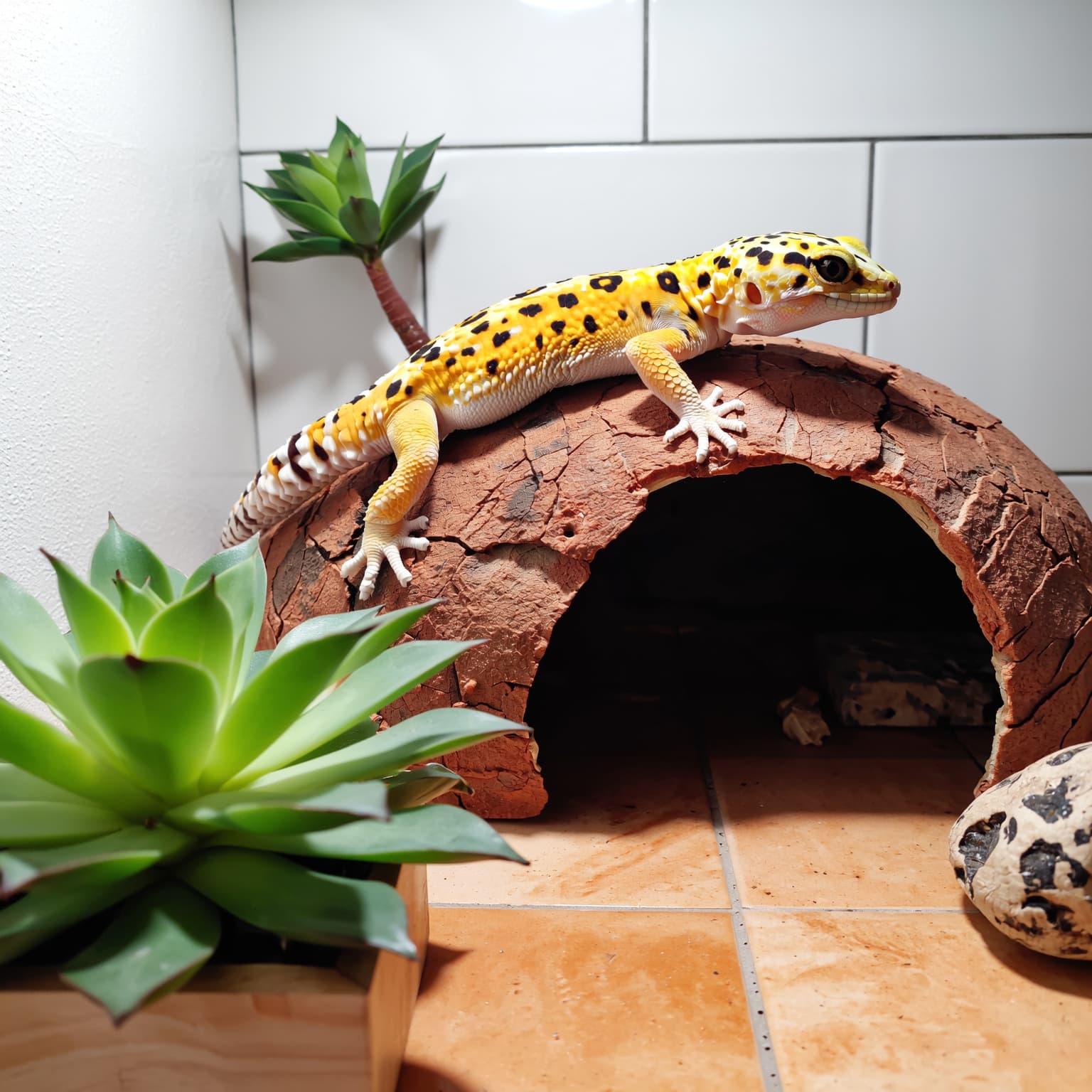
Why Décor Matters for Gecko Health
Tank décor isn’t just about looks — it directly affects your leopard gecko’s behavior, comfort, and stress levels.
In the wild, geckos spend most of their time hiding among rocks and plants, using textures and shadows for security.
A bare enclosure causes anxiety and inactivity, while a properly designed setup encourages exploration and natural behavior.
Décor also helps maintain temperature gradients, improves humidity control, and prevents boredom — a key part of reptile enrichment.
Before decorating, ensure your heating and airflow are already stable:
👉 Read our Heating Mats vs Lamps Guide and Ventilation Importance Article for optimal base setup.
Core Décor Elements Every Gecko Needs
Every leopard gecko tank, whether minimalist or bioactive, must include these essentials:
| Element | Purpose | Placement Tip |
|---|---|---|
| 🪨 Warm Hide | Digestive rest area | Over heat mat (warm side) |
| ❄️ Cool Hide | Retreat to regulate body temp | Opposite end of tank |
| 💧 Moist Hide | Helps with shedding & hydration | Middle of tank |
| 🌿 Décor Objects | Enrichment & climbing | Evenly spaced, not cluttered |
| 💦 Water Dish | Hydration | Cool side |
| 🍽️ Feeding Dish | Keeps insects contained | Warm side (near heat) |
Each hide serves a biological purpose. Without all three, geckos can become stressed and develop shedding or digestion issues.
🔗 Full instructions for hide setup are available in the Starter Kit Checklist.
Choosing Safe Materials
Stick to non-toxic, easy-to-clean materials:
- Ceramic, resin, slate, or natural cork bark
- Avoid: porous wood, dyed plastics, or anything sharp-edged
- Seal porous décor with reptile-safe sealant before use
If you want the “desert look,” focus on texture — not sand.
Loose substrates can be dangerous (impaction risk). You can achieve the same aesthetic safely with textured tile and fine crushed slate pieces.
Designing a Natural Layout (Step-by-Step)
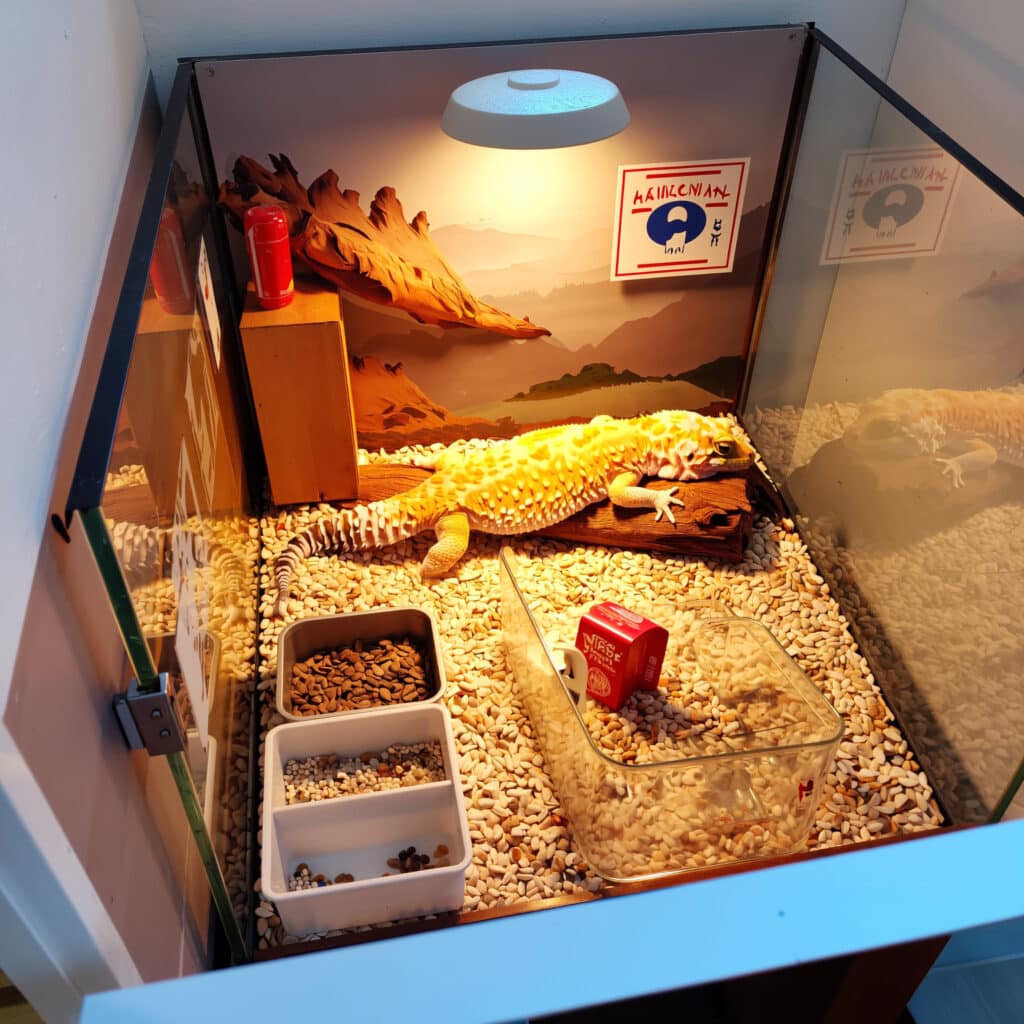
Creating a natural, functional habitat starts with balance. Follow this order to ensure both beauty and biology align:
Step 1 — Define Zones
- Warm zone: heat mat, basking area, warm hide
- Middle zone: moist hide, plants, decorative rocks
- Cool zone: cool hide, water dish
This division helps maintain temperature gradients — warm (90°F) to cool (75°F) — while giving your gecko environmental variety.
Step 2 — Layer the Floor
Use ceramic or textured stone tile as the main substrate.
Then add decorative layers:
- Flat slate for climbing
- Pebbles for realism
- Artificial plants for cover
Step 3 — Place the Hides
Stagger them diagonally (not in a line). This lets your gecko move freely and choose its comfort level.
Step 4 — Add Vertical Interest
While leopard geckos are terrestrial, they enjoy mild climbing. Add small rocks, driftwood, or fake succulents for enrichment.
For design inspiration, explore the Glass vs PVC Tanks Guide — the visuals show how enclosure material affects décor placement and airflow.
Safe & Unsafe Décor List (2025 Update)
| Safe Décor | Unsafe Décor |
|---|---|
| Smooth slate or tile | Loose sand, calcium sand |
| Artificial succulents | Real plants with fertilizer |
| Reptile-safe resin hides | Painted/varnished wood |
| Cork bark & rock caves | Sharp rocks, glass edges |
| Flat stones | Small gravel (choking hazard) |
Common Mistake:
Many beginner kits include “desert sand” or wooden décor that retains bacteria. Always check product labels for reptile-safe certification.
PVC and glass tanks react differently to humidity — so make sure your décor materials match your enclosure type (see Tank Setup Guide).
Enrichment & Behavior Boosters
A beautiful tank also stimulates your gecko mentally. Here’s how to add simple enrichment without clutter:
1️⃣ Rock Shelves – Create multiple height levels for exploration.
2️⃣ Tunnels or Logs – Mimic natural burrows.
3️⃣ Hollow Caves – Offer total darkness for security.
4️⃣ Fake Plants – Add color and comfort (silk or plastic).
5️⃣ Dig Box – Optional enrichment using sterile soil or coconut fiber.
Rotate décor occasionally to spark curiosity.
You’ll notice your gecko exploring more, showing natural hunting behavior, and displaying brighter coloration.
For stress and behavior interpretation, read the Safety & Wellbeing Guide — it helps you tell comfort from anxiety.
Aesthetic Themes & Inspiration
You can personalize your tank while staying gecko-safe. Here are three reliable décor themes that balance style and function:
1️⃣ Desert Realism
- Beige tiles, slate rocks, and dry plants.
- Use LED lighting to create sunrise tones.
- Perfect for glass tanks with strong airflow.
2️⃣ Natural Jungle Touch
- Add mossy textures, green artificial plants, and dark cork bark.
- Slightly higher humidity (~40%).
- Ideal for PVC tanks that retain moisture better.
3️⃣ Minimalist Modern Setup
- Simple layout with clean tile base, two hides, and neutral décor.
- Great for small apartments or beginners.
Whichever theme you choose, focus on accessibility — hides should be easy to remove for cleaning, and nothing should block airflow.
See our Ventilation Guide for positioning décor without trapping humidity.
Cleaning, Safety & Final Tips
Décor maintenance is crucial to keep bacteria away and colors bright.
Follow this cleaning routine:
Weekly
- Remove waste and debris.
- Wipe hides and décor surfaces with warm water.
Monthly
- Deep-clean décor with reptile-safe disinfectant.
- Boil or bake stones (if natural) to sterilize.
Every 6 Months
- Replace artificial plants or re-seal porous materials.
Detailed procedures are explained in the Tank Cleaning Routine Guide.
Final Thoughts
Décor transforms your tank from “functional” to thriving habitat.
With safe materials, smart layout, and gentle lighting, your leopard gecko will explore confidently and rest comfortably.
Combine décor design with good ventilation, stable heating, and weekly cleaning to achieve professional-level care.
If you want to move beyond basics, explore our Safe Accessories & Monitoring Tools Guide — it shows how to add smart tools without disrupting your décor flow.
FAQs — Leopard Gecko Tank Décor
What décor is essential in a leopard gecko tank?
Three hides (warm, cool, moist), flat rocks, and a water dish are essential. Add fake plants for enrichment.
Can I use real plants?
Only if pesticide-free and soil-sealed. Most keepers use artificial ones for safety and easy cleaning.
Are climbing structures safe for geckos?
Yes, if short and stable. Avoid sharp edges or tall pieces that could tip over.
How often should I clean décor?
Spot-clean weekly, deep-clean monthly, and replace worn-out materials every six months.
What’s the best décor layout?
A diagonal layout — warm hide on one side, cool on the other, moist hide in the center — promotes natural movement and heat control.
Can I decorate my gecko tank cheaply?
Absolutely. DIY hides from containers and dollar-store plants work perfectly if cleaned and sealed.
Does too much décor stress geckos?
Yes. Overcrowded tanks trap humidity and block airflow. Keep 40% of floor space open.
Author

