
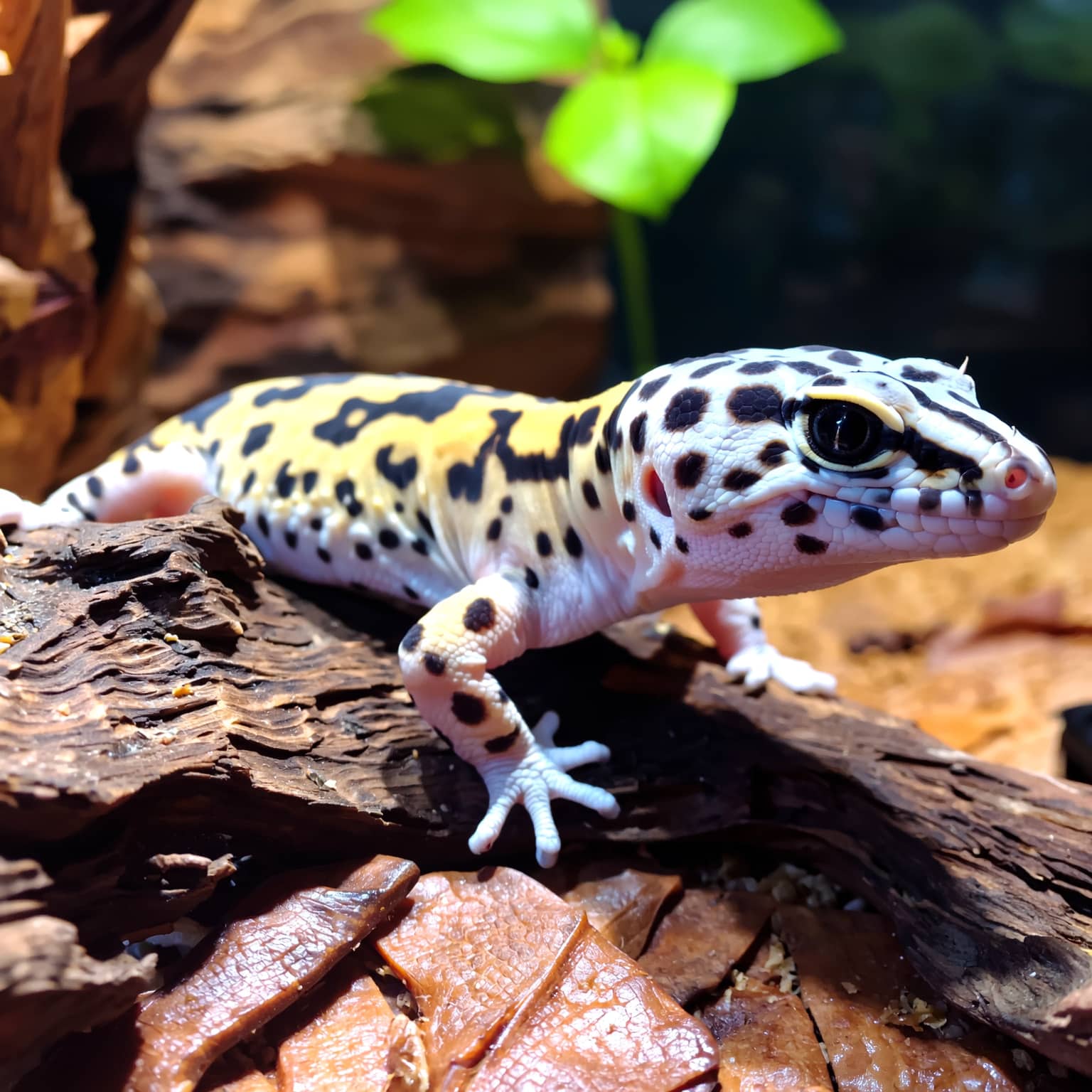
Shedding is a natural part of a leopard gecko’s life, but for new keepers, it can be both fascinating and concerning. While most geckos shed without issues, problems like stuck skin or incomplete sheds can lead to serious health risks if not addressed.
Understanding what’s normal — and what’s not — helps you recognize when your gecko needs a little extra help. In this guide, we’ll cover the shedding process, common issues, safe fixes, and how to prevent problems in the future.
Why Shedding Happens
Growth and Skin Renewal
Leopard geckos shed to replace old skin with new layers, allowing for growth and maintaining skin health. Even adult geckos continue to shed throughout their lives as part of natural skin renewal.
Frequency of Shedding at Different Life Stages
- Hatchlings & Juveniles: Shed every 1–2 weeks because they grow rapidly.
- Sub-Adults: Shed every 3–4 weeks as growth slows down.
- Adults: Shed about once every 4–8 weeks, depending on health, diet, and environment.
Shedding frequency is a good indicator of overall health. If your adult gecko suddenly sheds much more often or struggles with incomplete sheds, it could signal husbandry issues.
For a related care factor, see our humidity guide, since proper moisture is essential to healthy shedding.
What a Normal Shed Looks Like
Signs Your Gecko Is About to Shed
- Skin becomes dull, pale, or grayish a few days before shedding.
- Eyes may appear cloudy or bluish as the skin loosens.
- Geckos often hide more frequently and may refuse food in the days leading up to a shed.
Typical Shedding Behavior
- Leopard geckos usually shed in one piece, peeling the old skin off starting from the head and working down the body.
- Most geckos complete the process within 24 hours once it begins.
- It’s common (and normal) for geckos to eat their shed skin — this recycles nutrients and helps hide their scent from predators (an instinct from the wild).
Timeframe for a Complete Shed
- Hatchlings may shed overnight and be done by morning.
- Adults take longer but usually finish within 12–24 hours.
- If skin remains after 24 hours, especially on toes, tail, or around the eyes, it may indicate a problem.
For reference, if you notice shedding taking too long or leftover skin, review our common leopard gecko health issues guide to see if other factors may be contributing.
Common Shedding Problems
While shedding is natural, problems can occur if conditions aren’t right. These issues usually involve retained shed that doesn’t come off fully.
Stuck Shed on Toes and Tail
- Skin that remains on toes can tighten and cut off circulation, leading to loss of digits.
- Retained shed on the tail tip can restrict blood flow, sometimes causing the tip to die and fall off.
Retained Shed Around the Eyes and Mouth
- Skin stuck near the eyes can cause irritation, swelling, or infections.
- Around the mouth, it may affect eating and lead to discomfort.
Multiple Layers of Old Skin
- Geckos with poor husbandry may develop layered stuck shed, where new skin grows under old retained layers.
- This often signals chronic low humidity or long-term neglect of a humid hide.
Shedding problems are among the most common preventable health issues. To understand why they happen, see our humidity guide for proper tank adjustments.
Causes of Shedding Issues
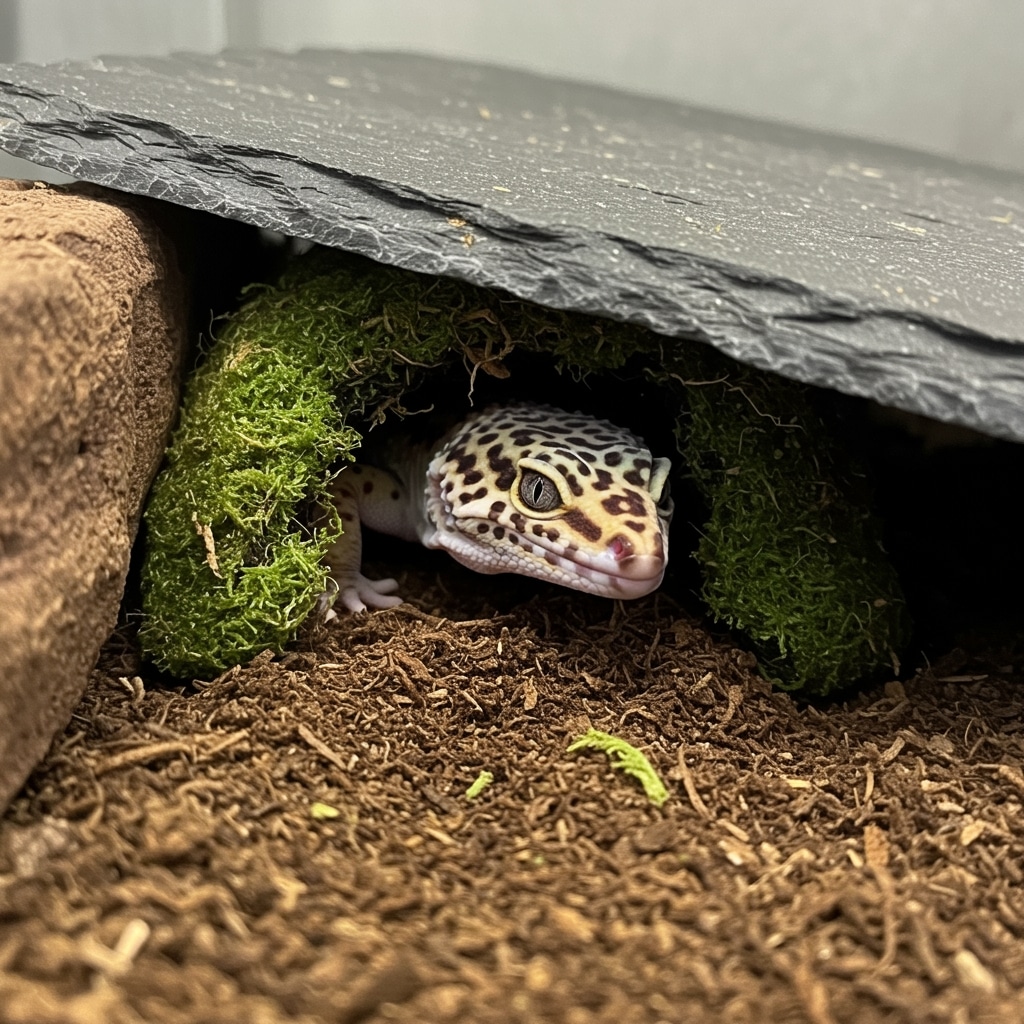
When leopard geckos struggle with shedding, it’s almost always linked to husbandry or health factors.
Low Humidity or Missing Humid Hide
- Leopard geckos kept without a humid hide often develop stuck shed.
- General tank humidity may be correct, but without a moist microclimate, shedding becomes difficult.
- Ideal humid hide humidity is 60–70% (see our humidity guide for details).
Nutritional Deficiencies
- Vitamin A deficiency can cause eye issues, leading to retained shed around the eyes.
- Calcium or D3 deficiency affects skin health, making shedding less efficient.
- A balanced diet with supplements is key to preventing these problems.
Illness, Stress, or Poor Husbandry
- Parasites, infections, or stress from frequent handling can interfere with natural shedding cycles.
- Incorrect heating or lighting weakens the immune system and may reduce shedding success.
- Poor hygiene in the tank may also contribute to skin infections during the shed process.
In most cases, improving environment and diet resolves shedding issues before they become chronic.
How to Help a Gecko with Stuck Shed
Sometimes, even with good care, your leopard gecko may need help removing stuck skin. It’s important to use safe methods and avoid anything that could injure your pet.
Safe Methods
- Humid Hide: Ensure the gecko has constant access to a properly moistened hide. This alone often resolves minor stuck shed.
- Moist Cotton Swab: Gently dab a damp cotton swab on areas like toes or tail tips to soften skin before it peels away naturally.
- Shallow Warm Soak: Place the gecko in a shallow container of lukewarm water (no deeper than belly height) for 10–15 minutes. This helps loosen stubborn patches.
What NOT to Do
- ❌ Never peel or pull off shed by hand. This can rip healthy skin and cause injuries.
- ❌ Avoid using oils or lotions not specifically designed for reptiles — they can clog pores or cause irritation.
- ❌ Don’t keep the gecko in water for too long; extended soaking stresses them and can lead to illness.
When to Seek a Reptile Vet
- If shed remains on the toes for more than 2 days.
- If there is swelling, discoloration, or signs of infection.
- If multiple sheds have been problematic despite correct husbandry.
Proper intervention prevents permanent damage. For broader care context, see our health problems guide to recognize when professional help is necessary.
Preventing Shedding Problems
The best way to deal with shedding issues is to prevent them before they happen. Consistent husbandry and nutrition are the keys.
Maintaining Proper Humidity Levels
- Keep the enclosure’s ambient humidity around 30–40%, with a humid hide at 60–70%.
- Always place the humid hide on the warm side of the tank so evaporation keeps it functional.
- Replace moss or paper towel in the humid hide weekly to prevent mold.
Balanced Diet and Supplementation
- Offer a variety of feeder insects (crickets, dubia roaches, mealworms).
- Dust feeders with calcium + vitamin D3 at least 2–3 times per week.
- Provide a multivitamin powder once a week to prevent deficiencies linked to shedding issues.
Stress-Free Handling During Shed Cycles
- Many geckos become more reclusive and irritable before a shed.
- Avoid unnecessary handling during this time.
- Provide secure hides so they can shed in peace without stress.
For a more detailed breakdown of environmental adjustments, see our humidity guide, which ties directly into shedding health.
Conclusion & Next Steps
Shedding is a normal and healthy process for leopard geckos, but it can become a problem if husbandry isn’t dialed in. By understanding what’s normal and what’s not, you’ll know when to step in and when to let your gecko handle the process naturally.
Key Takeaways
- ✅ Normal shedding happens every 1–8 weeks depending on age.
- ✅ Signs of shedding include dull skin, cloudy eyes, and increased hiding.
- ✅ Stuck shed on toes, tail, or eyes is not normal and requires immediate attention.
- ✅ Prevention comes from proper humidity, nutrition, and stress-free environments.
- ✅ Never peel shed skin — use safe methods or consult a reptile vet if needed.
By providing the right environment and care, you’ll ensure your gecko sheds smoothly throughout its life.
For deeper guides, check out:
FAQs About Leopard Gecko Shedding
How often do leopard geckos shed?
How often do leopard geckos shed?
Hatchlings: Every 1–2 weeks
Juveniles: Every 3–4 weeks
Adults: Every 4–8 weeks
Shedding frequency depends on growth rate, health, and environment.
Should I remove shed skin from the tank?
Usually, no. Leopard geckos often eat their shed skin for nutrients and to avoid attracting predators (a wild instinct). If leftover skin is found, it’s safe to remove.
Is it normal for geckos to eat their shed?
Yes — it’s completely normal and healthy. It recycles nutrients like keratin and helps maintain natural behavior.
Can stress affect shedding?
Yes. Stress from improper handling, poor temperatures, or lack of hides can make shedding more difficult.
Do geckos need help every time they shed?
No. Most geckos shed independently. Intervention is only needed if stuck shed persists or causes health risks.
For deeper insight into preventing issues, revisit our leopard gecko humidity guide.
Author

