

🟩 Why Substrate Choice Matters for Leopard Gecko Health
The substrate is the foundation of your leopard gecko’s enclosure — literally. It’s more than just decoration; it directly impacts your pet’s health, hygiene, and comfort. Choosing the right substrate helps maintain proper humidity, supports digestion, and prevents life-threatening conditions like impaction.
A leopard gecko spends most of its life walking, burrowing, and resting on this surface, so it must mimic the texture and feel of its natural desert environment without introducing risks. A good substrate should also be easy to clean, non-toxic, and compatible with heating equipment, ensuring even warmth across the enclosure.
Improper substrates — especially loose materials like calcium sand — can lead to serious digestive blockages if ingested while hunting insects. This condition, known as impaction, can cause lethargy, bloating, and even death if untreated.
A healthy substrate choice creates a stable, sanitary base for your gecko’s habitat, complementing all other factors like heating, humidity, and safety. For a full overview of how substrate fits into the enclosure design, see Leopard Gecko Tank Setup Guide, which explains how to balance warmth, ventilation, and décor.
Table of Contents
🟩 Safe Substrates for Leopard Geckos (Top Recommendations)

Choosing the right substrate can be confusing with so many options on the market. The goal is to combine safety, cleanliness, and natural aesthetics without exposing your gecko to unnecessary risk. Below are the most trusted substrates among experienced keepers and herpetologists.
🧻 Paper Towels – The Hygienic Starter Choice
Ideal for hatchlings, juveniles, or sick geckos, paper towels are one of the safest and easiest substrates to maintain. They eliminate the risk of impaction, make spot cleaning effortless, and help monitor feces for signs of parasites or illness.
However, they lack the natural appearance of desert terrain and need frequent replacement.
💡 Best use: Quarantine setups or for keepers who prioritize hygiene over aesthetics.
🧱 Slate or Ceramic Tiles – Durable and Natural
Tiles are an excellent long-term substrate. They’re non-loose, easy to disinfect, and excellent for heat transfer, ensuring your gecko’s belly stays warm for proper digestion. Slate tiles also file your gecko’s claws naturally and give a realistic rocky desert look.
💡 Best use: Adult leopard geckos in display or permanent enclosures.
🧤 Reptile Carpet – Reusable and Safe for Claws
Reptile carpet offers a soft, reusable alternative that prevents ingestion risks. It provides traction for movement but should be cleaned weekly, as waste can soak into the fibers. Having two carpets to rotate during cleaning makes maintenance easy.
💡 Best use: Beginner setups or tanks with frequent handling and feeding.
🌿 Bioactive Substrates – For Advanced Keepers Only
Bioactive systems mimic natural ecosystems using soil blends, microfauna, and live plants. While visually stunning and self-cleaning to some extent, they’re difficult to balance in a dry environment and require precise humidity management.
💡 Best use: Experienced keepers comfortable maintaining microclimates and live terrariums.
For visuals and setup inspiration, see Tank Décor & Enrichment, which illustrates how to integrate these substrates into aesthetic, stable enclosures.
🟩Substrates to Avoid (Hidden Dangers)
Not every substrate sold in pet stores is safe for leopard geckos — even those labeled as “desert sand” or “natural reptile bedding.” Some materials pose serious health risks, especially when ingested or when they trap bacteria and moisture. Below are the most common dangerous options to avoid at all costs.
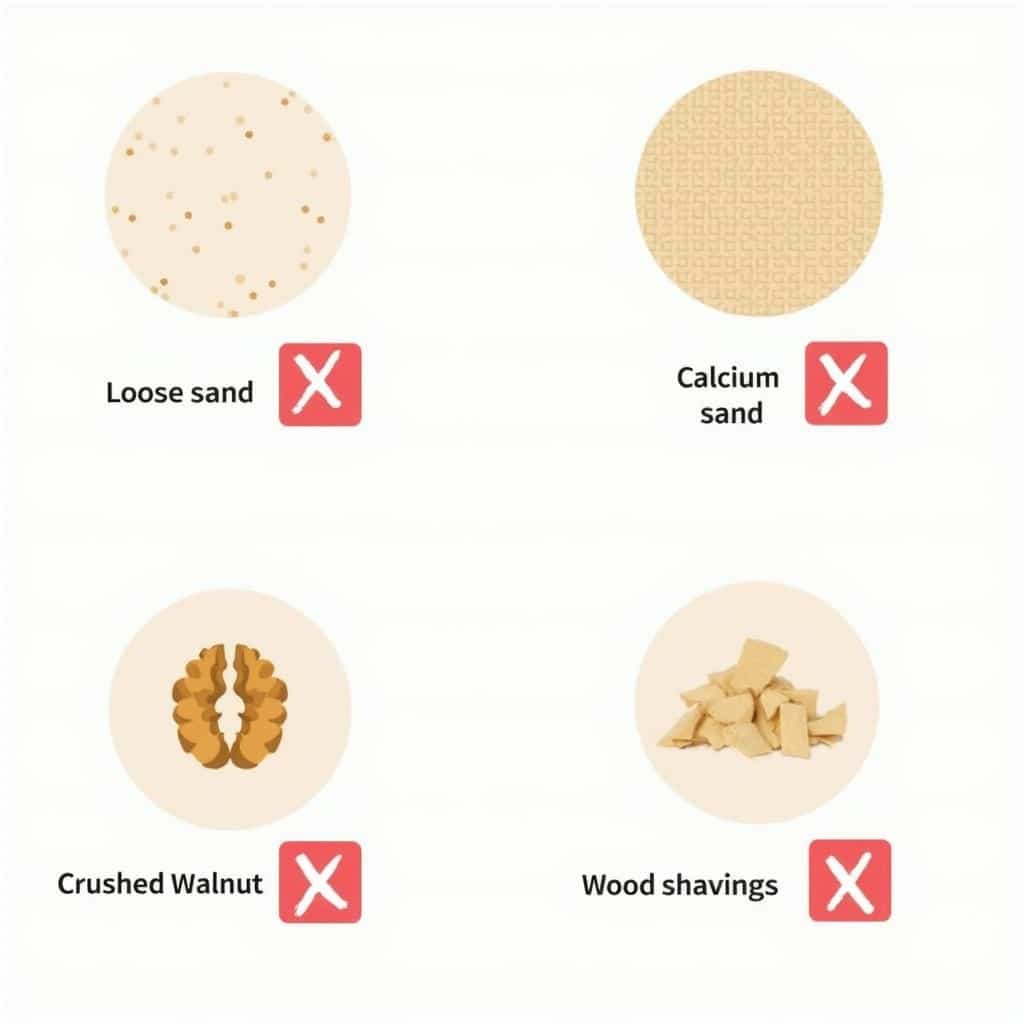
🏜️ Calcium Sand and Loose Sand – Impaction Traps
Calcium sand is heavily marketed as “digestible,” but that’s misleading. When your gecko licks or accidentally swallows sand particles while catching insects, the grains can clump inside the digestive tract, causing impaction — a painful and often fatal condition.
Sand also retains heat unevenly, leading to burns if placed over heating mats.
💀 Avoid completely, regardless of brand or claims of safety.
🌲 Wood Chips, Bark, and Soil – Bacterial and Moisture Hazards
Organic-looking substrates like bark or mulch may seem appealing but hold excess moisture, encouraging mold and bacteria growth. Sharp wood edges can also injure delicate toes and tails. Soil-based mixes are no better — they compress easily, create cold spots, and are impossible to sanitize effectively.
💀 Avoid using any wood- or soil-based bedding not designed for arid reptiles.
🥥 Coconut Fiber and Moss Mixes – Unsafe Humidity Levels
Coconut coir and moss retain water far too well for desert geckos, often creating humidity levels above 60%, which can lead to respiratory infections and skin shedding issues. These materials are only suitable for the moist hide, not as a full substrate.
💀 Use sparingly — only inside a humid hide box.
To understand how substrate choices interact with heat and humidity, visit Humidity & Temperature Management, where safe moisture control methods are detailed.
🟩How to Maintain and Clean Substrate Properly
Even the safest substrate can become a health hazard if it’s not cleaned and maintained regularly. Waste buildup encourages bacteria, fungi, and mites, which can stress your gecko and cause illness. A consistent cleaning schedule keeps the habitat safe, odor-free, and visually appealing.
🧹 Daily Maintenance
Perform light spot cleaning every day. Remove feces, shed skin, and leftover insects immediately to prevent contamination. This routine is crucial if you use reptile carpet or bioactive systems, where organic matter can decompose and attract pests.
💡 Tip: Keep a pair of long tweezers and a small scoop dedicated for waste removal.
🧴 Weekly Cleaning
For reusable substrates like tiles or carpet, disinfect surfaces weekly with a reptile-safe cleaner or a diluted chlorhexidine solution. Avoid bleach or strong detergents — they can leave harmful residues that irritate your gecko’s skin or respiratory system.
Replace paper towels or disposable liners completely at least once a week, or sooner if soiled.
🧼 Deep Cleaning (Monthly)
Once a month, perform a full clean:
- Remove your gecko and décor items.
- Replace or wash the substrate depending on its type.
- Wipe down the enclosure walls and floor with a reptile disinfectant.
- Ensure everything is completely dry before reassembling.
This deep clean resets the habitat and prevents bacterial colonies from forming under tiles or carpet edges.
A well-maintained substrate works hand in hand with a good heating setup to regulate temperature and prevent microbial growth. You can find detailed step-by-step instructions in Tank Cleaning & Maintenance.
🟩Choosing the Right Substrate by Gecko’s Age and Environment
Leopard geckos have different needs throughout their life stages — what works for an adult might not suit a hatchling or senior gecko. Likewise, factors like room humidity, feeding habits, and tank design play key roles in substrate selection.
🐣 Hatchlings and Juveniles
Young geckos are the most vulnerable to impaction since they often miss their prey and accidentally ingest substrate. The safest option is paper towels or non-adhesive shelf liners, which eliminate ingestion risk and allow easy cleaning.
💡 Tip: Avoid all loose substrates for geckos under six months old. Hygiene and stability matter more than aesthetics during this growth phase.
🦎 Adult Leopard Geckos
Once your gecko reaches adult size (around 12–18 months), you can introduce slate tiles, ceramic tiles, or reptile carpet. These provide good heat transfer and a natural walking surface without the risks of loose materials.
If you maintain proper humidity levels and clean regularly, these surfaces create a visually pleasing and functional habitat.
👴 Senior Geckos or Geckos with Mobility Issues
Older geckos or those recovering from health problems benefit from softer, flat-textured substrates like reptile carpet or even paper towels. These reduce stress on their joints and make monitoring waste easier for health checks.
🌍 Environmental Factors to Consider
- Dry climate homes: Slightly porous materials like unglazed tile can help retain minimal humidity.
- Humid regions: Stick with sealed tile or paper substrates to prevent mold.
- Bioactive setups: Only suitable in controlled humidity tanks with proper drainage layers and microfauna.
Each setup should reflect the natural arid environment of the leopard gecko while adapting to your household conditions.
For guidance on selecting equipment and placement that complement your substrate choice, explore Enclosure Placement & Environment.
:
🟩Cost Comparison and Long-Term Practicality
Choosing a substrate isn’t only about safety or aesthetics — it’s also about long-term practicality. Some options may seem affordable upfront but become costly or labor-intensive over time. Evaluating the total cost of ownership helps you plan a stable, sustainable setup for your leopard gecko.
💰 Low-Cost, Short-Term Options
Paper towels and newspaper are the cheapest substrates. They’re ideal for beginners, quarantine setups, or young geckos. However, they require frequent replacement (every few days), which can become tedious. While inexpensive, they aren’t visually appealing for display tanks.
💡 Estimated Cost: $2–$4 per month depending on tank size and replacement frequency.
🪨 Mid-Range, Long-Term Investments
Slate or ceramic tiles represent a one-time purchase with minimal long-term cost. They’re durable, safe, and energy-efficient since they retain and distribute heat evenly. Cleaning them weekly keeps them looking brand new for years.
💡 Estimated Cost: $20–$40 upfront, lasting 5+ years.
🌿 Reusable Textile Substrates
Reptile carpet costs slightly more than paper towels initially, but it’s washable and reusable. You’ll need at least two pieces to alternate during cleaning. Over time, it’s more economical than disposable materials, though it can fray and retain odors after several months of use.
💡 Estimated Cost: $10–$25 for two pieces (replace yearly).
🌱 High-End Natural Systems
Bioactive substrates can cost $50–$100 or more initially due to soil layers, drainage materials, and live elements like microfauna. They require technical knowledge and ongoing care but can be rewarding for advanced keepers.
💡 Estimated Cost: $10–$20 per month in maintenance supplies (microfauna, humidity control).
For owners comparing substrate costs with heating gear, check out Heating & Lighting Requirements, which complements this guide by explaining how substrates affect heat distribution efficiency.
🟩Common Myths About Leopard Gecko Substrates
Despite the wealth of reliable information available, leopard gecko care is still plagued by persistent myths—especially regarding substrates. Many of these misconceptions are fueled by outdated advice or marketing tactics from pet stores. Let’s debunk the most common ones with facts supported by real data and reptile experts.
❌ Myth 1: Sand Is “Natural” for Leopard Geckos
This is the most widespread and dangerous misconception.
Leopard geckos come from rocky, arid regions of Pakistan and Afghanistan—not loose, dune-like deserts. In the wild, they live on hard-packed clay, gravel, and rocks, not soft sand.
Even fine “calcium sand” can cause impaction, a life-threatening blockage in the digestive tract when ingested. It also irritates their eyes and nostrils, especially in young geckos.
✅ Fact: Natural doesn’t always mean safe. Choose packed or solid surfaces like tiles or liners instead.
❌ Myth 2: Bioactive Tanks Are Easy to Maintain
While bioactive systems sound appealing, they require advanced care and close humidity monitoring. Leopard geckos are desert reptiles; their low humidity needs (30–40%) don’t always align with a bioactive system’s higher moisture balance.
✅ Fact: Bioactive setups are possible but not recommended for beginners. They work only with careful soil composition, proper drainage, and microfauna maintenance.
❌ Myth 3: Reptile Carpets Are Completely Maintenance-Free
Reptile carpets are reusable and popular, but they still need weekly washing and full replacement every few months. Bacteria can build up between fibers, especially under warm humid hides.
✅ Fact: Reptile carpet is great—but only when rotated and sanitized properly.
❌ Myth 4: Substrate Type Doesn’t Affect Health
Many owners underestimate how much substrate influences foot health, respiration, and temperature regulation. Uneven or dusty materials can cause skin irritation and breathing problems, especially when mixed with loose debris.
✅ Fact: The substrate is a key part of the gecko’s wellness. It affects not just comfort but also digestion, shedding, and overall behavior.
For further insight into how substrate interacts with humidity and air quality, check Humidity & Temperature Management.
🟩Step-by-Step Setup: Changing Substrate Safely
Switching your leopard gecko’s substrate might sound simple, but doing it incorrectly can cause unnecessary stress, temperature imbalance, or even health issues. Here’s a careful, step-by-step approach to help you replace or upgrade your gecko’s substrate safely and efficiently.
🧺 Step 1: Prepare the New Substrate and Tools
Before you start, make sure you have everything ready:
- Your chosen substrate (tile, reptile carpet, paper towels, etc.)
- Reptile-safe disinfectant
- Clean gloves and a scoop or tongs
- Thermometer and hygrometer to recalibrate heat and humidity afterward
If using tiles, ensure they’re cut to the tank’s exact dimensions. For carpets, pre-wash and dry them to remove manufacturing residues.
🦎 Step 2: Remove Your Gecko and Décor
Place your gecko in a temporary holding box with a paper towel base, a hide, and mild warmth. Then, take out all hides, bowls, and decorations from the enclosure.
This step ensures that no cleaning agents or dust particles come in contact with your reptile.
🧽 Step 3: Clean and Disinfect the Tank
Remove the old substrate completely. Vacuum or wipe away leftover particles. Clean the enclosure with a chlorhexidine-based reptile cleaner or a mix of water and white vinegar (1:1 ratio).
💡 Tip: Don’t forget to clean under heating mats or tiles — debris often accumulates there unnoticed.
🔥 Step 4: Install the New Substrate
- For tiles: Lay them flat and secure, ensuring no sharp edges.
- For carpet: Fit snugly and cut precisely around hides or décor.
- For paper towels: Place multiple layers to absorb moisture.
If you use bioactive substrate, add it layer by layer — drainage, soil, and top mix — ensuring moisture balance before introducing your gecko.
🌡️ Step 5: Reassemble and Monitor Conditions
Reinstall décor, hides, and dishes. Let the setup run for 24 hours before reintroducing your gecko to ensure that temperature and humidity stabilize.
Monitor with a digital thermometer and hygrometer for the next few days. Adjust heating if needed, as substrate thickness can affect under-tank heat transfer.
To see how substrate interacts with temperature, refer to Heating & Lighting Requirements.
🟩Final Recommendations and Long-Term Care Tips
By now, you know that substrate isn’t just decoration — it’s the foundation of your leopard gecko’s environment. Choosing the right material and maintaining it properly ensures health, hygiene, and comfort for years to come.
✅ Quick Recap of the Best Practices
- Avoid loose sand or any particle-based substrate, especially for juveniles.
- Use tile or paper towels for safety and easy cleaning.
- Maintain daily spot-cleaning and monthly deep cleaning routines.
- Check temperature regularly, since substrate type affects heat retention.
- Replace worn-out carpets or cracked tiles promptly to avoid injury.
💡 Long-Term Tips from Experts
- Always quarantine new geckos on paper towels before introducing them to decorated tanks.
- Rotate reptile carpets weekly to allow thorough drying and disinfection.
- If you try a bioactive setup, document humidity and mold levels weekly for consistency.
- Observe your gecko’s behavior — scratching or constant hiding can indicate discomfort from substrate texture or temperature.
🦎 How Substrate Affects the Whole Ecosystem
A clean, stable floor base contributes to a healthy microclimate, supporting proper shedding, respiration, and digestion. When paired with balanced lighting and heating, your gecko’s enclosure becomes a miniature desert biome that mimics its natural habitat.
For optimal harmony, check how to fine-tune your environment in Enclosure Placement & Environment.
🌿 Conclusion
Safe substrates combine comfort, hygiene, and stability. They protect your gecko’s health while making maintenance simple for you. Whether you choose tiles, reptile carpet, or paper towels, consistency in care is what truly matters.
Your gecko doesn’t need a desert of sand—it needs a secure, steady home built on trust, cleanliness, and care.
FAQs About Leopard Gecko Substrate
Can I use sand if I feed in a dish?
No. Even with a feeding dish, leopard geckos lick surfaces while exploring. Accidental ingestion still happens, and the risk of impaction remains high.
What’s the cheapest safe substrate?
Paper towels are the most affordable and hygienic option. They’re especially useful for hatchlings, quarantine tanks, or sick geckos.
Do geckos need substrate for enrichment?
Not necessarily. Leopard geckos get enrichment from hides, rocks, and décor, not loose substrate. Safe flooring combined with enrichment pieces provides both security and stimulation.
Is excavator clay safe?
Yes, but only when used correctly. Once hardened into solid structures, it poses less risk of ingestion. Avoid leaving it loose or crumbly.
Which substrate is best for display tanks?
Slate or ceramic tiles are ideal for natural-looking enclosures. They retain belly heat, are easy to clean, and mimic desert terrain without the risks of sand.
For more habitat design ideas, see our guide on tank layouts that mimic natural habitats.
Author

