
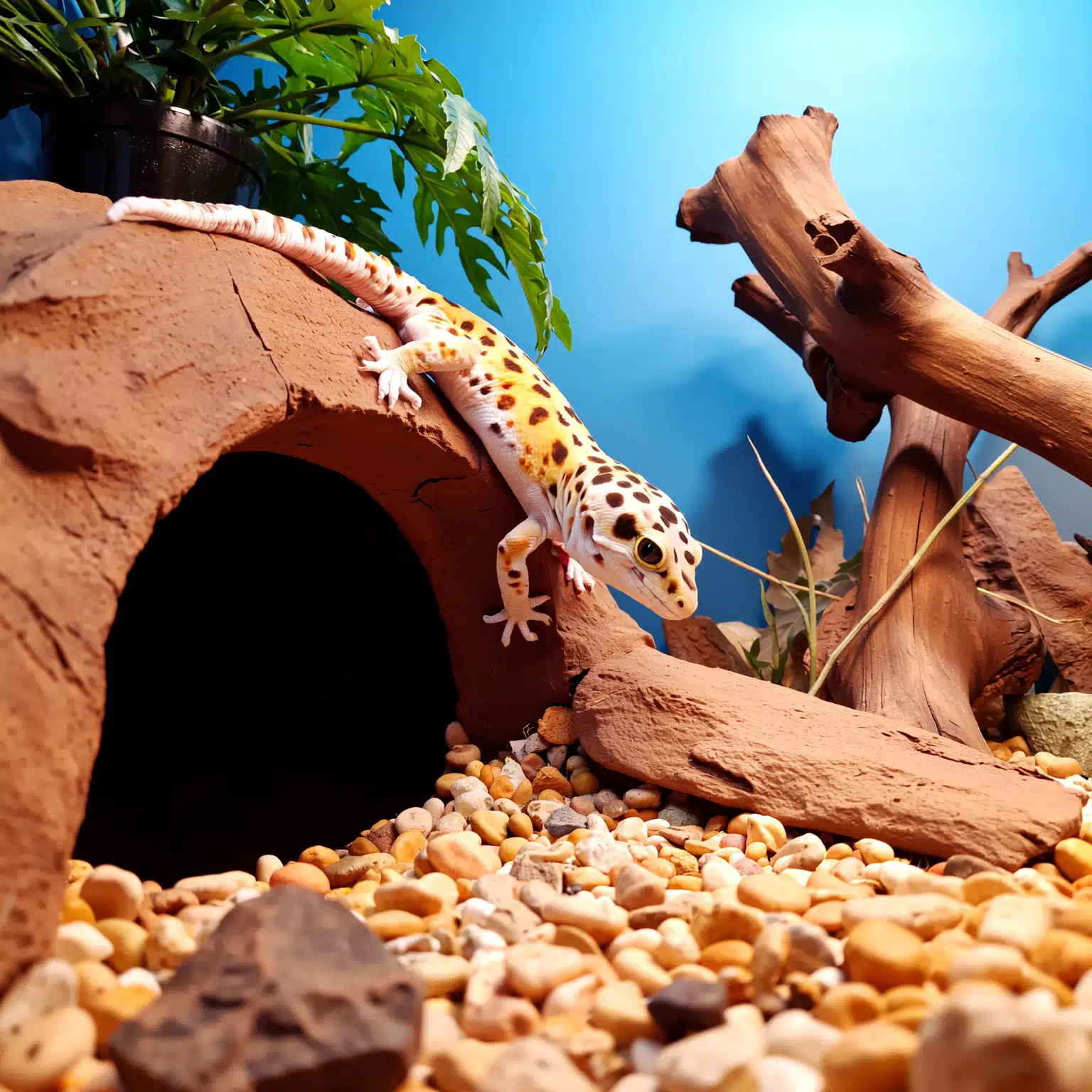
A leopard gecko’s tank is more than just a box — it’s their entire world. The way you arrange hides, décor, and heating zones directly affects your gecko’s comfort, stress levels, and ability to display natural behaviors. A good layout doesn’t just look nice; it helps your gecko thrive.
In this guide, we’ll explore how to design leopard gecko tank layouts that mimic their natural habitat, from rocky desert themes to minimalist setups. Whether you’re a beginner or an experienced keeper, you’ll find ideas that balance functionality, safety, and aesthetics.
Part 1: Why Tank Layout Matters
Enrichment and Natural Behavior
In the wild, leopard geckos roam rocky deserts and dry grasslands, exploring crevices and sheltering in burrows. Replicating this environment encourages:
- Exploration: Geckos are more active in tanks with safe décor to climb and investigate.
- Hunting Behavior: Open areas paired with hides give geckos natural hunting opportunities.
- Thermoregulation: A proper layout ensures access to both warm and cool zones.
Stress Reduction with Proper Hides and Décor
A poorly arranged tank can make geckos feel exposed or insecure. Stress is often expressed through hiding constantly or glass surfing. For a deeper dive into these behaviors, see our guide on leopard gecko behavior.
Providing at least three hides (warm, cool, and humid) and well-placed décor helps geckos feel secure while encouraging natural activity.
Part 2: Understanding the Natural Habitat of Leopard Geckos
To create a tank layout that truly benefits your gecko, it helps to first understand where they come from.
Native Environment
Leopard geckos are native to the rocky deserts and dry grasslands of Afghanistan, Pakistan, India, and surrounding regions. Their wild habitat is:
- Arid: Low overall humidity, with moist burrows underground.
- Rocky: Loose stones, crevices, and cliffs for shelter.
- Sparse Vegetation: Few plants, mostly grasses or scrub.
- Temperature Gradient: Hot surfaces during the day and cooler shaded areas at night.
Translating the Wild into a Safe Enclosure
While you can’t perfectly replicate the wild, you can design an enclosure that captures the same principles:
- Rocky décor (slate, stacked stones, faux caves) to mimic natural hides.
- Dry open space on the cool side for resting.
- Humid hide to replicate underground burrows.
- Low plant cover with artificial plants for visual enrichment.
This approach provides a balance between functionality and enrichment while avoiding unsafe loose substrates that can cause impaction. For more detail on substrate safety, see our article on best substrate options for leopard geckos.
Part 3: Essential Tank Zones
A well-designed leopard gecko enclosure should always include three main zones. Each serves a purpose that supports your gecko’s natural behaviors and health.
Warm Side with Basking and Hide
The warm side is where your gecko digests food and regulates its body temperature.
- Place a heat mat under one-third of the tank, controlled by a thermostat.
- Add a warm hide directly over the heat source so your gecko can rest while absorbing belly heat.
- Keep temperatures at 88–92°F (31–33°C) inside the hide.
If you’re unsure about heating setups, our guide on heat mats vs. heat lamps explains the pros and cons of each option.
Cool Side with Resting Hide
The cool side gives your gecko a place to retreat from the heat.
- Place a hide on the opposite end of the tank.
- Keep temperatures between 75–80°F (24–27°C).
- Include décor such as rocks or artificial plants for added cover.
Humid Hide for Shedding Support
A humid hide is essential for healthy shedding and hydration.
- Fill with sphagnum moss, damp paper towel, or eco-friendly substrate.
- Place on the warm side, where evaporation helps maintain moisture.
- Humidity inside the hide should reach 60–70%.
If you’ve ever dealt with stuck shed, especially around the toes, you’ll know how important this hide is. For more detailed troubleshooting, check our guide on leopard gecko shedding problems.
Part 4: Naturalistic Layout Ideas
There’s no single “correct” way to set up a leopard gecko enclosure. Your layout can be simple and practical or detailed and decorative. Here are three popular approaches.
Rocky Desert Style
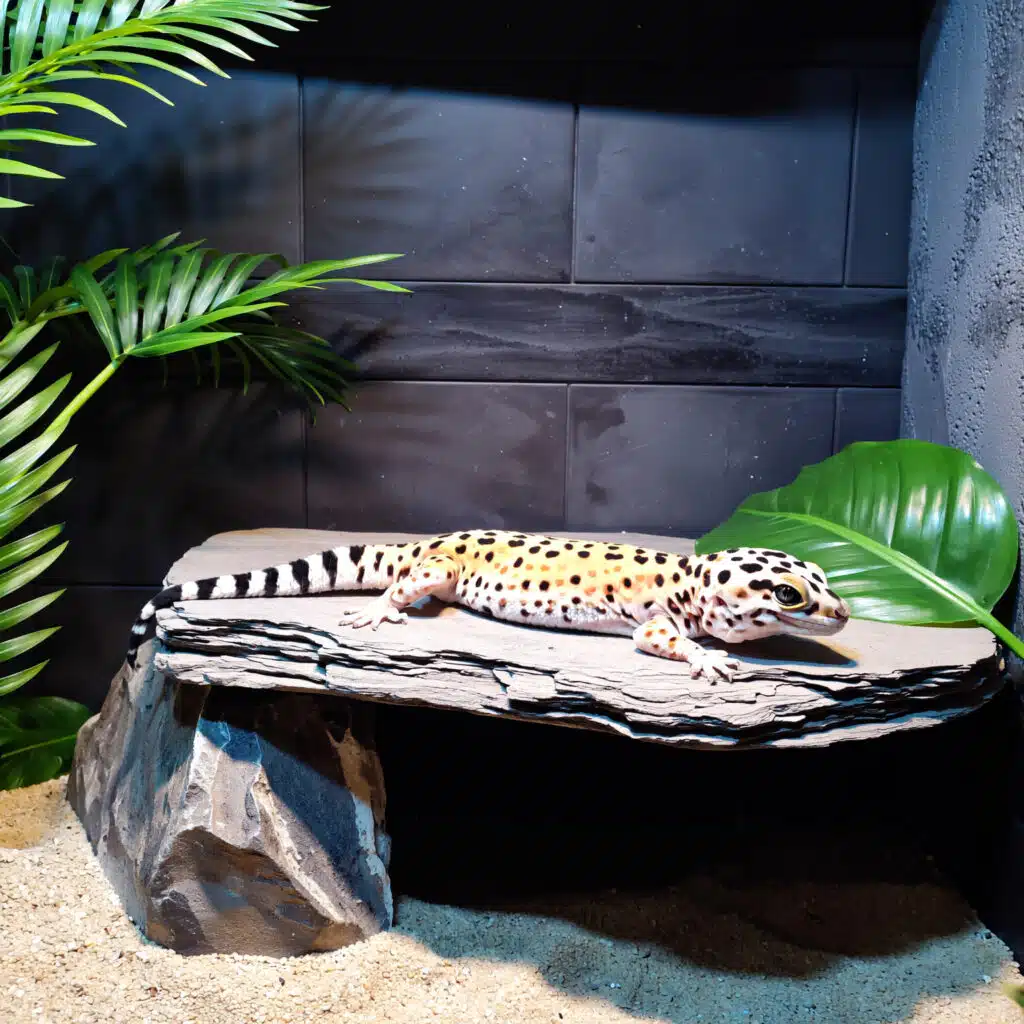
This layout mimics the leopard gecko’s native environment:
- Use slate tiles or ceramic tile as substrate for a natural, rocky look.
- Add stacked rocks (securely glued or placed) to create crevices and climbing opportunities.
- Incorporate caves and artificial plants to break up open space.
This design looks great and encourages exploration. For inspiration, check out our guide on leopard gecko tank décor ideas.
Minimalist Design
A simple but effective approach that’s easy to clean and maintain:
- Reptile carpet or paper towels as substrate.
- One hide on each side plus a humid hide.
- A few flat décor pieces for enrichment.
This layout is practical for beginners and ensures you can monitor your gecko easily.
Semi-Natural Setups
For those who want a natural look without the risks of loose substrate:
- Combine tiles for flooring with strategically placed faux plants and branches.
- Add background panels or corkboard to create a naturalistic appearance.
- Provide multiple hides with different textures and shapes.
This design balances aesthetic appeal with safety, making it ideal for display tanks.
Part 5: Décor and Accessories That Work Best
The right décor doesn’t just make your leopard gecko’s tank look nice — it also supports natural behaviors and reduces stress.
Safe Rocks, Branches, and Caves
- Rocks & Slate: Great for basking spots and natural hiding crevices. Always secure them with aquarium-safe silicone or place them firmly on the tank floor to prevent collapse.
- Branches: While leopard geckos are ground-dwellers, they will climb if given sturdy options. Low branches add enrichment.
- Caves & Hides: Commercial reptile caves or DIY hides made from plastic containers give geckos a secure place to rest.
Using Artificial Plants for Coverage
- Artificial plants provide shade, visual barriers, and enrichment.
- They make the tank feel less “empty” and more natural.
- Low-maintenance and safe compared to live plants that may alter humidity.
We’ve reviewed options in detail in our guide on leopard gecko accessories you actually need.
Avoiding Unsafe or Toxic Decorations
- Sharp Rocks/Glass Décor: Can cause injuries.
- Treated Wood or Pine/Cedar Products: Contain oils that irritate reptile skin and lungs.
- Loose Sand Mixed with Décor: Creates ingestion and impaction risks.
When choosing décor, always think about safety first — every piece should be stable, non-toxic, and easy to clean.
Part 6: Tank Layout Examples by Style
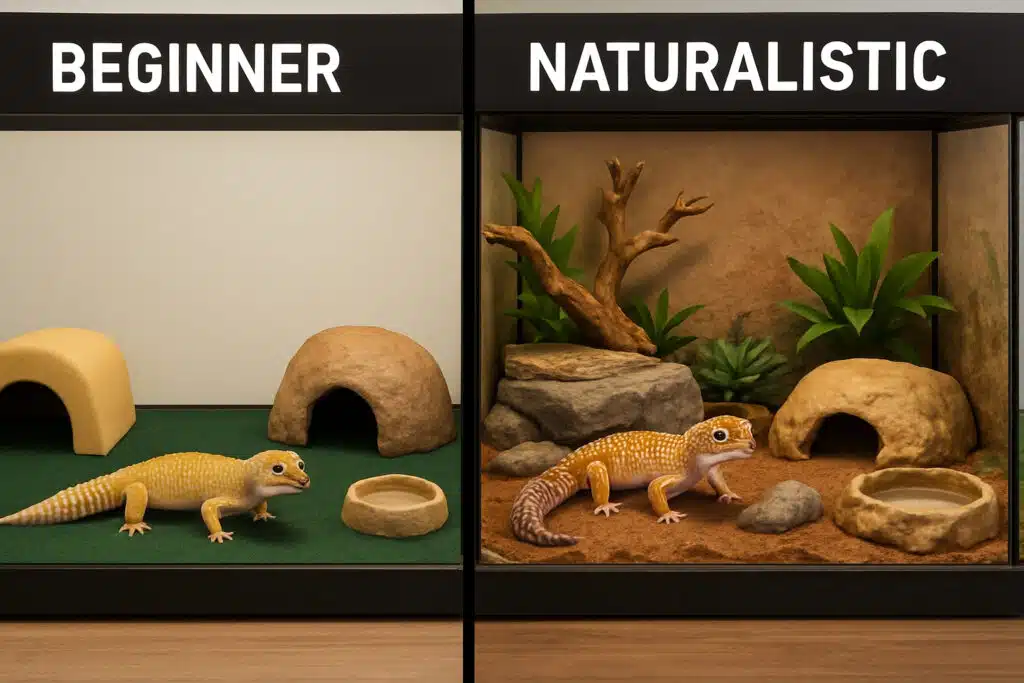
Every keeper has different goals for their leopard gecko’s enclosure. Some want a functional, low-maintenance setup, while others aim for a display-worthy tank. Here are three common layout styles.
Beginner-Friendly Layout (Simple Essentials)
- Substrate: Paper towels or reptile carpet for easy cleaning.
- Three hides: Warm, cool, and humid.
- Shallow water dish and basic décor (flat rocks, small plants).
- Heat mat with thermostat for belly heat.
This setup is affordable, beginner-safe, and focuses on function over looks.
Display Layout (Naturalistic & Aesthetic)
- Substrate: Slate tiles for a desert-rock appearance.
- Stacked rocks, background panels, and faux plants for realism.
- Multiple hides integrated into décor.
- Optional UVB light for added health benefits.
This style is popular for owners who want their gecko’s enclosure to be part of their living space. For inspiration, see our tank setup guide.
Breeder Layout (Functional Tubs)
- Substrate: Paper towels or no substrate for easy cleaning.
- One warm hide, one cool hide, and a humid hide.
- Minimal décor — designed for practicality, not display.
- Lightweight tubs stacked on racks for efficiency.
This setup works for breeders managing multiple geckos but isn’t recommended for pet keepers who want enrichment and display value.
Part 7: Common Layout Mistakes to Avoid
Even with the best intentions, many leopard gecko owners make mistakes when arranging their tank. These errors can cause stress, injury, or long-term health problems.
Too Few Hides or Only on One Side
Leopard geckos need at least three hides — one warm, one cool, and one humid. A common mistake is placing all hides on the same side of the enclosure, which prevents proper thermoregulation.
Overcrowding the Tank with Décor
While enrichment is important, too much décor can clutter the tank and reduce floor space. Geckos may struggle to move around or feel overwhelmed if the layout is too busy. Balance is key.
Using Loose Substrate with Décor Pieces
Some owners mix sand with rocks or décor for a “desert look.” Unfortunately, this creates impaction risks when geckos lick surfaces while hunting. For safer alternatives, see our detailed guide on substrate options for leopard geckos.
Ignoring Stability of Heavy Items
Rocks, branches, and décor must be secured. If they topple over, they can injure your gecko. Always place heavy pieces directly on the tank floor, not on top of loose substrate.
📝 Tip: Think of the layout as both a habitat and a playground. It should be safe, functional, and supportive of your gecko’s natural instincts.
Conclusion & Next Steps
Designing a leopard gecko tank layout isn’t just about making the enclosure look good — it’s about creating a safe, functional habitat that reflects the gecko’s natural needs. By including a warm side, cool side, and humid hide, plus stable décor and enrichment, you’ll give your gecko the opportunity to explore, regulate temperature, and feel secure.
Key takeaways:
- ✅ Prioritize floor space over height for tank design.
- ✅ Always include at least three hides (warm, cool, humid).
- ✅ Choose décor that is stable, non-toxic, and easy to clean.
- ✅ Mimic the gecko’s native rocky desert environment with slate, rocks, and sparse plant cover.
The right layout can reduce stress, encourage natural behavior, and make your gecko’s home a joy to look at.
For a complete breakdown of substrate, heating, and lighting to pair with your layout, see our Ultimate Leopard Gecko Tank Setup Guide.
FAQs About Leopard Gecko Tank Layouts
Can leopard geckos live in bioactive setups?
Yes, but bioactive setups are complex and not always ideal for beginners. Leopard geckos prefer dry environments, so bioactive tanks require careful control of substrate layers, drainage, and humidity. For most keepers, a semi-natural setup with tile and décor is safer and easier to maintain.
Do leopard geckos need climbing branches?
Leopard geckos are ground-dwellers, but they enjoy low climbing opportunities. Adding flat rocks, small ledges, or sturdy branches gives them enrichment without risk of falling.
How many hides should be in one tank?
At minimum, every leopard gecko enclosure should have three hides: one on the warm side, one on the cool side, and one humid hide. Larger tanks can include extra hides for variety and enrichment.
Is it okay to decorate with artificial plants?
Absolutely. Artificial plants provide coverage, reduce stress, and make tanks look more natural. They’re low-maintenance compared to live plants, which may alter humidity levels.
Author

